
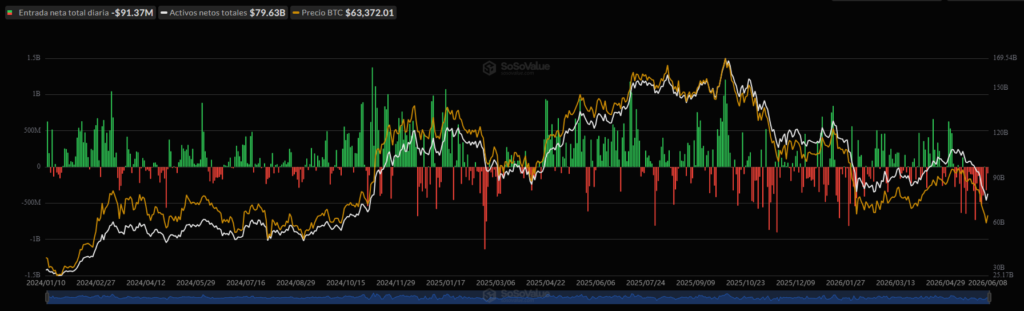
ETFs are signaling that institutional money is leaving the bitcoin market.
According to BloFin Research, these companies will attract up to USD 240,000 before the end of 2026.
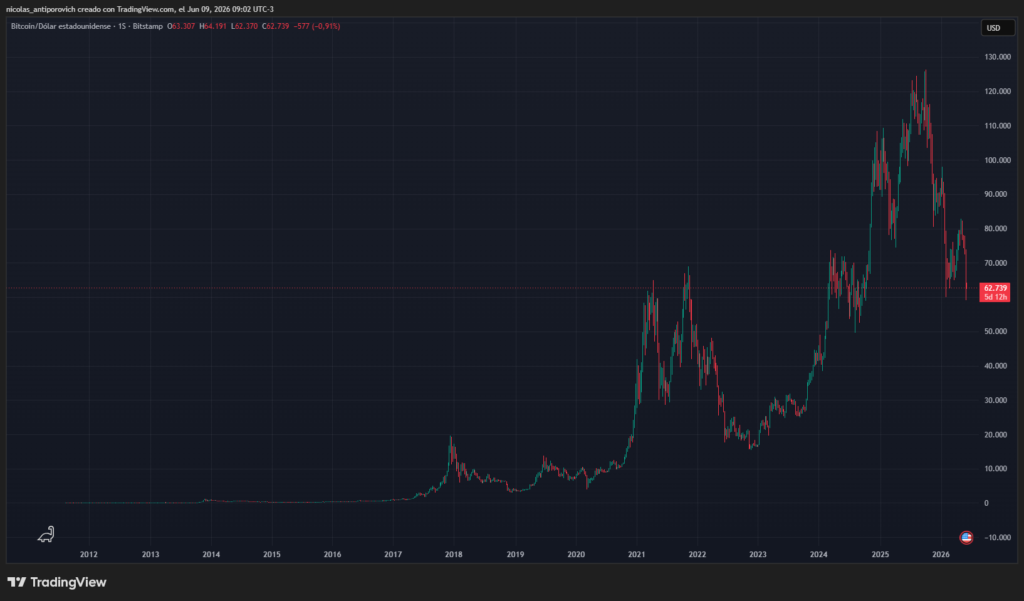
The price of bitcoin (BTC) fell below $60,000 on June 5, 2026, its lowest level since the beginning of the year. And, at the time of this publication, June 9, doubts persist among analysts about what the next movements of the digital currency will be. Will the downward trend continue or will there be a recovery?
The price drop was caused by multiple causes: persistent inflation in the United States, geopolitical tension in the Middle East and record outflows from spot ETFs; Added to these reasons is a factor that has gone more unnoticed, but is largely relevant: institutional and retail capital is being absorbed by what BloFin analysts described as “the largest mega-IPO cycle” in recent history.
It is worth clarifying that IPO is the acronym in English for “initial public offering.” It refers to the process by which companies go public.
But, before giving more details about this “mega-IPO cycle,” let’s look at some data that supports the capital rotation hypothesis.
The bitcoin ETF in the United States they stopped their worst streak of departures with barely USD 3 million of net inflows on Thursday, June 4, after 13 consecutive days of withdrawals which accumulated more than USD 4.3 billion. The data is not just a number: it is the most direct sign that large capital allocators are reducing exposure to bitcoin at an unusual speed.
A single day of that streak, June 2, saw outflows of around $733 million. Assets under management for bitcoin ETFs fell from about $106 billion at the start of the streak to about $85 billion, a decline of nearly 20%.
The hardest hit fund was BlackRock’s iShares Bitcoin Trust (IBIT): it concentrated around USD 2.94 billion of accumulated withdrawals, followed by the Fidelity Wise Origin Bitcoin Fund with outflows close to USD 403 million.
What is happening? It could be that Investors are liquidating positions in bitcoin (both cash and ETF) to have liquidity available to invest in IPOs (or even in the pre-IPOs that are already available on some cryptocurrency exchanges, as CriptoNoticias has reported).
Companies suspected of “stealing” money from bitcoin: SpaceX, OpenAI and Anthropic
BloFin analysts they estimate that SpaceX, OpenAI and Anthropic will jointly raise more than $240 billion between June and the end of 2026more than all VC-backed IPOs in the United States since 2000 combined.
The most immediate case is SpaceX. The company priced $135 per share with the SEC, aiming to raise $75 billion and debut on the Nasdaq on June 12 under the ticker SPCX, with a valuation of $1.77 trillion. I would be the largest IPO in history.
About $22 billion of that offering is reserved for retail investors, significantly broadening the spectrum of those who could move capital from other risk assets — including cryptocurrencies — to SPCX in the coming days.
BloFin Research identifies at least Four reasons why SpaceX attracts capital that might otherwise have remained in bitcoin:
- 1) The company’s history of extraordinary returns, taking into account that its valuation grew from approximately USD 500 million at its inception to nearly USD 800 billion in 2025.
- 2) Fragile sentiment in the cryptocurrency market with no clear rebound catalyst.
- 3) The lower attraction of US Treasury bonds.
- 4) The rotation from laggard stocks (or laggard cryptocurrencies) to the new hot name.
Everything happens within the natural cycle of bitcoin
And it is important to mention that all this is happening within the historical cycle of bitcoin. The decline from the October 2025 high follows, in depth and timing, the pattern of previous cycles: in the three previous cycles, the lows arrived approximately 12 months after the high, always in the fourth quarter of the following year. If this pattern continues, the window of minimums would point to the fourth quarter of 2026.
According to BloFin analysts, It would be the same IPO calendar that would ultimately end up causing capital to return to bitcoin. They explain a two-phase liquidity sequence. First comes absorption: capital flows into large IPOs, reducing the liquidity available for bitcoin just as the digital currency seeks bottom.
Then will come the release: When IPO lockup periods begin to expire—typically 180 days after debut—employees and investors who received shares will begin to liquidate. Historically, that type of newly rich investor tends to reallocate capital towards higher beta assets, including bitcoin and cryptocurrencies.
In the case of SpaceX, which is scheduled to debut on June 12, the staggered unlock schedule would begin to release liquidity from insiders in the second half of 2026, with the highest available flow in around 180 days, that is, around December. OpenAI and Anthropic, which do not yet have confirmed dates but are within the same cycle, would add more liquidity in 2027 when their own lockups expire.
The fall of bitcoin is a multi-causal phenomenon
Having said all this, it is important to note that Bitcoin’s fall is not exclusively attributable to mega-IPOs.
Added to this is the sale of 32 BTC by Strategy – its first in four years – which, although economically trivial in terms of volume, broke the “never sell” narrative that anchored institutional psychology during the cycle; geopolitics in the Middle East; and a complex macro environment with multiple tensions (including a United States tariff policy that continues to have global repercussions and increase the risk of inflation).
What the current analysis on IPOs adds to the picture is the structural dimension: when capital has more attractive options in the traditional market —and it has rarely had them with the magnitude that this IPO cycle represents—, liquidity does not disappear, it is simply reallocated.
According to BloFin, bitcoin will regain liquidity but it will probably be only after the absorption cycle ends and the profits from the mega-IPOs seek new destinations.