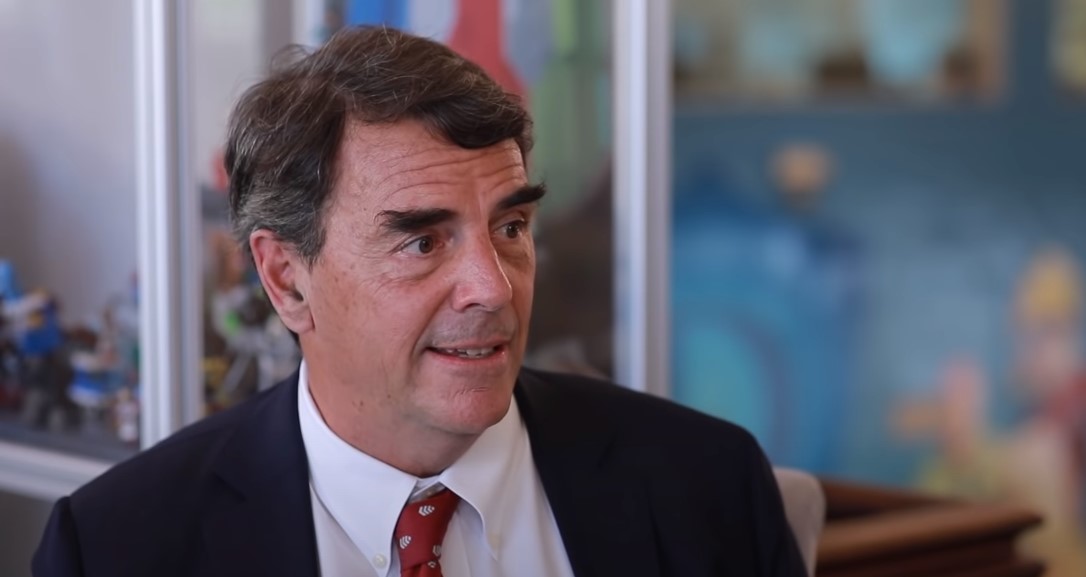
Every time Google introduces a new quantum chip, the same question generates widespread concern: will my bitcoin (BTC) funds disappear? The official response is usually reassuring: “decades away.” But Tim Draper just planted an uncomfortable idea. And it doesn’t point to where everyone is looking right now.
On June 9, 2026, Draper granted an interviewand in it his statement was brief, but packed with enormous depth. “Quantum computing will hack banks long before it even touches the blockchain.”
In that way, the prominent Silicon Valley venture capitalist turned the dominant narrative of fear on its head. That’s because until now, the general narrative placed Bitcoin as the weakest link compared to quantum. And now, the investor has just turned the target and put it on the backs of the traditional banking system. But what is the basis for making such a statement?
The silent fragility of banks (and what Bitcoin has and they don’t)
Draper’s argument rests on a structural difference that is rarely mentioned in mainstream media headlines. It is the fact that banks operate with centralized systems.
They use encryption such as RSA (Rivest-Shamir-Adleman) or AES (Advanced Encryption Standard) that work like safes, but with configurations that, according to Draper, are old and vulnerable. They do not have a distributed mechanism to reverse a massive attack.
Here’s the real issue: Bitcoin has technical tools that traditional banks do not have. On the one hand, the network can be upgraded via a soft fork (or hard fork if necessary) to adopt post-quantum resistant cryptography.
On the other hand, in an extreme scenario, full node operators could revert the chain to the last secure block. through a fork. However, this second option is controversial: while some see it as a strength of decentralization, others consider it an emergency measure which should be avoided as it could damage the perception of Bitcoin’s immutability.
Meanwhile, the recent context of the banks proves Draper right on a painful point.

The year that exposed banking fragility
The ground where Draper plants his flag is still hot due to the bankruptcies of Silicon Valley Bank, Signature Bank and First Republic in 2023, which was reported by CriptoNoticias at that time.
Millions of depositors saw their banks collapse within days. Not because of quantum, but because of poor liquidity management. The difference, highlighted by Draper, is that The dollar does not have a quantum Plan B. Bitcoin, at least in theory, yes. But here appears the first major fracture of the debate, because Draper’s statement omits the fact that the traditional financial system does not simply remain waiting.
The Bank of England, for example, published in October 2025 a plan to guide the banking transition towards post-quantum cryptography. It explicitly warns against the “harvest now, decrypt later” strategy, where attackers store data today to break it with quantum computing in the future.
On the other hand, JPMorgan Chase tests from June 2026 post-quantum tools on your network of tokenized deposits, as well as partnering with Oxford Quantum Circuits on a research center in London.
These and other banking transactions It does not mean that Draper is wrong, but it does mean that his narrative simplifies a more complex reality. Bitcoin faces real risks today (centralization of miners and millions of lost bitcoin), and a rollback massive would destroy confidence in the immutability of the network. Meanwhile, institutions like JPMorgan, HSBC, and Swift are already actively migrating to post-quantum encryption.
In any case, Draper’s post in violently divided reactions. Some accuse him of “selling quantum smoke to raise BTC.” Others remember that banks are already hacked today, only by social engineering, not by quantum.
And so what should a hodler normal with this information?
And now what? The question no one can answer yet
Nothing concrete has happened. No bank. No blockchain. Zero real quantum hacks. Therefore, Draper’s statement on June 9 remains a speculative thesis. But The debate has changed its nature.
Now many are more focused on discovering the answer to the question: which system is best prepared organizationally for when quantum arrives?
The answer, for now, depends on who you ask. And how much faith each person places in the distributed codes versus centralized governments.
Meanwhile, Draper has achieved something that few investors achieve, which is the fact that banks have to defend themselves from a comparison that until a year ago they won by a landslide. And that, whether they like it or not, has us here focused on this news.