The current geopolitical chaos has affected even the reserve asset par excellence.
“The long-term bullish thesis for gold remains intact,” explains Smith.
The drop in the price of gold opened a possible buying window for investors seeking exposure to the precious metal.
This is explained by Samuel Smith, an analyst at High Yield Investor, who in his most recent report published yesterday, June 9, 2026, held that the recent pullback does not alter the fundamentals that drive gold from the end of 2023. “The bullish thesis for gold in the long term remains intact,” he stated.
That reading, although Smith does not mention it, also covers PAXG and XAUT, two digital assets backed by physical gold issued by Paxos and Tether, respectively, that allow you to follow the price of the metal within the digital asset market, without trading directly with bullion or mining stocks.
At the time of publishing this article, June 10, 2026, gold is trading around $4,160 per ounce. This level confirms its entry into bearish territory, after a drop of more than 20% from the historical highs reached at the beginning of the year.
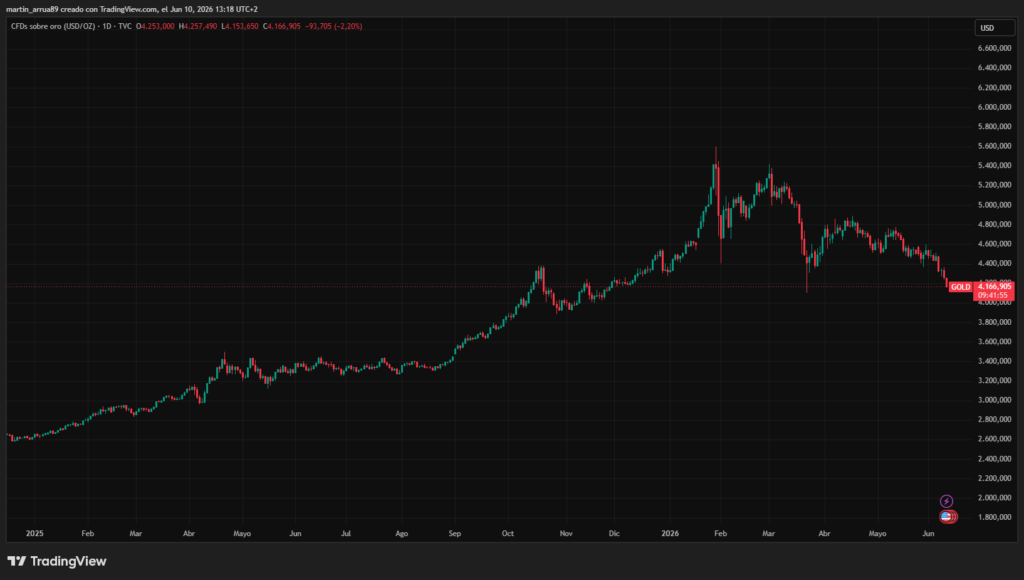
The pullback came after a strong bull market. According to Smith, part of the decline responds to a natural correction after an accelerated rise. However, the analyst clarified that There were macroeconomic factors that increased pressure on the metal.
“The outbreak of war with Iran caused a significant increase in oil prices,” Smith explained. The reason is that the conflict raised fears about a disruption to transit in the Strait of Hormuz, a sea route located between Iran and Oman through which – under normal conditions – around 20% of the oil traded worldwide circulatesas reported by CriptoNoticias.
This increase in energy prices fueled expectations of more persistent inflation in the United States. As a result, markets began to discount that the Federal Reserve (FED) would have less room to cut interest rates and could even be forced to keep them elevated for longer.

Although gold often benefits from periods of geopolitical uncertainty, high rates reduce its relative attractiveness compared to yield-generating assets, such as US Treasuries or money market funds.
In this regard, Smith said: “Since gold is often considered a store of value compared to cash, the higher the return that can be obtained on cash, the less attractive gold is as a savings instrument.”
The analyst mentioned that Türkiye and Russia sold part of their gold reserves. In the Turkish case, to support its currency after the regional conflict; in the Russian, to finance expenses associated with the war in Ukraine and other budgetary needs.
“This represented a setback for the market and generated headlines that scared some investors, leading them to adopt a more bearish stance on gold,” Smith noted.
The bullish thesis for gold remains
Despite the correction, Smith believes that the structural factors driving gold remain in place. “Structural demand for gold, especially from central banks, has not changed as they remain net buyers, particularly China, and several other central banks are allocating an increasing proportion of gold to their reserves,” the analyst noted.
He also noted that recently Gold overtook the US dollar as the main reserve asset of central banks.
The analyst added that rising US debt, geopolitical tensions in the Middle East, Ukraine and Asia, along with central bank purchases, continue to support demand for the metal.
“The fundamental factors that drove gold’s recent bull run remain strong over the long term,” he said.
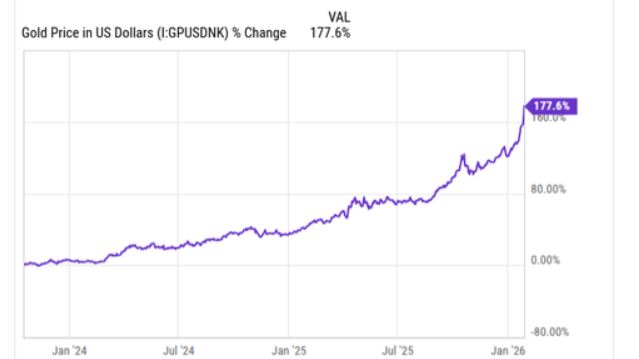
In turn, he gave as an example that, from the end of 2023 to the beginning of June 2026, gold records a return of more than 178%. For Smith, this journey does not invalidate the possibility of new increases: on the contrary, he considers that the current correction offers an attractive entry point for investors with a long-term strategy.
JP Morgan maintains a similar vision. The entity projects let the gold reach an average of $6,000 per ounce during the fourth quarter of 2026 and approaching $6,300 towards the end of 2027.
According to Greg Shearer, head of precious metals at the firm, the market is currently going through a period of uncertainty. “Gold is trapped in a kind of technical no man’s land,” he said. However, he added that Risks related to inflation, deterioration in purchasing power, fiscal concerns and geopolitical fragmentation continue to favor demand for gold as a store of value.
The risks gold still faces
Not all analysts believe that recovery is imminent. Goldman Sachs maintains a projection of $5,400 per ounce by the end of 2026, but warns that the path could remain volatile.
“We view near-term risks to our gold forecast as skewed to the downside,” they pointed out analysts Lina Thomas and Daan Struyven.
The entity maintains that the metal remains vulnerable to new liquidations if tensions in the Strait of Hormuz persist. Goldman analysts warn that eventual corrections in the bond or stock markets could cause additional sales of gold to cover losses in other assets.
JP Morgan identifies a similar risk. “The most important downside risk to our view is a scenario in which US growth and employment remain strong while inflation continues to accelerate,” Shearer explained.
Then, A more aggressive FED could weaken investor demand for gold.
For now, those who maintain a bullish view consider that the current correction represents an opportunity to accumulate exposure to the metal. If that thesis ends up prevailing, PAXG and XAUT could accompany the recovery of gold once the uncertainties that currently dominate the global scenario decrease.