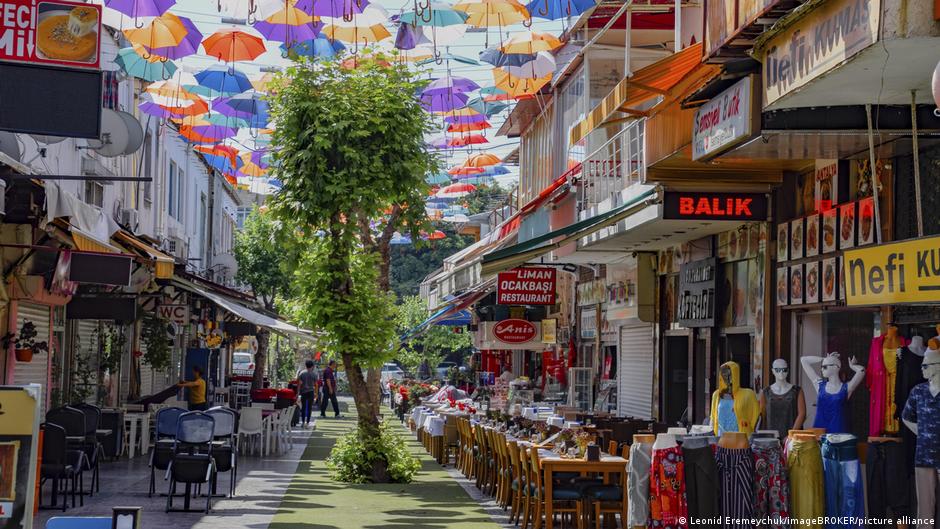
Cities are particularly vulnerable to extreme heat – days when pavements cook like stoves and making it a struggle to sleep at night.
Densely built-up urban areas, with their paved roads, impervious surfaces and limited green spaces, are heat islands that can be 10 to 15 °C (up to 30 °F) hotter than surrounding rural areas. That extra heat puts pressure on critical city infrastructure and harms public health; According to United Nations data, about half a million people die every year from heat-related causes.
Climate change caused by our fossil fuel emissions will mean more frequent, more intense and earlier heat waves in the coming years. But cities – home to more than half the world’s population – are working to remain liveable, sharing adaptation and resilience strategies that will be discussed at preliminary UN climate talks in Bonn this week and next week.
“Heat is a silent killer, but it is not inevitable,” Dr. Hans Henry P. Kluge, the World Health Organization’s regional director for Europe, said Thursday as he presented updated guidance on heat prevention measures. “We have the tools. Now we must use them.”
‘The nature of summer has changed’
“Today, heat is no longer just a local climate feature. It has become an urban, public health, economic and socio-environmental challenge,” said Leonardo Madeira Martins, sustainability leader for the city of Teresina in northeastern Brazil.
Although the dense tropical city is known for its lush green spaces, Martins said temperatures now often exceed 40 C (104 F). It disrupts “urban mobility, sleep quality, productivity and overall well-being” of the city’s population of about 870,000, he wrote in an email.
Residents of Antalya, Türkiye – host of the upcoming COP31 UN climate talks – have also noticed changes in the summer weather.
“Antalya is a Mediterranean city where summers are always hot; however, the nature of the heat has changed,” said municipality climate expert Melike Kiresibasi. He told DW that heat waves are starting earlier, lasting longer and becoming more frequent — a trend that “could intensify significantly by mid-century,” especially in densely populated urban centers.
“This is putting increasing pressure on our population – which now exceeds 2.6 million – but also on our health services, our energy and water systems and the millions of visitors we receive every summer,” Kiresibasi said.
Particularly at risk: children, the elderly and sick people
Homes, workplaces and other buildings can protect people during times of extreme heat, but they can only do so much. When extreme temperatures persist at night, people living in overheated buildings struggle to cool down – and this is particularly dangerous for vulnerable groups such as children, the elderly and the sick.
Antalya wants to adapt buildings and help residents survive the heat, Kirecibasi said. This includes air conditioning systems, but also reducing “how much cooling our buildings need in the first place.” An EU-supported heat risk assessment of the city using satellite data and climate projections has pinpointed the residents who are most exposed to rising temperatures.
The city’s strategy includes better building design that increases the use of shade, prioritizing surfaces that reflect heat or insulation like green roofs. Other solutions include public water points and increased energy efficiency. “This way, cooling can be more affordable, more accessible and lower in carbon intensity,” Kiresibasi said.
Structural limitations and social inequality are also exacerbating the heat in Brazil. “In a middle-income city like Terrecina, not all families have constant access to air conditioning,” Martins said. This has created a public health challenge, “particularly in vulnerable communities and peripheral areas, where many homes have poor ventilation, inadequate roofing and limited urban tree coverage.”
The ongoing UN-supported research project has given Teresina insight into how extreme heat affects the health of pregnant women and their babies, especially in disadvantaged communities. Martins said the findings allowed the city to develop a strategy that includes access to information and resources to help manage heat during pregnancy.
Terresina is working to preserve and expand its urban forests, wetlands and green corridors, which can absorb heat and make it easier for the city to cool itself naturally. Shady community gardens and shared public spaces are also part of the mix.
Fortaleza, another Brazilian metropolis, has launched a network of 10 weather stations that provide real-time data on temperature, UV index and humidity in coastal city areas susceptible to urban heat.
“By making this information transparently available to the public, we aim to promote a shared understanding of the risks associated with extreme heat and encourage the collaborative development of solutions to address them,” a representative from Fortaleza City Hall said in an email.
‘There’s a generation growing up’ that knows how to live with the heat
In its campaign to combat extreme heat, Fortaleza is targeting public schools with a plan to install air conditioning systems across the country by 2028, which will be partially powered by solar power. The city also wants to bring back green space to bare schoolyards.
“We know that high temperatures directly affect students’ well-being, concentration and learning,” a Fortaleza spokesperson said. Schools in Kenya’s Kilifi County, northeast of Mombasa, are also key to the cooling plan. To prevent large-scale deforestation, government-backed clubs in boarding schools and colleges now teach students how to plant and care for new shade trees.
“When they go back home, they plant trees in their home compounds,” said Wilfred Kenga Baya, the county’s energy director. “We are developing a generation that has knowledge on environmental protection and issues [heat] Mitigation.”
Biya said people in more remote areas of Kilifi – living with unreliable electricity and fewer resources – are often left without ways to escape the heat. In response, the county has prioritized the installation of decentralized solar power systems, reliable local networks that help cool critical facilities such as health centres, schools and homes previously excluded from Kenya’s national grid.
“The adoption of renewable energy has really increased [over] Over the past few years,” Baya said, describing how people in the county of 1.5 million have begun using solar-powered fans and cookers instead of polluting fossil fuels, which contribute to warming.
“These microgrids ensure lifeline services remain operational without reliance on vulnerable long-distance power transmission lines.”
Edited by: Sarah Stephan