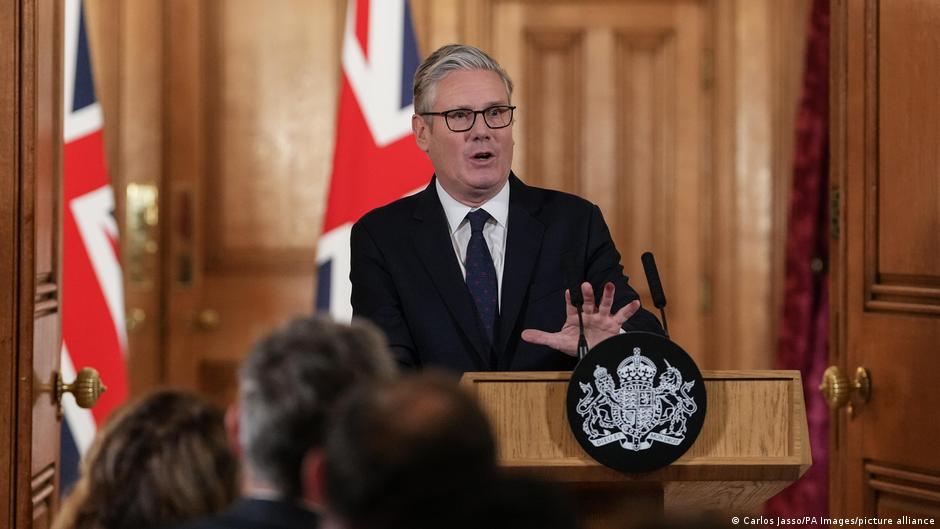
The British government announced on Monday that children under 16 will be banned from using social media in the United Kingdom starting next year.
Prime Minister Keir Starmer said popular social media platforms such as Snapchat, TikTok, YouTube, Instagram, Facebook and X (formerly Twitter) were designed to be “addictive”, making them “dangerous” and making young people “unhappy”.
Starmer hopes the ban will be passed into law by December and come into force by early 2027, following similar initiatives launched in Australia, Canada, Brazil and Indonesia.
“Every parent can see it with their own eyes: Social media is making kids unhappy,” said Starmer, who herself has two teenage children. “I have heard firsthand from families crying out for change, and we will act accordingly.”
The move, which will not include messaging apps such as WhatsApp, has been welcomed by campaigners including Britain’s Prince Harry and his wife Meghan Markle. But it could spark a major battle with US tech giants, who argue that social media restrictions risk pushing children into even less regulated spaces.
A YouTube spokesperson said, “Blanket bans push kids out of such curated, supervised, beneficial experiences and toward anonymous, less-safe services,” while Meta said the ban could drive teens toward online alternatives without any parental controls.
Starmer: ‘I’m confident we can implement it’
Starmer acknowledged the challenges and acknowledged that some teenagers would try to find their way around the ban, but he compared it with age restrictions on alcohol and tobacco.
“Some teens find ways to stop drinking before they even have to,” he said, “but that doesn’t mean we should abandon any efforts to prevent them from purchasing alcohol.” “I’m confident we can implement it.”
Starmer is currently under domestic pressure over alleged issues with the cost of living, immigration and military spending, and may face a leadership challenge within his own Labor Party in the coming weeks.
But a ban on social media could prove a popular move and give him a more positive legacy, with 90% of British parents surveyed reportedly in favor of it.
“If tech companies wanted to make changes, they could have done so by now, but they have chosen not to do so,” said Ellen Roome, a children’s online safety campaigner. Ellen Roome, whose son took his own life when he was just 14, said.
“We need to come down hard on them. If they are not going to do it, we need to be very strict.”
UK social media bans: what do teens think?
The youth who spoke to news agency AFP gave mixed reactions.
“Honestly, I think it’s a good thing, because I don’t even remember how old I was when I got Instagram, but it was pretty early on,” said 19-year-old student Connie Skeet. “You’re making friends with people you don’t know. It’s not as safe.”
But 18-year-old tour guide Tom Warwell thought 16 was “a bit high” and argued that younger teens were a “better age to focus on” because “times have changed so it’s important for people to still be able to use it.”
The UK ban may anger US President Donald Trump after the US Embassy in London came out against a “sweeping social media ban” earlier this month.
But Australian Prime Minister Anthony Albanese welcomed the British move, saying: “Social media giants operate across borders. By standing together, we can do more to hold them accountable and keep children safe online.”
Edited by: Wesley Dockery