The United States and Iran announced on Sunday that they have reached a preliminary agreement to end their war, raising hopes of an end to the energy crisis that has gripped countries around the world since the conflict began.
“Ships of the world, start your engines. Let the oil flow!” President Donald Trump praised the US-Iran deal in a social media post.
The Strait of Hormuz is set to reopen after both sides formally signed the agreement on Friday.
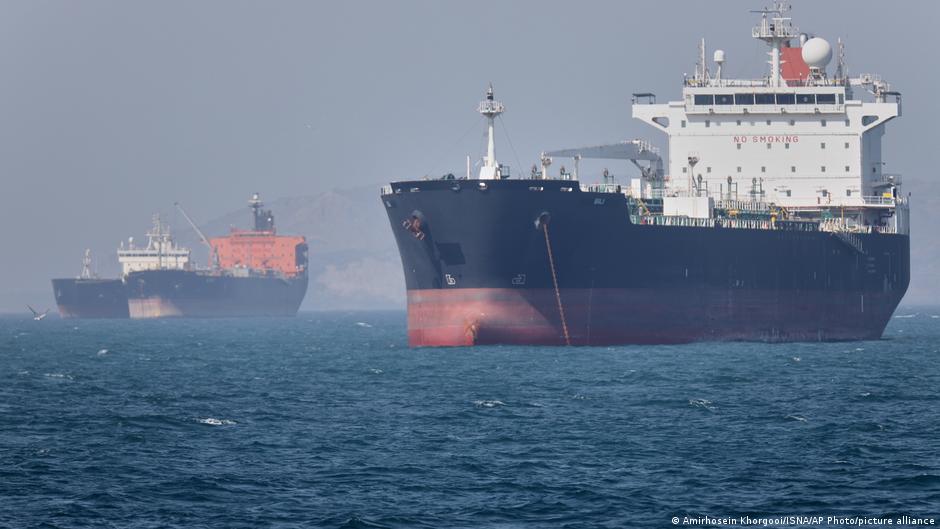
The narrow waterway is a vital route for global energy trade, handling about a fifth of the world’s oil and natural gas in normal times.
Tehran has effectively shut down shipping through the strait since the beginning of the conflict on February 28, 2026, causing one of the largest global oil-supply disruptions in history.
At the time, many predicted prices would rise from around $72 (€62) per barrel to $150 to $200 on February 27.
In the end, price increases were more moderate and reached a peak of about $120 a barrel of oil shortly after the conflict began before falling back down.
Following the announcement of the US-Iran peace deal over the weekend, the price declined further.
Prices remained under control due to loss of demand
An increase in supplies from the US and other non-Gulf sources, subdued Chinese demand, a coordinated release of strategic reserves and market optimism that the conflict would end soon helped keep the price rise under control.
For example, the US increased crude oil exports to more than five million barrels per day in April and May, up from an average of about four million barrels per day in recent years. wall street journal Informed.
Meanwhile, China has significantly reduced its crude oil imports in recent weeks and has instead relied on existing commercial inventories and strategic reserves.
Feridun Fesharaki, chairman emeritus of energy consultancy FGE NexantECA, recently told Bloomberg that the oil market has responded to the energy shock with a reduction in demand.
He said, China, the world’s largest crude oil importer, has cut imports by four million barrels per day.
China began using its vast domestic reserves in May to ease supply bottlenecks in the Middle East, rather than buying crude on the spot market, said Emma Lee, chief China oil market analyst at Vortexa.
The withdrawal from spot purchases “significantly reduced downward pressure on crude oil prices,” he wrote in an article. Research note at the end of May.
Global oil reserves are falling rapidly
However, China is not alone, as countries around the world have increasingly tapped their domestic reserves to compensate for the millions of barrels of oil stranded in the Persian Gulf.
Oil reserves fell by an average of 5.3 million barrels per day between March and MayAccording to the US Energy Information Administration.
However, industry experts have warned that stocks are reaching critical levels.
“The buffers are getting thinner,” warned Rystad Energy analyst and former OPEC official George Lyon.
“Inventory draws and partial bypass options may provide some short-term relief, but they cannot completely address longer-term disruptions to flows through the Strait of Hormuz,” he told DW last week.
“In that case, it is not inconceivable that oil prices could rapidly reach $150 a barrel this summer,” Lyons said.
It will take months to return to normal
Now a deal has been reached between Washington and Tehran and they have agreed to quickly reopen the strait, raising hopes that the supply crisis will soon ease.
But experts point to the need for safeguards such as clearing sea mines and warn that it will take months for energy markets to return to pre-conflict normality.
It will also take time to restore traffic through the strait – with hundreds or thousands of ships still stranded – and to resolve issues such as insurance.
“Even though ships now have safe passage, tankers are misplaced, oil production/refining facilities need to be ramped up to full capacity, and questions remain about the cost and availability of insurance for ships passing through the strait,” Neil Shearing, chief economist at Capital Economics, wrote in a research note.
“Our current working assumption is that ~80% of energy flows will resume by the end of the third quarter,” he said.
Neil Crosby, head of research at market intelligence firm Sparta Commodities, told DW earlier this month that once the strait reopens, ensuring the free flow of traffic could take “eight weeks, maybe more, depending on how long each step takes.”
Restoring supplies will be a challenge
In addition to massive shipping problems, the conflict also resulted in damage to energy facilities in the Persian Gulf.
Damaged oil fields, pipelines and other infrastructure will need repairs before they can contribute to increased supply. Bringing sites back online requires intensive monitoring and can be a slow process.
Additionally, some energy producers in the region shut down production because they ran out of storage space.
Against this backdrop, energy supplies and prices are likely to take some time to stabilise.
“There will be a lot of waiting to be seen as to how quickly the strait actually reopens and how long it will take for oil flows to actually return to normal,” Nick Twidale, chief market strategist at ATFX Global in Sydney, told Reuters.
“It’s definitely going to happen in months rather than weeks.”
Edited by: Tim Rooks