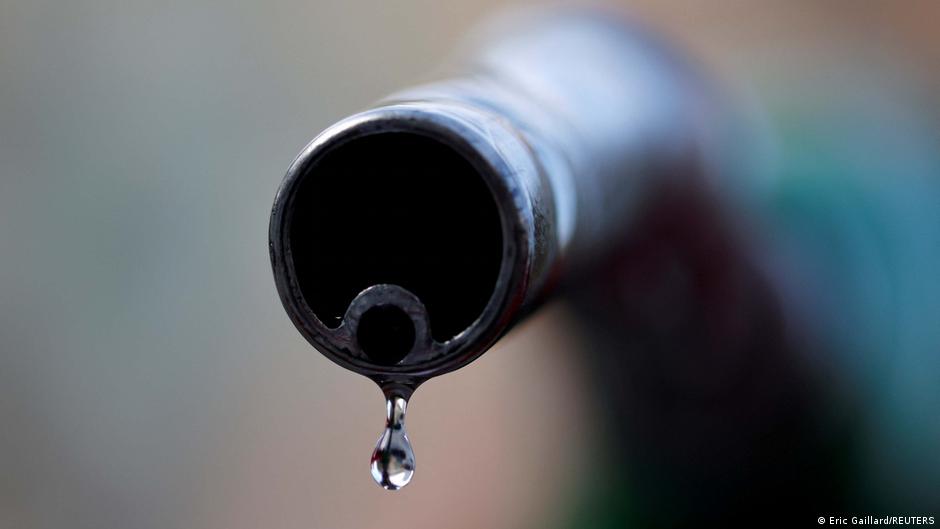
Fuel supply constraints are tightening in Russia after Ukrainian drone attacks on oil refineries led to fuel disruptions in several regions.
And this may be just the beginning, with pressure on the fuel market expected to increase in the coming months. If drone attacks continue at their current intensity and damaged refineries are unable to return to normal operations, local shortages could turn into a widespread crisis.
Disruptions in fuel supplies have been reported in more than 10 Russian regions in recent weeks, according to publicly available sources seen by DW. Some fuel stations have imposed restrictions or stopped selling gasoline altogether.
‘Logistical lockdown’ in Crimea
The situation is particularly tense in occupied Crimea. Fuel shortages followed recent drone strikes that disrupted traffic on the so-called “Novorossiya Highway,” which connects the peninsula to Russia’s Rostov region and serves as a major supply route for fuel.
This “logistical lockdown”, as Ukrainian Defense Minister Mykhailo Fedorov described the attacks on transport routes between Crimea and Russia, has forced Russian authorities to impose strict controls on the peninsula.
Premium gasoline is now available only in exchange for ration coupons. According to local media, major fuel station chains have stopped selling it to private customers for several weeks. Regular gasoline is limited to purchases of no more than 20 liters (about 5 gallons).
A few days ago, 15 filling stations in Russia’s Krasnodar region on the Black Sea completely suspended fuel sales. This is a small number compared to the approximately 1,000 stations in the region, according to figures from local authorities.
Where is the fuel shortage?
Complaints are rising on social media that gasoline is repeatedly running out, even at filling stations that have not made public any suspension of sales. Many users attribute this to the influx of motorists traveling from Crimea to Russia’s Krasnodar region to refuel.
Krasnodar Governor Veniamin Kondratyev described the situation as “difficult” and noted an “artificial surge” in demand.
Fuel shortages – although often not severe – are now affecting practically the entire country. In central Russia, isolated reductions have been reported at different stations in the Kursk, Belgorod, Ryazan and Oryol regions. Even sporadic complaints have been observed in Moscow and the surrounding area.
Problems are also emerging in St. Petersburg and the northwest, including the Leningrad, Pskov, Novgorod, Murmansk and Karelia regions. Declines have also been reported in Siberia and the Russian Far East.
In most cases, the disruptions involve small fuel stations that are not affiliated with major oil companies. It’s not a full-scale crisis, but complaints are rising, and gasoline prices have been rising steadily for several weeks – rising by 0.5% per week.
What harm are drones causing?
Russia experiences fuel disruptions almost every year, but to varying degrees. In the summer, demand for gasoline and diesel typically increases due to the agricultural and holiday seasons. Additionally, oil refineries perform scheduled maintenance during this period.
In 2024 and 2025, these factors were exacerbated by Ukrainian drone attacks, causing disruptions beyond normal seasonal levels. This year, the crisis had begun to emerge even before seasonal pressure had fully arrived, as drone attacks had already begun and appear to be becoming more effective.
According to Bloomberg calculations, eight of Russia’s 10 largest oil refineries were targeted by drone attacks in May alone. Some facilities, including the Lukoil refineries in Nizhny Novgorod and Perm, have been repeatedly hit.
Yaroslav Kabakov, strategy director at Moscow-based Finam, one of Russia’s largest investment firms, said the attacks were affecting not only primary refining units as in previous years, but also secondary processing facilities used to produce gasoline and diesel.
“Repairs at these facilities take months and are further complicated by restrictions restricting the supply of equipment,” he said.
Russian statistics on fuel production remain largely classified. However, some data has been released that point to a significant year-on-year decline.
According to Russia’s statistics agency Rosstat, production of petroleum products fell 9% in April compared to April 2025. The decline in May was even sharper, with Bloomberg estimating a 13% decline year-over-year.
According to the Center for Research on Energy and Clean Air (CREA), an independent research group, the Rosneft refinery in Tuapse has been particularly hard hit by the strikes. Between January and May, it reduced exports of petroleum products by 73% compared to the previous year. CREA estimates the resulting export loss to be €1.7 billion (about $2 billion).
Russians are preparing for a worsening crisis
Market participants are warning that there will be a systemic fuel shortage if refineries remain closed.
“A significant shortage of fuel is currently being felt only in Crimea. There are still reserves in the rest of Russia, but current supplies are insufficient. If the situation does not improve, the shortage will affect several more regions by the end of July or beginning of August,” a fuel market source told Russian Business Daily. Kommersant.
Russia’s Energy Ministry has launched an “industry task force” since June 8 to prevent the crisis from spreading. The body aims to ensure “stable and efficient operation of the country’s entire fuel and energy complex”.
Earlier, authorities had imposed a ban on gasoline exports – a measure that has been used repeatedly. However, the subsequent ban on kerosene exports was unprecedented. Gasoline supplies from Belarus have increased significantly at the St. Petersburg International Commodity and Raw Materials Exchange.
The scale of the looming crisis remains unclear
Fuel prices are expected to rise, as it did last year, but not sharply, since retail gasoline prices in Russia are strictly regulated by the state. Some independent filling stations and small chains may close temporarily to avoid losses.
CREA expert Isaac Levy said, “Ukrainian drone attacks are causing significant costs to Russia’s oil sector. They disrupt operations and reduce refinery capacity, increase repair and security expenses and create logistics bottlenecks.”
At the same time, he said, the impact on the Russian state is limited for the time being. Oil that cannot be processed domestically is being exported. As long as war in the Middle East continues to destabilize global markets, conditions will remain favorable for those exports.
Ukrainian drones are also targeting Russia’s export infrastructure, but so far these attacks have had no significant operational impact. According to Bloomberg, Russia’s seaborne oil exports reached their highest level since the war began in early June.
This article was originally written in Russian.