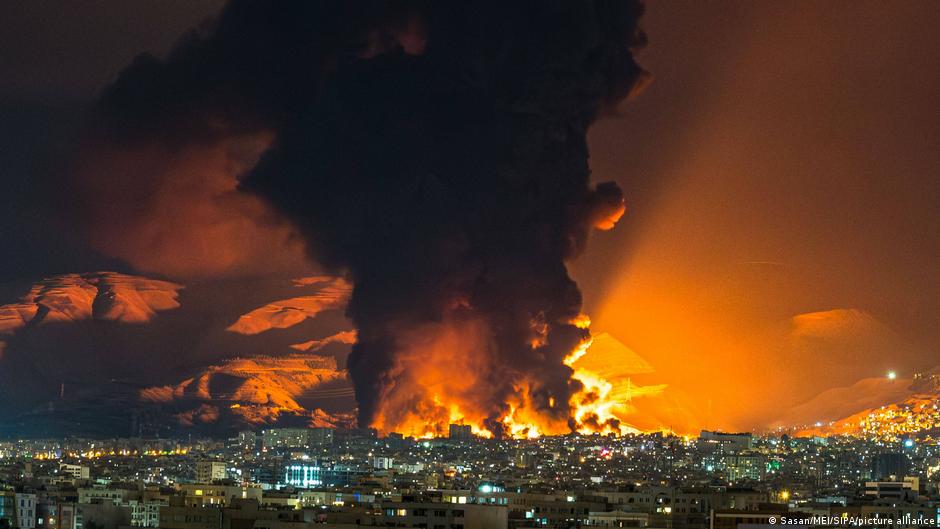
If the peace deal holds, the conflict between the US and Iran could end soon, but it could take months, if not years, for the global economy to return to its previous path.
As the Iran war and the current energy crisis have again highlighted the global economy’s dependence on oil and gas, some economists say now is the time to accelerate the transition away from fossil fuels and reduce reliance on volatile energy markets.
In opening remarks at this year’s climate talks in the German city of Bonn, UN climate chief Simon Still said the war in the Middle East was not only responsible for “immense human suffering” but had led to a “fossil fuel cost crisis” that is strangulating economies everywhere.
He said it was now “clear” that maintaining dependence on fossil fuels meant continuing inflation and economic instability.
Bonn talks have been going on for the past two weeks with the aim of preparing an agenda for the 2026 COP climate conference to be held in Türkiye in November.
The annual COP summit brings together nearly 200 countries to commit to the Paris Agreement – a 2015 agreement built around efforts to keep global temperature rise well below 2 degrees Celsius (3.6 degrees Fahrenheit) and limit it to 1.5 degrees.
Burning coal, oil and gas remains the primary driver of rising temperatures around the world, and the annual talks focus on how to transition to a clean energy future in a fair and equitable way.
However, the words “fossil fuel” do not actually appear in the Paris Agreement. And for many years it was considered almost taboo to explicitly discuss his phase-out in chat rooms.
But observers say the latest energy price shock has changed the political debate in Bonn and sparked new discussions about energy independence. This is not because countries importing oil and gas are now facing higher costs.
However, this changing political mood has not yet reached the highly technical climate negotiations.
New pro-renewables coalition not universally supported
At a climate summit in Brazil in November 2025, governments failed to agree on a clear roadmap to phase out fossil fuels, with efforts particularly blocked by oil-producing states such as Saudi Arabia and Iran. China, Russia, Tanzania and Senegal also expressed strong language opposition to any changes.
In response to this lack of consensus, approximately 60 countries gathered in Colombia in April for the first conference specifically dedicated to implementing the transition away from fossil fuels (TAFF).
This meeting was akin to a “coalition of the interested”. Hosted by Colombia and the Netherlands, it brought together a number of countries, including Brazil, Australia and Norway, which are already facing severe climate impacts. Also visited Germany.
Africa against the “coalition of the willing”
Opinions vary widely on how and whether the TAFF initiative could impact the implementation of the Paris Agreement, which is entirely separate from international agreement.
Nevertheless, a senior diplomat from the country attending TAFF told DW on condition of anonymity that national representatives continue to discuss possible future structures and working methods of the new alliance behind closed doors in Bonn.
Countries that oppose explicit fossil fuel phaseout are concerned that the TAFF consortium could interfere with the broader political dynamics of the UN negotiations.
“This is a multilateral process and we should not engage outside the process and come in later and then perhaps impose those outcomes on others who are not part of the interested parties,” African chief negotiator Antwi Bosiako Amoah told DW.
The situation in Africa remains complex in a step-by-step manner. Some countries, such as Nigeria, export fossil fuels while others depend on them to expand energy access and economic growth.
At the same time, African countries are already suffering the most severe consequences of climate change, despite contributing less than 4% of historical global greenhouse gas emissions.
The lack of affordable financing remains one of the biggest obstacles to investing in renewable energy and building sustainable prosperity across the continent. Many African countries face high borrowing costs and limited access to affordable capital in international financial markets.
African negotiators are not alone in being skeptical of initiatives outside the framework of the Paris Agreement. Discussions about phasing out fossil fuels are blocked in many negotiating chambers.
“Whenever we try, Saudi Arabia and their friends raise all kinds of procedural objections and other tactics,” said a diplomat involved in the talks.
Could the energy crisis accelerate the development of renewable energy?
According to Fatih Birol, Executive Director of the International Energy Agency, the recent energy crisis has exposed the fragility of a system overly dependent on fossil fuel markets and geopolitically fragile supply chains.
According to a new report from the German think tank New Climate Institute, political reactions to the crisis have been mixed.
Many governments, including Germany, have relied on traditional measures such as tax relief for fossil fuels. Others, including the European Union, Chile, Indonesia and Vietnam, have used the crisis to accelerate electrification and introduce reforms that support clean energy systems.
The researchers conclude that recent crises have permanently changed the global energy landscape. Governments are increasingly recognizing the risks associated with fossil fuel dependence, yet decisive policy responses remain inadequate.
The focus has shifted towards implementation
Ahead of Türkiye and Australia taking over the presidency of the next climate talks, Brazil’s outgoing COP30 president Andrés Correa do Lago reflected on the progress made in Bonn.
“We are moving from a COP focused on negotiations to a COP focused on implementation,” he said.
In other decisions taken in Brazil last year, the country agreed to triple the amount of adaptation finance it provides to developing countries by 2035.
One of the central debates over the past two weeks in Bonn was the baseline against which this increase should be calculated. Using 2019 as the reference year would mean tripling funding to approximately $20 billion, versus the approximately $40 billion 2025 baseline.
Antwi Bosiako Amoah stressed that Africa cannot finance adaptation through additional debt. Instead of loans, the continent needs more public support and a substantial increase in international climate finance.
The issue is expected to top the agenda at the climate summit in Türkiye.
This article was originally published in German.