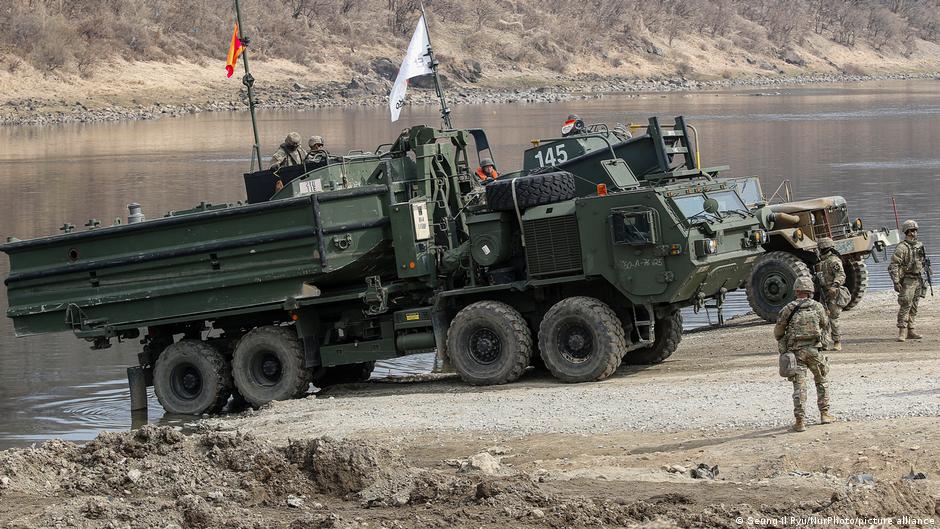
While South and North Korean armies keep a watchful eye on each other across the demilitarized zone dividing the two countries, Seoul’s Defense Ministry announced on Wednesday that farmers and residents will be allowed to access slightly more land near the heavily fortified border from 2027.
The ministry said it would reduce the Line of Civil Control (CCL), a military-controlled buffer zone south of the border, from 10 kilometers (6.2 mi) to an average of 6 kilometers.
South Korean Defense Minister Ahn Gyu-baek said, “The CCL was established to restrict civilian access and guarantee military operations, but there is a growing need to supplement its actual control measures.”
“We have come up with an adjustment plan for the CCL to adapt to the future security environment amid declining military manpower, while ensuring operational conditions,” Ahn said.
restrictions on life near the border
South Koreans require permission from the military to live or farm in the area. Analysts have said that local people face significant economic losses.
“We will enable regional development to the extent that it does not interfere with military operations,” Ahn said.
Residents welcomed the move, saying it would lead to more agricultural activities in the area and boost development and tourism.
Ganghwa County Councilor Park Heung-yeol told AFP news agency that construction even on privately owned land within the controlled area requires military approval.
What is Civil Line of Control?
The two Koreas officially remain at war as the war ended with an armistice rather than a peace treaty.
The CCL was established after the 1950–53 Korean War to control access to and protect military installations along the border between South Korea and North Korea. It currently extends 7 kilometers to the west, south and 10 kilometers to the east of the Military Demarcation Line, the border between the countries.
While the CCL provides a security buffer zone to the south, it also complicates the daily lives of residents wishing to develop their land.
Kim Deok-hyeon, mayor of Yeoncheon county near the inter-Korean border, told AFP the measures would “significantly reduce the inconvenience caused to local farmers.”
These measures include significant simplification of flight approval processes for agricultural drones.
Analysts said the measure was unlikely to anger Pyongyang as it concerned areas on the south side of the border.
Last year, South Korea removed loudspeakers used by the North for K-pop and news broadcasts, as the Lee Jae Myung government sought to ease tensions with its diplomatically isolated, nuclear-armed neighbor.
Edited by: Rana Taha
Don’t let algorithms hide news. If you rely on our team for reliable reporting, please take a moment choose us as your Preferred source on Google by clicking here And press the “Star” or “Favorite” button, so you always see our verified news first.