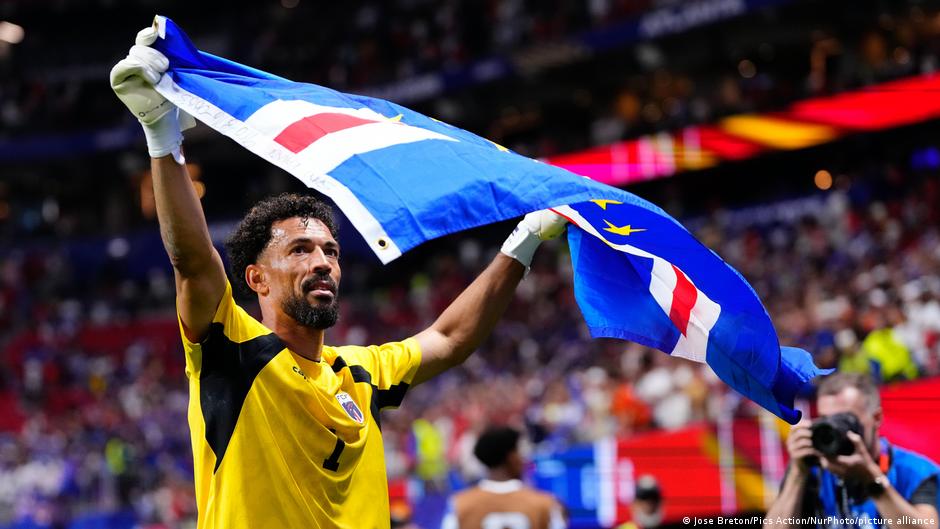
From unknown, experienced goalkeeper to global fame and an additional 6 million social media followers in 90 minutes, Vozinha’s story is one that has made the World Cup so special around the world.
The Cape Verde stopper produced an excellent performance as his side drew 0-0 with European champions Spain on Monday. But the tears he shed after the game weren’t just joyful ones.
He told reporters, “I cried because I grew up with my grandparents and unfortunately they weren’t here; they died a few years ago.”
“They were everything to me, to my life. I also cried because my mother couldn’t come here because of the visa. We couldn’t come here because of the money we had to pay for the visa.” [complete it] On time. I would like him to stay here, but I’m also very happy.”
The visa issue has been a major topic of the World Cup, mainly in the United States. Cape Verde was added earlier this year to the list of countries whose citizens are required to deposit a refundable bond of up to $15,000 (€12,931) before traveling to the country.
Travel restrictions continue to impact World Cup
As well as the bond, citizens of Haiti, Ivory Coast, Iran and Senegal are banned from traveling entirely, while there have been widespread reports of fan visas being rejected from several countries. On the eve of the tournament, the Somali referee, Omar Artan, was denied entry due to “investigative concerns”, making him “inadmissible”, according to the US Customs and Border Protection agency.
No further details have emerged on these concerns, but US President Donald Trump in December described Somalis as “trash” and told immigrants from the African country to “go back where they came from” and that “their country is no good for some reason.”
All this despite a promise from FIFA president Gianni Infantino, who awarded Trump the inaugural FIFA Peace Prize last year, that “fans from all over the world will be welcomed” to the tournament. In the same August 2025 statement, Infantino said the visa process would be “smooth, ensuring that those who qualify will be able to visit with their fans.”
Iran separated from one team in World Cup
For many fans, that hasn’t been the case. But it has also created problems for the teams and their support staff, particularly in Iran. While the framework for a settlement in the US-Israel war with Iran has been agreed, the conflict means the Iranian team is operating under different conditions to the other 47 teams in the tournament.
Iran coach Amir Ghalenoui said his team were being “pressed” after a late change to their travel plans following Monday’s 2-2 draw with New Zealand. Galanoi’s team moved base camp from Arizona to Tijuana, Mexico shortly before the tournament and must leave the United States after each match to return. Ghalenoi said he thought the team would stay overnight in Los Angeles after the match but was forced to leave.
“We were supposed to stay here tonight to recover and return tomorrow at lunch time, but they did not allow us,” Ghalenoi said. “To be honest, I don’t know why. I think our team is probably the most harassed in the entire World Cup.”
It was not immediately clear what prompted Gelenoi to step down. But forward Mehdi Taremi said sanctions on the Iran team have put them at a competitive disadvantage.
Despite dissatisfaction, Infantino visits Iran team
“It’s not good for us. I think it’s not good for football,” he said. “I think FIFA has to help us even more than that,” Taremi said, adding that he believed the team’s preparations had been rushed. He said Infantino had visited the Iran dressing room before the match.
“He wants to try to help us, but it’s also about other things,” Taremi said.
The FIFA President later posted about the match on social media, using the FIFA tagline “FIFA Unites the World” as part of his text.
Iran is also coping without many officials and media workers. They are unable to travel due to visa restrictions, causing coaches to take on additional responsibilities on the bench.
“The federation is absent here. Our media is not here. Our management team, many of them are not here. We used to have a part of a coaching team to help with replacement, but we didn’t have that. People from the technical sector had to deal with it,” Ghalenoi said.
Edited by: Chuck Penfold