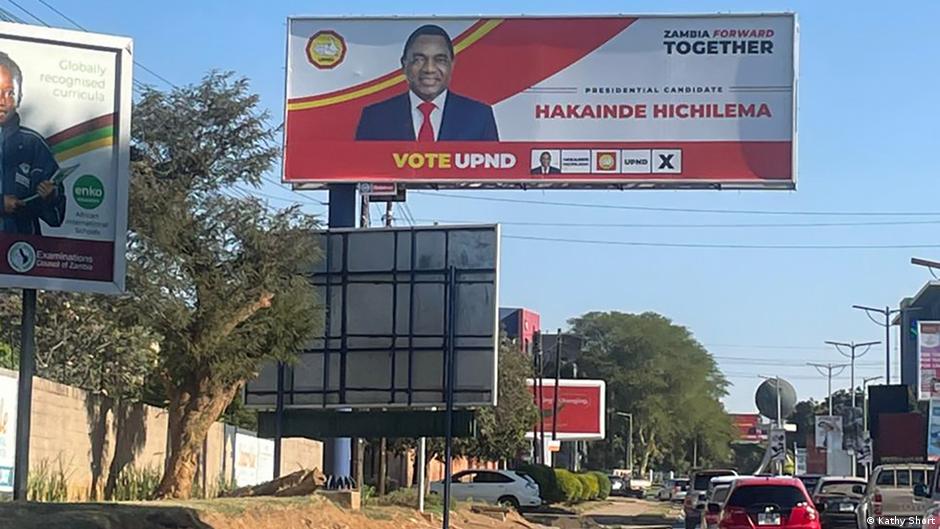
Zambia’s general election is scheduled for August 13, 2026. For many Zambians, the main concern is more jobs, especially for young people. Inflation remains a major economic challenge, with double-digit price increases continuing to exacerbate the cost of living crisis. But the stakes go beyond Zambia’s borders. The election results could impact investment in critical minerals and economic reforms. It could also shape Zambia’s relations with major global powers such as the US, the EU and China.
Political parties are mobilizing across the country, focusing on unemployment, poverty, electricity shortages and healthcare. “These elections will shape the future and unity of Zambia. Peace and stability are essential to economic growth and maintaining investor confidence in key sectors such as mining,” Bizek Jube Phiri, a historian and political analyst at the University of Zambia, told DW.
Fourteen presidential candidates have been approved to contest the elections, underscoring Zambia’s competitive political landscape. Outgoing President Hakainde Hichilema of the ruling United Party for National Development (UPND) is seeking a second term.
His administration has prioritized debt restructuring and fiscal discipline. They also hope to attract more investment in mining. Supporters say these policies are strengthening the economy, while critics say the benefits have still not reached ordinary households.
Among President Hichilema’s main challengers is Brian Mundubile, leader of the Tonse Pamodzi Alliance, who is campaigning on cost of living, job creation and governance reforms. Other candidates include Fred M’Membe of the Socialist Party and Harry Kalaba of Citizens First. Former lawyer Given Katuta is the only female candidate.
The biggest issue in the minds of voters
For many Zambians, the election is about economic survival. Supporters of the ruling party, Sidney Ngandu, support Hichilema’s re-election. “President Hichilema is disciplined and hard-working. He should be given another term to continue growing the economy,” Ngandu told DW.
Frustration over rising prices is widespread. Pro-opposition security guard Richwell Mwambazi said the workers needed immediate relief. “Life is hard,” Mwambazi said.
“I want leaders who will improve wages, create jobs and protect workers.”
Young voters are also demanding change. First-time voter Natasha Khaziley told DW that her generation wants leaders who understand their struggles. “This is about the future we are inheriting. I want a leader who understands the challenges young people face, especially unemployment and the rising cost of living.”
Development expert Charity Musamba said tackling affordability should be a top priority. “The first issue that must be addressed in this election is the cost of living crisis. People want solutions that will help them afford food and other necessities.”
Apart from domestic issues, Zambia’s election is attracting unusual international attention due to its role as Africa’s second-largest copper producer after the Democratic Republic of Congo (DRC). Copper is an essential component of electric vehicles, renewable energy systems and infrastructure, increasing Zambia’s strategic importance in the global energy transition.
The Zambian government wants to promote copper production, positioning the sector as a driver of economic growth and foreign investment. Post-election stability is key to achieving those goals. “Investors want certainty,” Nicholas Menza, an economist at the Economics Association of Zambia, told DW. “Political stability and policy stability will be critical if Zambia is to attract long-term investment and achieve its ambitions to increase copper production,” Mainza said.
China’s hold in Zambia
China remains one of Zambia’s major economic partners, particularly in mining and infrastructure. Lusaka recently won a $1.5 billion (€1.3 billion) energy deal from Chinese state-owned company China Machinery Engineering Corporation (CMEC). The deal, which will include solar, wind and coal-fired projects, is expected to add 900 megawatts of power capacity as Zambia grapples with power shortages linked to drought and heavy reliance on hydropower.
Additionally, the United States has deepened engagement through the Lobito Corridor, a major rail and logistics project linking Angola, the Democratic Republic of the Congo, and Zambia. The initiative aims to transport minerals – particularly copper and cobalt – from Central Africa to Angola’s Atlantic port of Lobito for export to global markets.
The Lobito Corridor is also a component of a broader Western effort to secure supply chains for critical minerals amid rising global demand. “What happens in Zambia doesn’t just matter to Zambians,” former Zambian diplomat Anthony Mukwita told DW. “This will matter to global powers competing for access to critical minerals and seeking reliable partners in Africa.”
Relations between Lusaka and Washington have become strained in recent months. A proposed US-Zambia health financing agreement worth more than $1 billion is stalled due to disagreements over its terms and broader governance concerns. The standoff comes after Washington previously cut some of its health aid ‘Systemic theft’ Donated medicines, highlighting persistent weaknesses in Zambia’s public health system.
Zambia’s influence reaches beyond its borders. As a member of the Southern African Development Community (SADC), it plays an important role in regional trade and diplomacy. As the campaign heats up, voters will evaluate candidates primarily on the basis of jobs, prices and living conditions. But the outcome will be closely watched in Beijing, Washington and beyond.
Edited by: Crispin Mavakideau