24 June 2026
Flipkart, Amazon to boost instant commerce business
Walmart-owned Flipkart has said it plans to expand its instant commerce services in India.
Instant commerce, which allows delivery of goods within 30 minutes from neighborhood warehouses, is quite popular in India.
The company said it will focus on smaller cities and increase the number of its stores from 1,000 to 1,500 in the coming months.
Meanwhile, Amazon has also ventured into the instant commerce business and is also looking to expand in the country.
In a statement, Amazon said it is expanding its ultra-fast delivery service “Now” to 300 Indian cities, a huge jump from the 15 cities where it is active now.
Amid the service’s growing popularity in India, the government in January ordered companies to stop promoting their grocery delivery as a “10-minute” service, citing safety concerns aboard.
https://p.dw.com/p/5FyZp
24 June 2026
Government tightens foreign funding rules for NGOs
India’s Home Ministry has introduced changes to the Foreign Contribution (Regulation) Act (FCRA) that will impose higher penalties on non-governmental organizations (NGOs) for several offenses related to the receipt and use of foreign contributions.
According to an Indian newspaper report, NGOs that use more than 20% of foreign contributions on administrative expenses will now have to face a fine of Rs 1 lakh or 5% of the excess amount spent, whichever is higher. Financial Express.
The rules related to registration under FCRA have been significantly amended.
Reportedly, the new rules oblige organizations applying for foreign funding to clarify its exact purpose.
“Every application for registration shall state the purpose or purposes for which registration is sought” and shall mention the States or Union Territories in which the association proposes to undertake activities.
Under religious purposes, activities range from construction to renovation and maintenance of religious places, promotion of religious education and devotional music.
Since 2014, Prime Minister Narendra Modi’s government has tightened restrictions on nonprofit groups, suspending many and banning others from receiving foreign funding, accusing them of spending the money on “anti-national activities.”
In 2020, a major FCRA amendment banned transfers of foreign funds between NGOs, reducing the administrative expenditure limit from 50% to 20%.
https://p.dw.com/p/5FyH2
24 June 2026
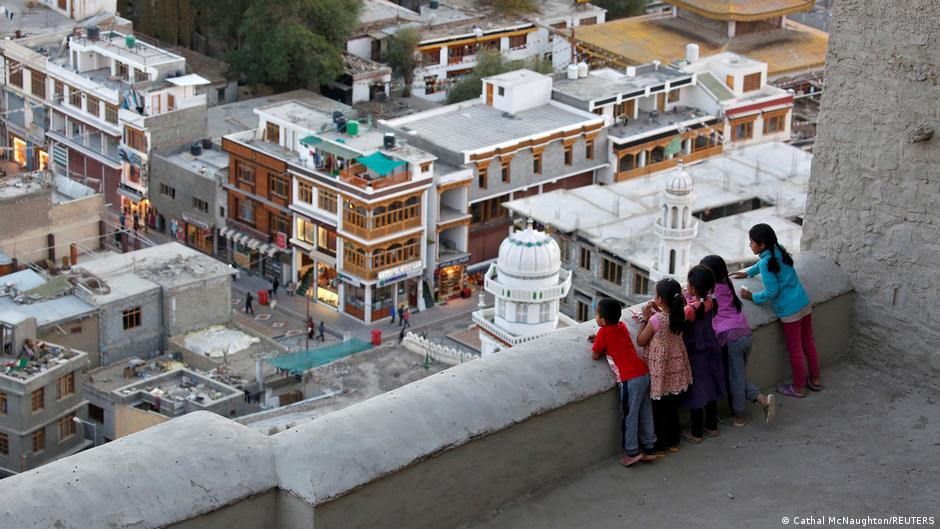
Business closed in Ladakh amid standoff with Delhi
Businesses remained closed in India’s Himalayan region of Ladakh on Tuesday on a call by the two main political groups representing the two regions that make up the union territory.
Leh Apex Body (LAB) and Kargil Democratic Alliance (KDA) called for protests to express their disagreement with the Union Home Ministry.
Business establishments and private institutions remained closed in most parts of the Union Territory. Thousands of people attended the rally demanding “credible talks” with the central government.
The groups have alleged that the government has agreed to proposals for constitutional safeguards for Ladakh along with taking over the bureaucracy.
Both groups accused the government of exacerbating the “confidence deficit” by failing to include key consensus reached during the talks on May 22 in the official minutes (MOM) of the meeting.
What do we know about Ladakh talks with Delhi?
The central government and groups have held several rounds of talks from 2023. The talks were halted after four people were killed and over 80 injured in alleged police firing during protests in Leh last September over the demand for statehood.
LAB and KDA have warned that if “two essential” agreements are not reflected in the last minutes, they will revert to their original demand of “full statehood and Sixth Schedule status for Ladakh”.
Inclusion in the Sixth Schedule of the Indian Constitution will provide protection to tribal lands, local employment and the delicate Himalayan ecology from outside groups.
In 2019, the Government of India abrogated Article 370 resulting in the region being separated from Jammu and Kashmir and redesignated as a separate union territory.
The decision was initially welcomed by Ladakhi residents but soon concerns grew over inadequate political representation.
https://p.dw.com/p/5Fxvq
Welcome to our coverage
hello! This is midhat from DW’s New Delhi studio. I am here to bring you all the things that are making headlines in IndiaToday.
Protests over government policies were seen in India’s Himalayan region of Ladakh. Businesses remained closed in both Leh and Kargil districts of Ladakh to register their dissatisfaction.
The Indian government has also revised foreign funding rules to make them more stringent for NGOs.
The biggest change has been made in the religious category.
Meanwhile, Walmart’s e-commerce arm Flipkart is looking to expand its “quick commerce” business in India.
Stay tuned as we continue to bring you more information about this and other incidents from across the country.
https://p.dw.com/p/5Fxvp