“Look, we can finally get this done.” This was the message the leaders of the three ruling parties wanted to convey to the public on Thursday morning, July 2. The leaders of the conservative Christian Democratic Union (CDU) and Christian Social Union (CSU) parties and the centre-left Social Democrats (SPD) held seven hours of talks at the Chancellery to reach their new 34-point reform package.
The reforms range from overhauling pension and health care systems to cutting billions in taxes, reducing bureaucracy and liberalizing labor laws. The success of these reforms will matter not only for the health of the economy and the stability of the ruling coalition, but also for the general mood in Germany.
German voters remain very worried
In general, things are not going well in Germany. Seven years later, the economy remains in crisis and has yet to regain momentum. According to the latest Deutschlandtrend survey conducted for the public broadcaster ARDThree-quarters of voters see this as a major problem. The findings are based on a survey of 1,317 eligible German voters conducted by polling firm Infratest Dimap from June 29 to July 1.
Currently, one in four employed people is worried about losing their job. Concerns about excessive immigration to Germany have decreased slightly, although a narrow majority remains concerned about “too many foreigners”.
Climate change and its impacts are once again firmly on people’s minds. In June, Germany suffered a heat wave with historically high temperatures exceeding 40 °C (104 °F). Now, more than two-thirds of people fear that global warming will destroy the foundations of life.
More investment to protect against heat
About 89% of respondents believe that policymakers should allocate more funds to ensure that infrastructure such as transportation networks, schools and hospitals are better prepared for future heat waves.
Additionally, 58% of respondents believe that climate protection should not be neglected even when facing other crises. However, larger differences emerge when party affiliation is taken into account. Among voters for the far-right Alternative for Germany (AfD), 71% disagree.
About 59% of respondents believe that the industry rather than individual consumers have greater responsibility when it comes to climate protection. However, 54% oppose incorporating the environmental costs of products into their prices, for example through a CO2 tax.
pension system challenges
In June, a commission of experts presented a package of measures to reform the pension system. The ruling coalition has now decided to implement all these measures.
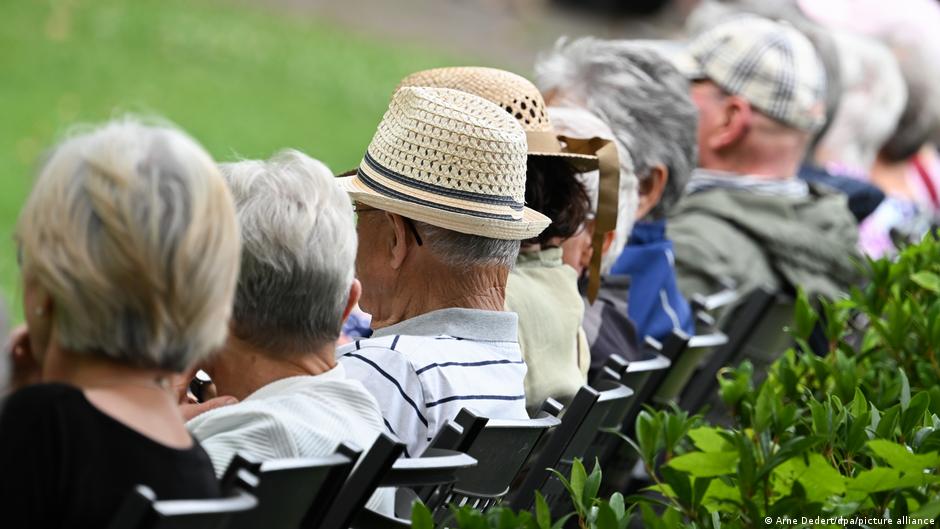
Demographic trends are placing enormous pressure on pension systems. As the proportion of elderly people increases, an even smaller number of working-age people must support them. This is becoming an increasing burden and is unfair to young people.
Retirement benefits have declined in recent years, and more than half of Germans currently in the workforce fear they will face financial difficulties in old age. This is another problem that pension reforms aim to solve.
However, more than half of Germans currently do not believe that the planned reforms will make the pension system more stable. AfD and left-wing party voters are particularly skeptical.
cuts are unpopular
Infratest Dimap surveyors also asked respondents about their views on specific measures. He found strong support for the idea that politicians, self-employed individuals and board members of corporations should also pay into the statutory pension insurance system. Most also welcome the introduction of a capital-backed supplementary pension system, in which employers and employees each contribute equal shares.
On the other hand, cuts such as linking retirement age to life expectancy or eliminating the option to retire at age 63 for long-term insured individuals remain unpopular. Overall, German voters are wary of the proposed package of measures: only three in ten respondents expect it to increase intergenerational fairness. Among those under 35, the figure is only two in ten.
Public opinion towards the government has not improved
This once again shows that German voters have lost faith in their government. In the latest ARD DeutschlandTrend poll, 86% of respondents say they are not satisfied with the work of the coalition parties – or not at all satisfied. The same feeling is strong among the voters towards the ruling parties. Among CDU/CSU voters, 36% are satisfied, while among SPD voters the figure is 27%.
Only 13% of those surveyed gave Chancellor and CDU leader Friedrich Merz a positive rating – a new low. Vice Chancellor and SPD leader Lars Klingbeil maintains a 21% approval rating, and AfD leader Alice Weidel is at 27%.
If general elections were held today, the AfD would become the strongest party nationwide. As in June, the party will get 27% of the votes.
Meanwhile, the CDU/CSU has fallen one point to 22% and is now at its lowest since November 2021. The SPD has also fallen one point to 12%. The Greens and The Left have each improved by one point and are currently at 15% and 11% respectively. The 5% threshold would cause all other parties to fail to enter the Bundestag, including the liberal Free Democratic Party, which is at 4%.
This article was translated from German.