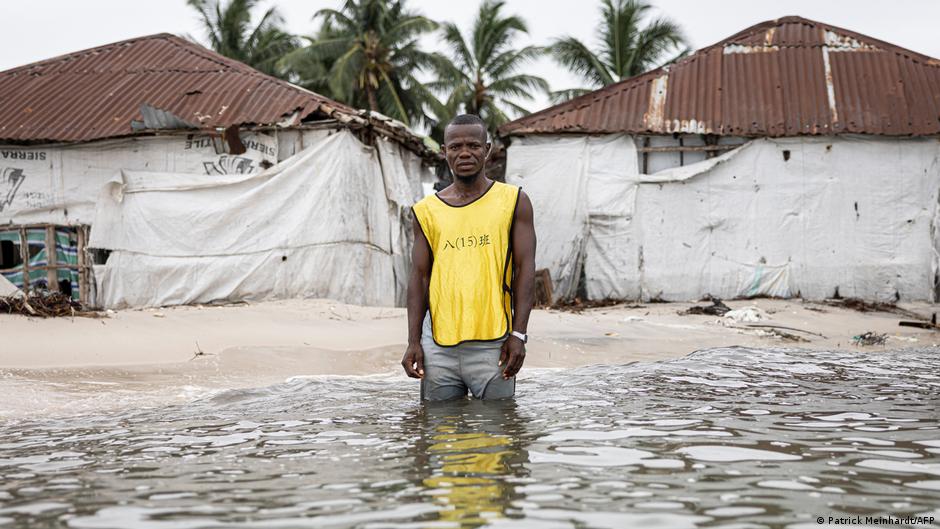
One in ten people still live in extreme poverty, more than two billion people face moderate or severe food insecurity and the number affected by climate-related disasters has more than doubled since 2015. This is according to data published in the United Nations reportToday.
Nearly a decade ago, the international community agreed to end all forms of poverty, fight inequalities and tackle climate change. United Nations set 17 goals 169 targetGoals such as zero hunger, clean water and sanitation, good health and well-being as well as access to affordable and clean energy are to be achieved by 2030.
While progress has been made in some areas, including nearly a billion people gaining access to safely managed drinking water, declines in new HIV infections and AIDS-related deaths, and reaching electricity to 92% of the global population, many other areas have fallen off track.
Nearly half of the targets are progressing too slowly, and 15% have fallen below the 2015 baseline.
Global extreme poverty is projected to reach 10% by 2026, just 3 percentage points below 2015 levels. Nearly one in four urban residents lives in slums or informal settlements. Furthermore, extinction risk is deepening across all species groups if global temperatures reach 1.43 °C (2.57 °F) above pre-industrial levels in 2025. The concentration of CO2 in Earth’s atmosphere is the highest it has been in two million years.
UN Secretary-General Antonio Guterres urged countries to step up action due to a record 23% drop in official development assistance in 2025.
“Let us together make a decisive final effort to achieve the Sustainable Development Goals and build a healthy, prosperous future for all,” he said.
Falling short: looming crises and a growing financial gap
Progress has been disrupted by increasingly violent conflict, with years of progress destroyed in a matter of months.
While the annual financing gap for the SDGs in developing countries stands at nearly $4 trillion (€3.5 trillion), global military spending has reached record highs.
The war in the Middle East has disrupted maritime traffic, blocking energy, fertilizer and food corridors. This could have serious long-term consequences for global food security, especially in parts of Africa and Asia.
Millions of people struggle to access adequate food and water
Although global hunger decreased slightly in 2024, it was still higher than in 2015. More than 8% of the world’s population experiences chronic hunger, and more than two billion people do not have access to adequate food at some time during the year.
The progress was largely driven by post-pandemic economic recoveries in South Asia and Latin America. Hunger continued to increase in Western Asia and Africa.
Billions of people have access to clean drinking water, but water stress (how much fresh water is extracted relative to how much is available) remains severe in many areas. Ten percent of the world’s population lives in countries with high or severe water stress levels.
Nearly half of the world’s countries have reported declines in river flows, with Latin America, the Caribbean, and parts of Central and Southern Asia most affected.
As climate risks increase, vulnerability also increases
The years from 2015 to 2025 were the hottest on record and greenhouse gas emissions continued to increase, reaching a new record high in 2024.
The oceans, which absorb about 90% of the excess heat being stored in the atmosphere, reached their highest levels on record for the ninth consecutive year. Warming of the oceans means melting of ice sheets resulting in rising sea levels. They also fuel tropical storms and degrade marine ecosystems such as coral reefs.
Natural disasters, exacerbated by climate change, are increasingly killing people, destroying infrastructure, reducing incomes and reducing dependence on credit and humanitarian assistance. While the number of deaths from natural disasters has declined by 65% over the past decade, the number of people affected by disasters has more than doubled.
better access to electricity; Sub-Saharan Africa left behind
Modest growth over the past few years means that 92% of people now have access to electricity, but more than 650 million people are still without electricity. Projections suggest that access will increase by only half a percent by 2030.
Central and Southern Asia have made the most progress, while Sub-Saharan Africa is home to 86% of people globally without electricity.
The share of renewable energy continued to grow but not at the scale required to achieve international energy, climate and development objectives. Installed renewable energy-generation capacity is set to reach a record global level in 2024, with developing countries driving this growth.
Slums are increasing due to increasing housing crisis
While some regions have seen declines in the share of people living in slums, the total global number has exceeded one billion.
“We need to act, and fast,” UN Habitat executive director AnaClaudia Rossbach told DW. “We are living in a global housing crisis,” he said, adding that one in four people does not have access to safe drinking water, sanitation and safe housing.
“If we don’t properly address housing, informal settlements, all the SDGs are at risk,” he said, calling housing the “ceiling” necessary to achieve all the SDGs.
“How can you improve access to education if kids don’t have a safe place to be at home and do their homework. How can you address health goals if you don’t have healthy homes and healthy neighborhoods.”
He said Africa and South-East Asia, where there are large numbers of informal settlements, are particularly at risk, as these regions are expected to see more than two billion people moving into cities.
what now?
The UN is urgently calling on countries to close the financing gap, accelerate the energy transition and strengthen multilateral cooperation, among other things. It says the choices made over the next four years are critical to reaching the 2030 goals, which will have a lasting impact on future generations.
“More than a decade of implementation has shown what is possible,” said Li Junhua, UN Under-Secretary-General for Economic and Social Affairs. “The task now is to scale up work with the urgency, investment and collaboration needed to deliver on the promise of the 2030 Agenda.”
Tim Schauberg contributed to this report.
Edited by: Tamsin Walker