Has the fragile US-Iran truce broken down?
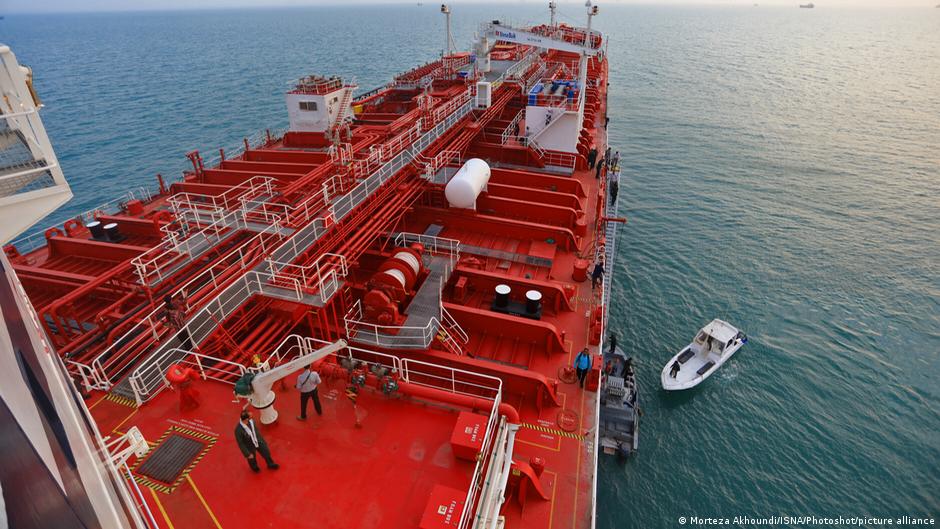
Iran has resurfaced after Tehran attacked at least three commercial ships in the Strait of Hormuz on Tuesday, according to US and maritime officials.
The attacks targeting a Saudi oil tanker and a Qatari liquefied natural gas (LNG) carrier prompted the United States to revoke temporary sanctions waivers on Iranian oil exports.
The major concession in the memorandum of understanding (MoU) agreed by the US and Iran last month allows Tehran to resume oil exports after its tankers were grounded due to a US naval blockade.
In further retaliation, US Central Command (CENTCOM) said on Wednesday it had struck more than 80 targets in Iran, including air defense systems, radars and more than 60 small boats used by Iran’s Islamic Revolutionary Guard Corps (IRGC) to harass shipping.
The US military said it launched fresh attacks on about 90 targets on Thursday.
CENTCOM said it wanted to “impose heavy costs to target and attack commercial shipping operated by innocent civilians in international waterways.”
Iran retaliated on Wednesday with fresh missile attacks on Gulf countries, with airstrike sirens and explosions reported in Bahrain and Kuwait. More attacks were reported on Thursday.
Traffic through the strait, which had resumed after the ceasefire agreement, has come to a halt again, Bloomberg reported Thursday, citing shipping tracking data.
Reacting to the escalation, maritime security firm MARISKS warned on Wednesday that the tit-for-tat action “marks a return to direct military confrontation.”
Speaking ahead of a NATO summit in Turkey, US President Donald Trump said the memorandum of understanding with Iran is now “over”, adding that “dealing with them is a waste of time.” [Tehran]”
Meanwhile, China and Qatar called for an immediate de-escalation of tensions, while German Defense Minister Boris Pistorius called on Tehran to stop provoking Washington and end attacks on ships.
Then why is Iran targeting ships in Hormuz?
Iran is trying to maintain its control over the Strait of Hormuz, the narrow waterway that before the war carried a fifth of the world’s oil and gas exports from the Gulf to the rest of the world.
Iran effectively closed the strait after US-Israeli air strikes on February 28 killed several Iranian officials, including Supreme Leader Ali Khamenei. Later, before a fragile ceasefire agreement was reached last month, Iran sank about a dozen ships captured in the strait.
In the days before Tuesday’s attacks, peace talks had made little progress on several outstanding issues, including long-term US sanctions relief and Iran’s nuclear ambitions.
Iran has repeatedly used Hormuz as leverage in negotiations when diplomatic progress has stalled, as well as attacks on Gulf states such as Saudi Arabia, the United Arab Emirates and Qatar.
Attacking these major oil producing countries and key US allies is seen by Tehran as a way to put pressure on Washington and spread instability so that the Middle East region feels the cost of war.
What advantage does Iran really have?
Repeated US-Israeli attacks have decimated Iran’s military. Since Tehran cannot defeat the US military in a conventional conflict, it is using asymmetric warfare as an advantage.
While Iran does not legally own the strait, it controls the northern coast, several strategic islands, and a beachhead that allows the IRGC to monitor and threaten passing ships.
Iran then relies on fast-attack boats, coastal missiles, mines, and drones to attack tankers, disrupting the world’s energy supplies without an all-out naval war.
According to reports, Iran has also started charging a toll of up to $2 million (€1.75 million) per ship for safe passage through Hormuz, a move described by maritime experts as illegal and unenforceable.
Iran insists that ships use its designated shipping lanes through its northern territorial waters, while the US supports using the lanes closest to Omani waters.
However, Tehran’s leverage is not unlimited. The US responded with its own naval blockade of Hormuz, preventing Iranian ships from exporting oil, cutting off an important source of income.
Iran was exporting oil at below market prices, mainly to China, in defiance of US sanctions.
Tehran uses a shadow fleet of tankers that frequently change flags, disable tracking and use ship-to-ship transfers to avoid detection.
Yet, without sanctions relief and the potential resumption of the US Navy blockade, the Iranian regime now risks complete economic collapse.
According to the Foundation for Defense of Democracies, a Washington-based think tank, Iran has suffered $144 billion in economic damage from the war, as well as billions of dollars in lost oil sales during the blockade.
The country’s currency, the rial, has fallen to a low of around 1.7 million to the dollar, and inflation has soared to more than 88%.
so what happens now?
In its latest statement, MARISKS said that revoking Iran’s sanctions exemptions “undermines the political foundation of the peace agreement” and reduces incentives for continued restraint.
The maritime intelligence firm warned that “the likelihood of further escalation increases significantly.”
While Trump said negotiations would likely continue, he labeled Iran a country led by “sick people” and said he did not want to engage with the regime.
Bloomberg cited an unnamed US official as saying that Tehran needed to behave responsibly to enjoy the benefits offered by the MOU. However, the official said US negotiators would continue to work in good faith.
But Iran remains defiant, with Parliament Speaker Mohammad Bagher Qalibaf warning on Twitter: “The era of bullying and extortion is over. It leads nowhere. We do not bow.”
As oil prices rose 5% on the latest increase, some experts warned that further US strikes were unlikely to change Tehran’s strategy.
Dennis Citrinowicz, a visiting fellow at the Atlantic Council think tank, wrote on X, “Instead, they risk pushing both sides away from a negotiated outcome…Washington and Tehran both still seem to like it.”
Editor: Andreas Becker
Editors’ note: This article was first published on July 8, 2026 and was updated on July 9 with the latest developments.