Nearly a week after the United States became the last co-hosts to be eliminated from the 2026 World Cup, the fallout from the suspension of striker Folarin Balogun’s red card ban continues.
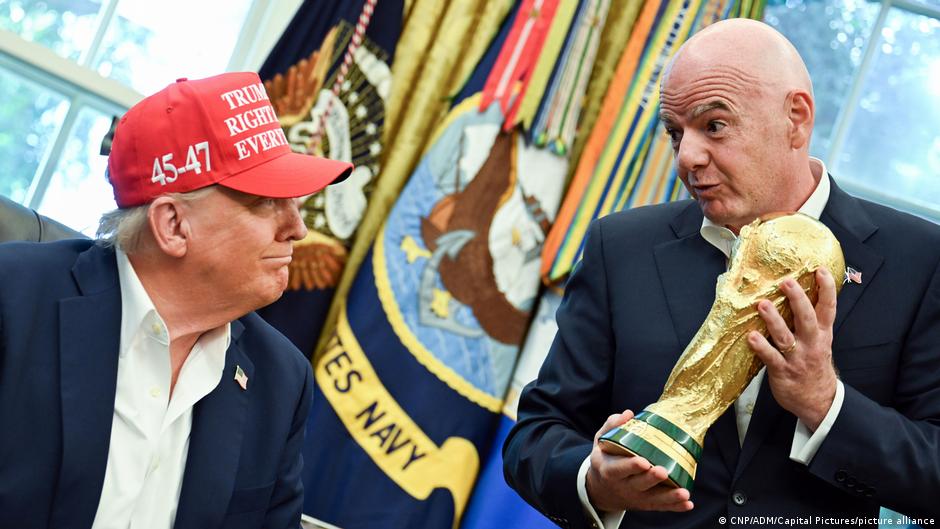
Following the intervention of US President Donald Trump and despite FIFA having laws prohibiting political interference, organizer FIFA took the almost unprecedented decision to suspend the forward’s ban.
“FIFA’s judicial bodies are independent,” FIFA president Gianni Infantino said, defending the process.
“They operate autonomously… their independence is essential to the credibility and integrity of football, and must always be respected.”
This particular decision was taken by FIFA’s 18-strong Disciplinary Committee, or at least that was the impression given by FIFA communications. but a UK newspaper report many times The committee’s chairman, Mohammed al-Kamali, was said to have made the unilateral call on Monday.
“Senior football figures have questioned why FIFA has refused to publish the written reasons for the Balogun decision, leading to a lack of transparency in the matter, or even explain why Balogun’s ban was waived.” Times Reads the report.
“This is the first time that someone has been sent off since the automatic suspension for red cards was introduced at the World Cup.”
Committee decisions are consistently taken by one person
FIFA has not yet responded to questions from DW or any other outlet on the matter. Al-Kamali is a UAE lawyer who has strong ties to the US and heads the committee made up of legal experts, practicing lawyers and officials from football associations.
However, the power of the committee now rests almost entirely in al-Kamali’s hands. financial Times reported last week The body’s last 110 published decisions were made by a single person, with al-Kamali “allowed to make decisions alone or delegate that power to someone else. Not all decisions are made public.”
Despite several other controversial decisions, no other decisions have been made by the disciplinary committee at the World Cup.
Infantino wants to extend the World Cup even further
Although politics has been a constant topic, the newly expanded tournament has been widely praised as a success on the field. Now Infantino has indicated that he wants to expand from 48 to 64 teams for the next men’s tournament in 2030.
“When organizing the World Cup, it is important to organize it for the whole world. Not just Europe and South America, but effectively for the whole world. Every country should be allowed to dream of participating in the World Cup,” he told Swiss pay TV station Blue Sport.
“You can see that the quality of the teams is extremely high, and it is getting higher and higher all over the world.”
Infantino called the extension to 2026 a “huge success” and nine out of 10 African teams advanced to the knockout rounds. However, only two of the nine Asian teams advanced from their group and only one team from outside Europe and South America (Morocco) advanced to the quarter-finals.
South American governing body CONMEBOL made an official proposal to expand the tournament to 64 teams in April 2025, but no decision has yet been made on the 2030 tournament.
The 2030 World Cup will primarily be co-hosted by Spain, Portugal and Morocco, with the first three matches being hosted by Argentina, Uruguay and Paraguay. This is ostensibly to celebrate the centenary of the World Cup, but it is also being seen as a way to pave the way for Saudi Arabia to host in 2034 as it means three continents (Europe, South America, Africa) get the chance to host a competition together, thus fulfilling FIFA’s allowance to rotate tournaments around the continents.
Further expansion has not been entirely well received by other continental associations. Victor Montagliani, head of North American and Caribbean federation CONCACAF, said it “doesn’t feel right” and would harm the “broader football ecosystem”. His counterpart in the Asian federation Sheikh Salman bin Ibrahim Al Khalifa said such a move would mean “anarchy”. The European federation, UEFA, which has an ongoing dispute with FIFA, has said it is a “bad idea” for both the tournament and the qualifying process. Complaints of increased workload on players are also likely to arise once again.
Despite the criticism, Infantino is expected to be easily re-elected to another term next year, which would help him secure an extension.
Edited by: Chuck Penfold