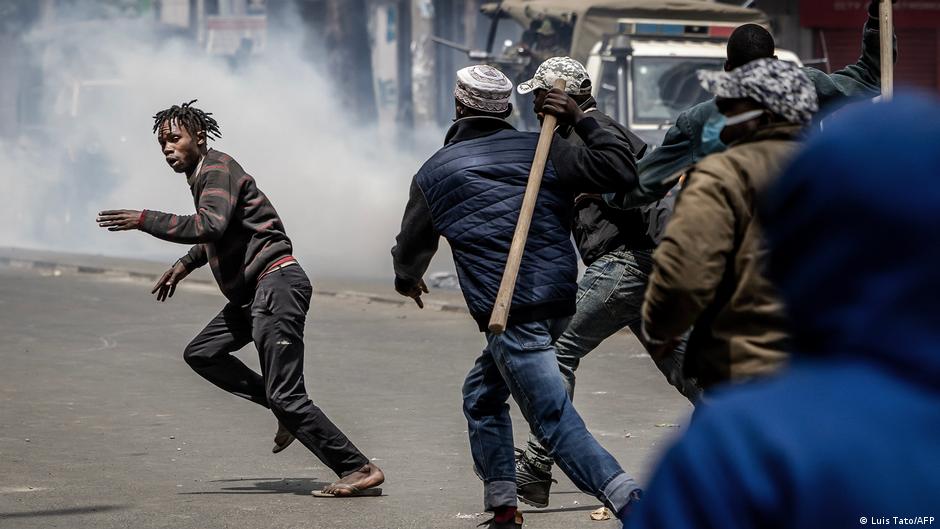
For Brian Ongor, a resident of Kenya’s capital Nairobi, seeing groups of young men in public has become a source of concern rather than a normal part of urban life.
“Whenever you see a group of young people, you get nervous because you never know what will happen to you next,” Ongor told DW. “Everyone is in constant panic. The general sense of security is diminished. It feels as if you are living in a jungle.”
Their concerns reflect growing fears among many Kenyans, especially after the violent disruption of opposition-linked meetings in the cities of Kisumu and Nyahuru this month.
So-called “hooligans” are being hired dozens or even hundreds at a time to intimidate rivals or disrupt public events ahead of Kenya’s 2027 elections. News agency Agence France-Presse (AFP) said police often turned a blind eye.
In June, a civil society and church forum at Nairobi’s All Saints Cathedral was disrupted during a discussion on public finance management.
according to a statement Published by Amnesty International Kenya on Monday, “The thugs publicly confessed that they were sent by some powerful government officials to carry out the heinous attack.”
The incidents have reignited debate about the increased use of politically connected gangs to disrupt public events ahead of Kenya’s August 2027 general elections.
The AFP news agency reported that “Kenyan politicians are hiring armed thugs for less than $4 a day as poverty and brutal political competition threaten to spark uncontrolled violence ahead of elections next year.”
Nairobi businesswoman Priscilla Njoroge urged young Kenyans not to allow themselves to be exploited for political violence. She said, “I would like to tell those goons who are abusing not to play with our peace because violence destroys everything. The damage is too much.”
University student Paul Mwai also raised questions on the response of security agencies. He said, “Yesterday the police were seen protecting the goons. I did not see even a single goon being dealt with decisively by the same government which keeps issuing threats.”
Ruto replies
The growing concern has led to a reaction from the government.
Speaking last month at the funeral of Zipporah Kosgey, wife of veteran Kenyan politician Henry Kosgey, Kenyan President William Ruto acknowledged the growing presence of political gangs and warned that violence could undermine the democratic process.
“These hooligans are innocent children who are being used by bankrupt politicians. They spread chaos all around, attack people and cause destruction,” Ruto said. “All the goons should be dealt with sternly and those who are giving money to these youth should also be traced.”
Security analyst Byron Adera says the use of political gangs is nothing new, but it appears to be becoming more organized in the run-up to Kenya’s elections, which are scheduled to be held on August 10, 2027.
“The political enterprise is driven by hooliganism, which is really what paid thugs are using to vie for political power,” he told DW. He said unemployed youth are particularly vulnerable to recruitment.
Adera warned that political violence and perceptions of partisan policing could undermine democracy.
“You have to ask yourself whether ultimately what drives the goons is the will of the people or the will of the politicians,” he said.
Political economist Sheila Owigo Olang, a governance analyst, says the recent wave of attacks appears more open and organized than in previous election cycles.
“From the faces of the hooligans, it looks like they have very strong sponsors because there are no consequences,” he told DW.
Olong said the attacks have extended beyond campaign rallies to churches and other public places, instilling fear among women seeking political office.
“Women are the largest voting demographic and when they stay at home it leads to illegitimate results,” she said. He also said that he had personally experienced political intimidation. “I have been a victim.”
lessons from 2007
Kenya has experienced election-related violence before. More than 1,000 people were killed following the disputed 2007 presidential election, before a power-sharing agreement brokered by former UN Secretary-General Kofi Annan helped end the crisis.
The Kofi Annan Foundation warns in its latest electoral vulnerability index Kenya faces a high risk of election-related violence ahead of the 2027 elections, with political tensions, economic hardship and public distrust in institutions cited among the key drivers.
As East Africa’s largest economy and one of the region’s most influential democracies, Kenya’s elections are closely watched across the continent.
With just over a year left until Kenya’s August 2027 general elections, analysts say curbing political violence will be essential to ensure the political contest is decided by voters rather than through intimidation.
Adera says if that happens, it could determine whether the election reflects “the will of the people” or “the will of the politicians behind the hooligans.”
Andrew Wasike contributed to this report
Edited by: Keith Walker