Europe’s carbon market rarely makes headlines. But it has become one of the world’s most influential climate policies.
The bloc wants to become carbon-neutral by 2050, and its carbon market is a central tool for achieving that goal.
The European Commission is expected to soon present a proposal for the next revision of the European Emissions Trading System (ETS), and the question is whether it will strengthen or weaken the system.
Industrial leaders, including parts of Europe’s steel sector, which have already invested in clean production, are hoping for a stronger system. But what exactly is emissions trading and how well does it work?
What is emissions trading system?
An emissions trading system (ETS) puts a price on pollution. Under the scheme, companies will have to hold permits for the greenhouse gases they emit.
The European system includes aviation, oil refineries, coal-fired power stations, steelworks, cement, glass and paper production, as well as parts of the chemical industry and shipping. Overall, these sectors are responsible for up to 40% of EU emissions, including around 10,000 industrial facilities, factories and power plants.
The idea is simple: the more a company pollutes, the more it has to pay. The EU sets overall emissions limits and issues a limited number of allowances. Each allows a specific amount of greenhouse gases to be released. These allowances can be traded in the carbon market.
It creates a carbon price that is designed to incentivize companies to cut their emissions as quickly as possible. The revenues generated by the European system are intended to help finance the transition towards a green economy. Emission limits are lowered every year to keep climate goals within reach. Under current rules it declines by 4.3% annually.
Where does the system work and where does it fall short?
According to the European Environment Agency, the EU’s environmental authority, the strongest results came in the energy sector. Emissions from all stationary industrial sites covered by the system are to fall by 51% between 2005 and 2024.
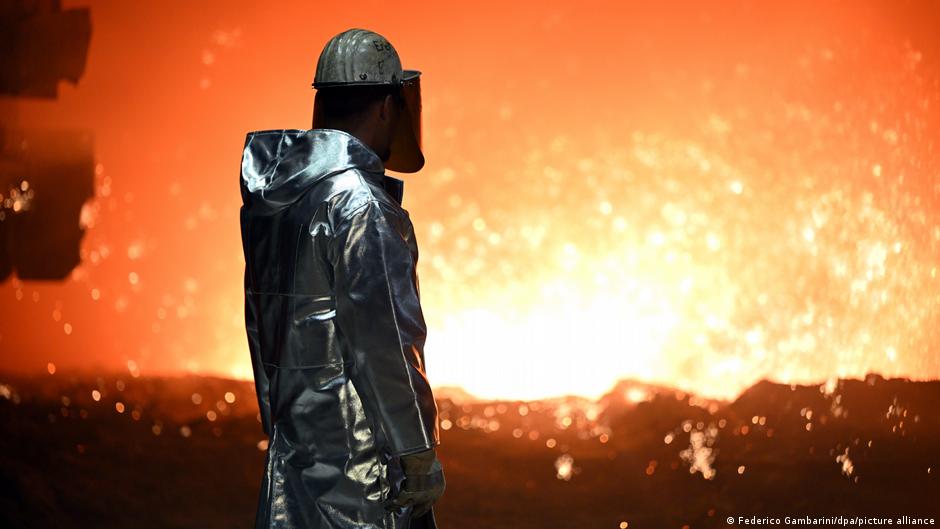
The energy-intensive steel industry now emits about 20% less than before the plan started.
Aviation tells a different story. According to the NGO Carbon Market Watch, emissions continue to rise there because the ETS captures only a small part of the region’s full climate impact.
One of the most powerful levers of the system is one of its central weaknesses: the free allocation of emissions allowances.
These were introduced as a temporary measure to protect the industry during the transition. Yet they remain widespread two decades after the ETS system was introduced. According to Carbon Market Watch, about 90% of industrial emissions are still covered by free allowances. This means that industries pay the full carbon price for only a small portion of their CO2 emissions.
The current plan is to phase out these free permits gradually, but industry groups are pushing back.
“In short, it’s big oil and petrochemicals that are lobbying heavily against it. And they’re joined by some big manufacturing sectors that are predominantly coal-based,” said Wijnanda Stoff, EU policy lead at Carbon Market Watch.
Stouffs says some companies receive more perks than they need and essentially make a profit by selling the rest..
The EU carbon market: a global blueprint with flaws?
According to the World Bank, there are now more than 35 emissions trading systems in operation around the world.
Stouffs says one reason for this is that the EU was an early mover and its system became a blueprint for other countries.
The second is the EU’s Carbon Border Adjustment Mechanism (CBAM), which imposes a carbon cost on certain imports. Its aim is to prevent imported products from gaining an unfair advantage over goods produced in Europe under strict climate rules.
“There has been a massive increase in emissions trading systems since the introduction of the CBAM: Indonesia, the Philippines, India, Turkey – they all already have one or are working very rapidly to create one,” Stouffs said.
He sees this as part of the “Brussels effect”: the ability of EU regulations to influence regulations beyond Europe’s borders.
He said, “We have put a price on carbon. Other countries are following suit and we need to. If everyone has a price on carbon, there is no competitive disadvantage. But we actually have a chance to solve climate change.”
But other countries may also copy some of Europe’s mistakes. Stoffs points to Türkiye and South Korea as examples. As in the early years of the European system, companies there may or may not offset part of their emissions through projects abroad.
Offsetting allows companies to continue funding projects elsewhere, such as tree-planting schemes. Environmental groups argue that the approach is often opaque and does not always translate into actual emissions reductions.
A World Bank analysis offers another cautionary example. It found no statistically significant effect of New Zealand’s emissions trading system on carbon dioxide emissions. A major reason was that agriculture, which accounts for about half of New Zealand’s national emissions, was largely excluded from the system.
fight in brussels
The next chapter of Europe’s carbon market is now being fought in Brussels. In a recent letter, Sweden’s Minister for EU Affairs Jessica Rosencrantz argued that: “Maintaining a sufficiently ambitious linear reduction factor is the most important element in preserving investment incentives for the industrial transition.”
He also called for emissions from waste incineration to be brought under carbon pricing.
Some business groups want the opposite, pushing to delay or weaken key elements. Their demands include phasing out free allowances and softening the EU’s climate strategy for 2040.
Lobby group BusinessEurope argues that inflation, geopolitical conflict, restrictions on global trade, high defense spending and a weak European economy are already putting the industry under pressure. It said further increases in the carbon price would add another significant burden to regions already strained by inflation and geopolitical conflicts.
The environmental policy spokesperson for the conservative EPP, the largest political group in the European Parliament, argues for ending free allowance allocations beyond 2039. But companies should receive them only under certain conditions.
“It is no longer acceptable for companies to use their free allowances to invest outside Europe. The most sensitive approach would be to link them to investment in the location concerned. This way, we secure jobs and at the same time strengthen Europe as an industrial hub,” the spokesperson said.
The political struggle has already yielded results. A second European emissions trading system covering fuels used in buildings and road transport was originally scheduled to launch in 2027. After political pressure, it was postponed to 2028.
The German Environment Agency (UBA) is warning against further delays or dilution. It argues that limiting free allowances and maintaining a strong carbon market is essential if the EU is to meet its climate targets.
Edited by: Anke Rasper, Sarah Stephan