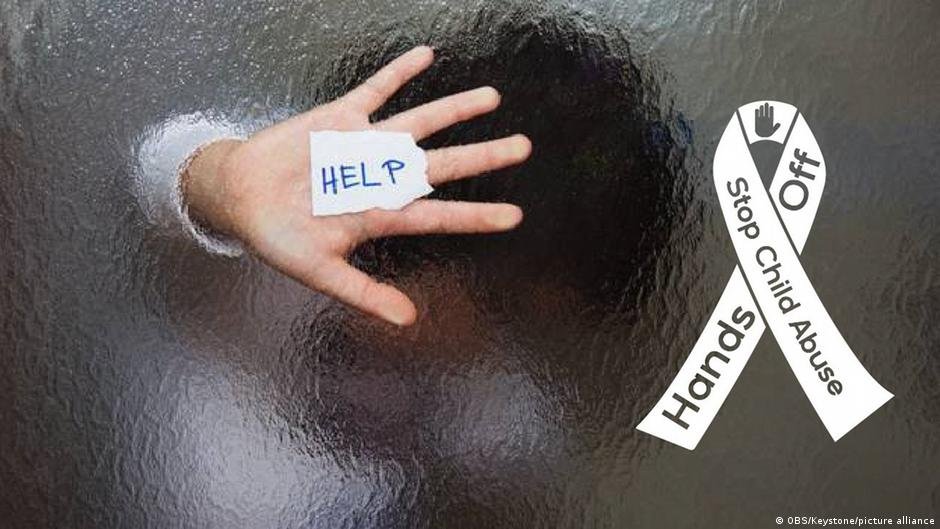
Leonie Kirschstein knew that the number of cases of sexual violence involving children and adolescents would not decrease. The psychologist works for a registered non-profit organization Dark Bitter EVWhich has served as a support center for young victims in the city of Cologne, West Germany, for almost four decades. This pioneering organization counsels victims, conducts educational outreach in schools and even stages plays on the subject of sexual violence.
Kirschstein, who worked for Jarbiter for three years, told DW that the number of unreported cases was extremely high: “Crime statistics only include cases that are reported to the police. But not those that we deal with every day, such as cases involving peer violence. In many cases, these are not reported at all, especially when the children are still very young. This group makes up the largest part of the cases that we handle in our consultation process.”
Victims of sexual violence in every classroom
The issue of sexual violence is more topical than ever: The World Health Organization estimates that 1 million children and adolescents in Germany have experienced or are currently experiencing sexual violence at the hands of adults.
This means that, on average, in every German school classroom, there are one to two children who are victims of sexual violence. Kirschstein, who specializes in psychotherapy with children and adolescents, says: “We get new cases every day; parents, in particular, call for initial counseling. Unfortunately, I still find victims often wondering whether they themselves did something wrong – that is, whether they had clearly said ‘no’ and whether the perpetrator understood their refusal that way.”
German Interior Minister Alexander Dobrindt wants to keep IP addresses intact
Leonie Kirschstein’s comments align with “Federal Assessment of Sex Crimes Against Children and Adolescents 2025,” which was released in Berlin on July 21.
It said the number of cases of sexual exploitation of children and adolescents remains alarmingly high and has even increased in many areas. The number of crimes of sexual exploitation against minors under 14 alone is expected to increase from 16,354 to 17,126 in 2024.
Crimes related to “child pornography” and cases of sexual exploitation of children without physical contact have also reached new record highs.
German Interior Minister Alexander Dobrindt is sounding the alarm: “The high number of cases of sexual exploitation of children and teenagers shows that we must protect our children even better – especially in the digital world,” he said. Dobrindt told the media, “Criminals should not be allowed to feel safe and hide in the anonymity of the Internet. In the fight against these despicable crimes, our law enforcement agencies need effective tools like IP address logging to identify criminals, proactively prosecute them, and eliminate active abuse.”
BKA president warns of ‘cyber grooming’
To better prosecute cyber crime, the federal government is currently pushing for legislation allowing IP addresses to be retained for three months. Dobrindt is confident that such a law can be passed as soon as possible. He has also called for the establishment of the post of European Commissioner for the Prevention of Sexual Exploitation of Children and Adolescents.
Meanwhile, Holger Munch, chairman of the Federal Criminal Police Office (BKA), has warned against “cyber grooming”. This refers to adults intentionally contacting children and adolescents online in order to initiate sexual contact.
“More than 98% of all offenders are male, with an average age of about 24 years; victims are predominantly female and, on average, are just under the age of 12. The primary risk factor is a lack of awareness of the risks associated with one’s online behavior. While juvenile offenders act out of boredom or just to pass the time, adult offenders often have sexual motives and specifically target minors,” Munch said, adding that Often leads to further progress. Meeting and abuse.
Youth lack adequate legal protection
Kerstin Claus, the independent Federal Commissioner against the sexual exploitation of children and adolescents, is calling for better protection, especially for teenagers in Germany.
“Cases of ‘sextortion’ are increasing dramatically and cyber grooming affects almost one in three people between the ages of 14 and 17,” she said. “And yet it is not currently classified as a criminal offence.”
What is not a criminal offense does not appear in the statistics and what is not counted there is not prosecuted, Closs said. He warned, “That’s why teens must be protected from cyber grooming, and sextortion must be classified as a separate sex crime. The federal status report cannot even begin to reflect the true extent of sexual violence to which youth are exposed online every day.”
This article has been translated from German.