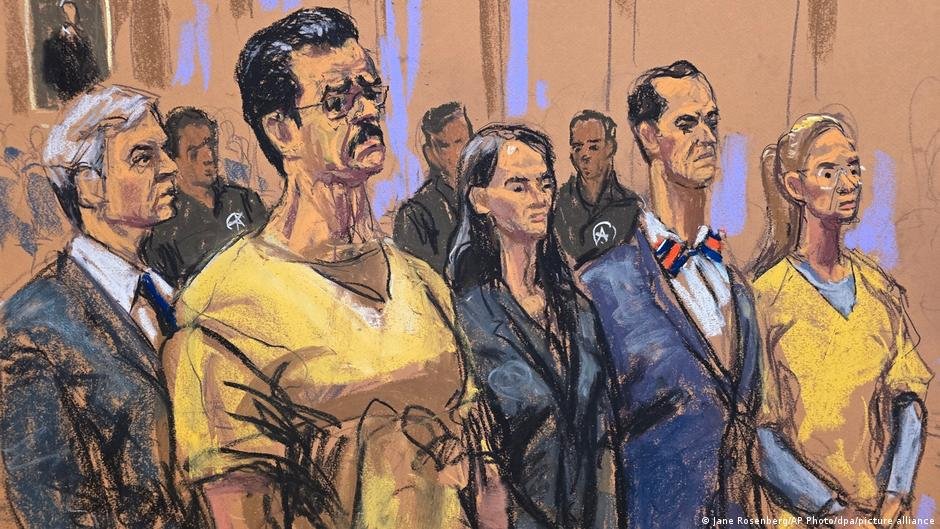
A US judge on Wednesday set a trial date for former Venezuelan President Nicolas Maduro and his wife Cilia Flores in New York, where they face drug trafficking charges.
Both have been detained since early January, when US forces entered Venezuela and seized them from their Caracas home.
The unprecedented midnight raid was praised by US President Donald Trump as a “surgical law enforcement operation” in a criminal case that was brought against the couple six years ago.
Maduro has maintained his innocence, describing himself as a prisoner of war and describing his capture as kidnapping.
Following a joint request by prosecutors and defense attorneys, Judge Alvin Hellerstein set a trial date of June 1, 2027 for Maduro and his wife.
Hellerstein also scheduled an upcoming hearing for November 17 to discuss defense motions, including challenges to the legality of how Maduro and Flores were captured and brought to the United States.
Maduro’s lawyer, Barry Pollack, told the judge on Wednesday, “All parties agree that this is a realistic schedule. We don’t think it’s going to slip, but obviously if anything comes up we will inform your honor.”
Maduro faces life imprisonment
US prosecutors have accused Maduro of using the power of the Venezuelan state to protect and promote illegal drug trafficking. He has also been accused of forming an alliance with a cartel to bring tons of cocaine into the United States.
If convicted, Maduro and Flores face possible life sentences in prison.
The pair sat separately at the defense table, surrounded by their lawyers, during the 15-minute hearing. He did not say anything during the proceedings. But as Maduro was led out of the courtroom by officers, he waved to an unidentified man in the courtroom gallery.
Pollack said his team planned to challenge the indictment on sovereign immunity grounds, and said that if successful, Maduro would not have to continue prosecution in the case.
Since Maduro’s ouster, Venezuela is being led by his former Vice President Delcy Rodriguez.
Rodríguez reestablished bilateral relations with the US, with Washington effectively taking control of Venezuelan oil exports.
In return, the US has eased sanctions on the country’s oil industry, while foreign companies have expanded oil and gas projects.
Don’t let algorithms hide news. If you rely on our team for reliable reporting, please take a moment Choose us as your preferred source on Google by clicking here And press the “Star” or “Favorite” button, so you always see our verified news first.
Edited by: Shawn Sinico