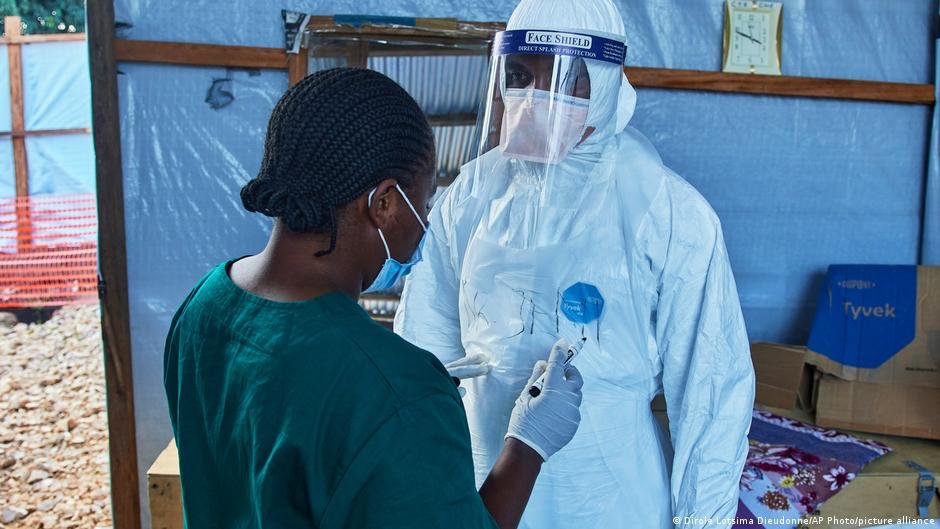
The World Health Organization (WHO) on Wednesday published an overview of new data documenting the rapid spread of the current Ebola outbreak in Congo.
Data from the Democratic Republic of Congo’s health ministry documenting cases detected between May 15 and July 19 show that 2,473 people in Congo and neighboring Uganda have been infected with the latest Bundibugyo strain of the virus, with 999 deaths recorded in Congo and two in Uganda.
Speaking at a health summit in Ghana on Wednesday, Dr. Jean Kassia, director general of the Africa Centers for Disease Control and Prevention, said 1,031 deaths had been confirmed.
“These people are dying. They’re dying because we don’t have vaccines, we don’t have medicine, we don’t have money,” he said.
The spread of Ebola – the fastest ever recorded – continues unabated because no vaccine or treatment exists for this new strain of the virus.
Until now, the deadliest outbreak – which spanned from 2013 to 2016 and infected 28,000 people, of whom 11,000 died – took almost eight months to reach the grim figure of 1,000 deaths.
Ebola is spreading faster than officials realize
Health officials in Congo say about 80% of new cases have emerged through unknown transmission chains, suggesting it is spreading far more quickly than authorities are tracking.
Overall, 82% of contacts linked to confirmed cases are being traced by authorities. That’s well below the 90%-95% rate WHO officials say is needed to contain the virus.
The highly contagious Ebola virus is spread through bodily fluids such as blood, semen and vomit, and is often fatal.
To date, infections have been recorded in five of Congo’s 26 provinces in the central African country of 116 million. The epicenter of the current outbreak is in Ituri province, which borders Uganda and South Sudan.
Health workers forced to flee
The severity of the situation is increasing due to attacks on health workers as well as the generally poor working conditions of these individuals.
Many health workers have been forced to flee affected areas out of fear for their safety, and others say they have not been paid for months.
Kassia told attendees of the Africa Health Summit that international efforts must be intensified to stop the spread of the virus.
“If we don’t stop this outbreak, it could become one of the worst Ebola outbreaks ever recorded in the world,” he said.
Don’t let algorithms hide news. If you rely on our team for reliable reporting, please take a moment Choose us as your preferred source on Google by clicking here And press the “Star” or “Favorite” button, so you always see our verified news first.
Edited by: Shawn Sinico