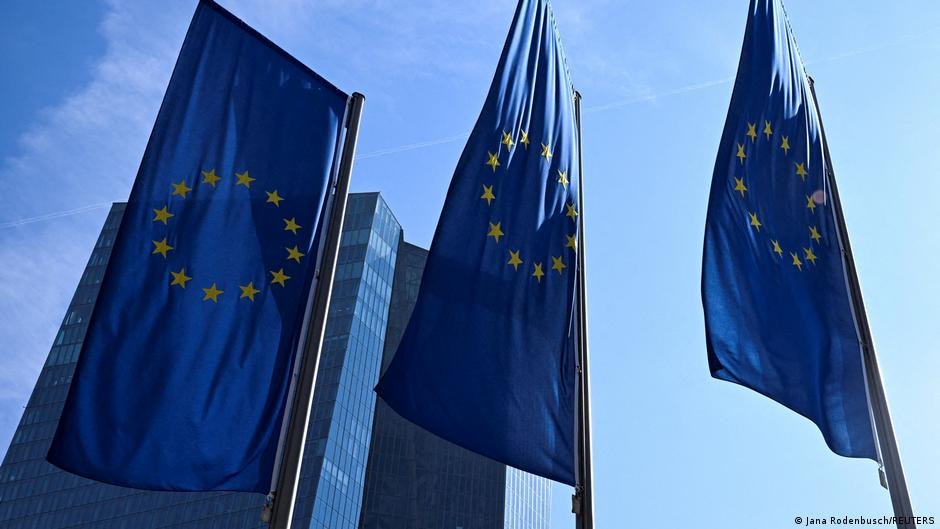
The European Central Bank (ECB) said on Thursday it would keep its interest rates steady for now, but indicated it was keeping a close eye on the economic fallout of the Iran war.
The ECB raised rates last month and hinted at more rate hikes in the future, but relatively quiet data in the weeks since has made a follow-up move appear less urgent.
Still, Thursday’s decision came as oil futures prices once again briefly topped $100 a barrel and firing between the US and Iran has again become a daily occurrence.
What did the ECB say about its rates decision?
The Frankfurt-based central bank for countries in the eurozone single currency area said the outlook for energy prices is currently in line with June projections, albeit well above levels recorded before the conflict in the Middle East.
“Uncertainty remains high and the full inflationary impact of the energy shock has not yet emerged,” The ECB said in a statement on its decision.
“It is therefore closely monitoring the intensity and duration of the shock as well as its indirect and second-round effects,” it said.
The ECB said it remained committed to its goal of keeping inflation stable at or near “its 2% target over the medium term”.
It said it would follow a “data-dependent and meeting-by-meeting approach” to determine the appropriate monetary policy stance, indicating that future increases are entirely possible if it is deemed necessary.
What are the Eurozone interest rates currently?
The ECB’s deposit facility, often considered the most important of its three base interest rates, is currently at 2.25%. Its prime refinance operating rate is 2.40% and its marginal lending facility is 2.65%. That’s down from a peak of 4.5% in 2023, following an inflation spiral following the COVID pandemic and Russia’s invasion of Ukraine.
These rates are the same as what the ECB charges moneylenders to borrow or deposit money. They are not the interest rates that typical borrowers and lenders pay for mortgages or receive on savings, but they can influence these rates significantly.
ECB President Christine Lagarde said at a news conference later on Thursday that “some governors” had considered raising rates during this month’s meeting.
Lagarde said, “The energy shock could be sharper and its impact on other prices and wages stronger than currently expected. The longer energy prices remain high, the greater the likelihood of broader inflation rising through indirect and second-round effects.”
But Lagarde also noted positive data in areas such as employment figures, industrial activity and plans to boost European defense spending.
He said most of the inflationary pressure lies in the cost of energy rather than other essential goods like food. Eurozone inflation declined from 3.2% in May to 2.8% in June, but energy inflation stood at 8.5% and 10.8% in those two months.
Raising interest rates is one of the tools available to central banks to control inflation. The idea is that by making borrowing more expensive, it discourages non-essential borrowing and economic activity and thus exerts negative pressure on demand and prices.
Edited by: Shawn Sinico
Don’t let algorithms hide news. If you rely on our team for reliable reporting, please take a moment Choose us as your favorite source on GoogleThat’s why you’ll always see our verified news first.