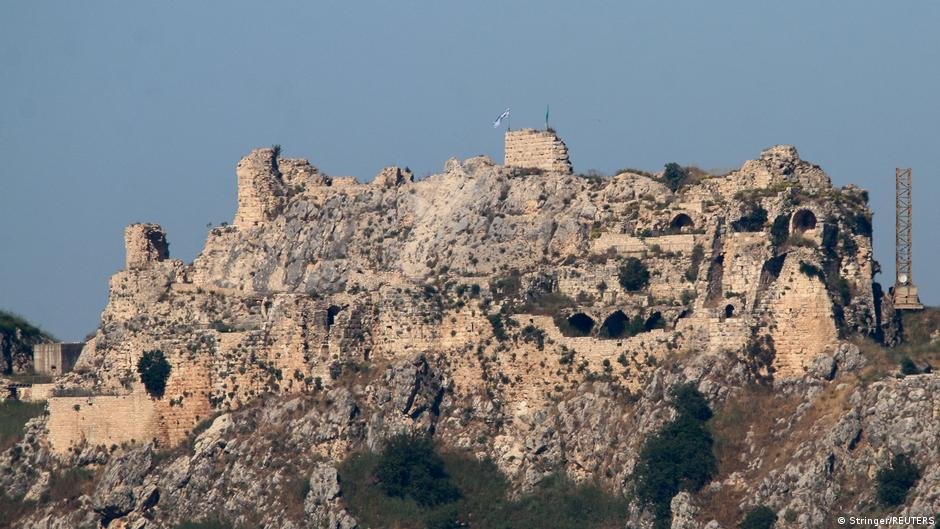
The UN cultural agency on Friday updated its list of world heritage in danger, including a Lebanese palace that was recently captured by Israeli forces as well as an archaeological site in the occupied West Bank amid Israeli objections.
This decision was taken during the meeting of the United Nations Educational, Scientific and Cultural Organization (UNESCO) in Busan, South Korea.
Members agreed that five castles, including Beaufort Castle in Lebanon’s Mount Amel and Sebastia in the West Bank, would be added to the agency’s World Heritage List and the List of World Heritage in Danger.
The decision was taken after reviewing the nomination on an emergency basis, citing the ongoing conflicts in the Middle East.
Israel’s Foreign Ministry had urged the Committee to reject the designation efforts, calling the designation the “weaponization of cultural heritage.”
What do we know about UNESCO designated sites?
Beaufort Castle is a Crusader fort also known as Qal’at al-Shaqif. Israeli forces captured the fortress in May during its military operations in southern Lebanon as part of the fight against Iran-backed Hezbollah militants.
The hilly area where Beaufort and the other five Jabal Amel listed castles are located has come under repeated Israeli bombardment during the war.
UNESCO said the forts have suffered damage and face ongoing threats from the conflict “serious enough to resort to an emergency procedure.”
Lebanon’s Culture Minister Ghassan Salame told the French AFP news agency that only the two castles were “within the reach of the Lebanese government” and accused Israel of already destroying Shamma Castle and threatening to demolish Beaufort.
Salame described the UNESCO listing as “a remarkable achievement in the effort to protect these important Lebanese historical sites”.
Meanwhile, Sebastia, the second site added on Friday, is located near the West Bank city of Nablus. It is believed to be the ancient Israeli and later Roman city of Samaria, which contains archaeological remains from the Iron Age, Roman, Byzantine and Islamic periods.
Israel still uses the name Samaria to refer to the northern West Bank.
Israeli authorities have developed an interest in the site in recent years, taking control of approximately 200 hectares of nearby Palestinian land for conservation and development purposes in 2025.
The site is important to the Palestinian tourism industry and is under threat from recent Israeli actions, including the closure of roads, fences and entrance fees to Israelis only.
UNESCO said, “The integrity of the site is currently threatened by an expropriation project aimed at subdividing the property and creating the ‘Samaria’ (Shomron) National Park.”
The nomination of Sebastián to the UNESCO list was first submitted to UNESCO in 2012 by the Palestinian delegation. It was argued that the site remains largely undeveloped under Israeli control and requires additional protection despite attracting tourists.
Adel Naim Daoud Attieh, member of the Palestinian delegation to UNESCO, said the World Heritage designation rewards the tenacity of Sebastia’s residents “who have protected this extraordinary site through generations despite occupation, sanctions and repeated attempts to separate it from its heritage.”
How has Israel responded?
Israeli Foreign Minister Gideon Sa’ar criticized UNESCO for the listing, calling Samaria in particular an attempt to “erase and deny the Jewish connection with this country.”
A member of the Israeli delegation, who attended the Busan meetings as an observer after Israel withdrew from the organization in 2019, said it was “shameful politicization that has ruined UNESCO and made a mockery of history.”
In a statement on Tuesday, the Israeli Foreign Ministry accused the Palestinian delegation of waging a “hostile, one-sided campaign” at UNESCO by falsely portraying Sebastia as an area facing emergency.
Addressing the listing of the Lebanese Beaufort Castle, the Israeli Foreign Ministry alleged that Hezbollah turned it into a military stronghold by building tunnels beneath the site and launching rockets from the area.
At Friday’s meeting, a Lebanese representative said the palaces have been used “only for cultural and tourist purposes” since Israel’s withdrawal from southern Lebanon in 2000 and accused Israeli media of circulating images of the tourist facilities as military tunnels.
The reason Israel withdrew from UNESCO was that it accused the UN agency of undermining its historical ties with the Holy Land.
Edited by: Shawn Sinico
Don’t let algorithms hide news. If you trust our team for reliable reporting, please take a moment to select us as your preferred source on Google click here And press the “Star” or “Favorite” button, so you always see our verified news first.