The situation in Sudan’s defeated city of Al Obeid is worsening by the day, with human rights organizations warning of mass atrocities. The children are in shock and do not dare to go to school.
Flattened houses and debris where there once was a school: these are the scenes seen in footage from the Sudanese town of El Obeid published by Ayin Network, a non-partisan Sudanese media outlet. Drone strikes by the paramilitary Rapid Support Forces (RSF) have caused massive damage to civilian infrastructure in North Kordofan’s capital, including electricity grids, transformers, water treatment plants, schools, universities and hospitals.
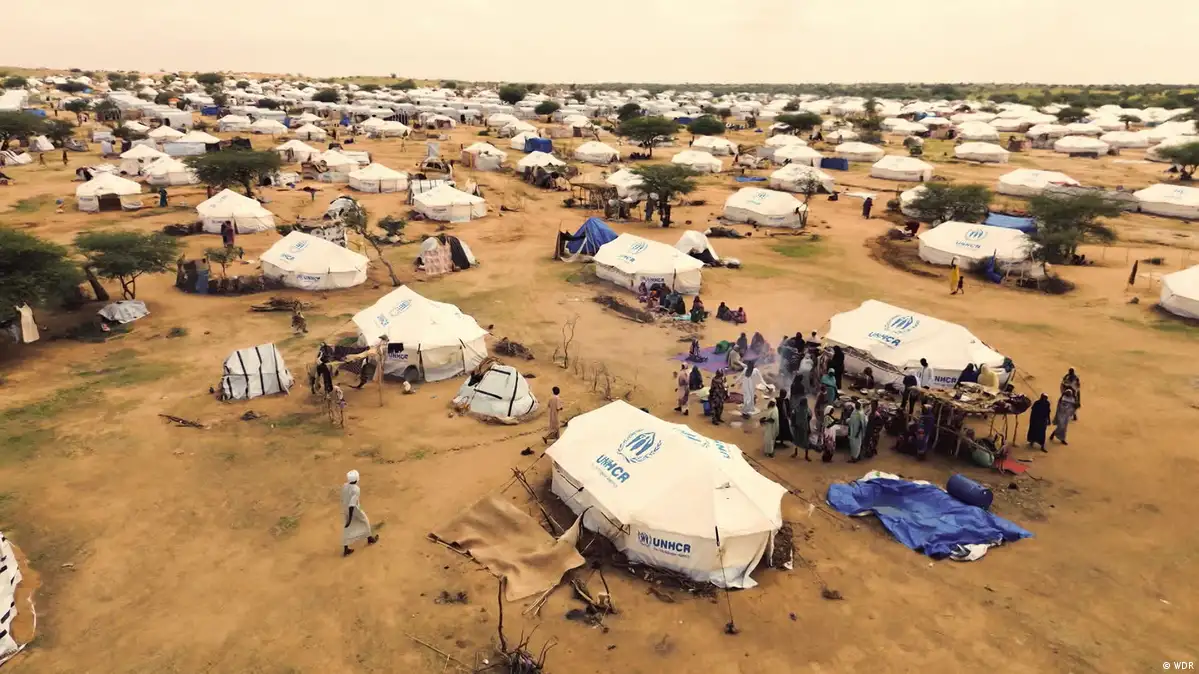
According to Ahmed Awad, a project manager for UK children’s rights organization Plan International and a native of El Obeid, the local population is struggling to survive. The city – which previously had a population of half a million but is now home to several lakh internally displaced persons (IDPs) – is under siege, he said.
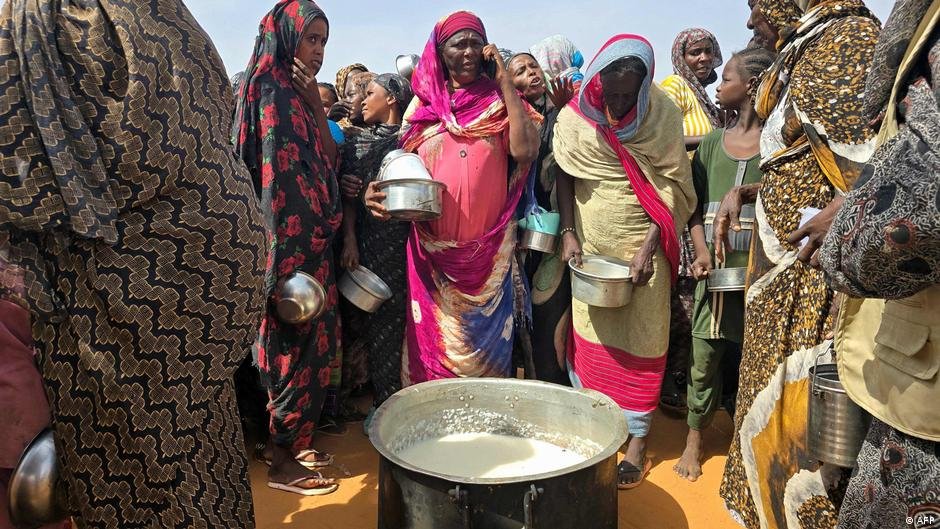
There are shortages of medical supplies as well as food and safe, clean water, and Awad said he saw long queues of IDPs at just one water pump: “Sometimes you can spend the whole day to get a liter of water for two or three days.”
He said a drone had struck a primary school and killed three children, traumatizing other children, many of whom no longer dared to go to school.
“One mother said her three children can’t sleep because they are always afraid of something happening again,” he said. He said Plan International tried to “provide psychosocial support” for people who fear drones, which could strike in orbit at any time.
El Obeid: trading center in the desert
El Obeid is a strategically important place. The city is a trading hub in the middle of the desert on the only major route between the Sudanese capital Khartoum – which is controlled by the Sudanese Armed Forces (SAF) – and the West Darfur region, much of which is under the control of the RSF. Since the war began in 2023, the city has been captured by the RSF and recaptured several times by the army and allied militias.
El Obeid is currently controlled by the army, which has about 13,000 troops deployed, and has been on the front lines since fighting shifted from Darfur to Kordofan at the beginning of the year. The RSF has deployed troops about 30 kilometers (18.6 mi) beyond the city limits, and is using drones to bomb civilian infrastructure.
‘Signs of Genocide’
Analysts, aid organizations and the United Nations have warned that the RSF could soon capture Al Obeid. They fear a similar scenario to the one that played out in the town of El Fashar in the neighboring state of North Darfur in October 2025, when the RSF began bombing infrastructure before storming the town after an 18-month siege.
Earlier this year, the UN Fact-Finding Mission to Sudan presented details of the atrocities committed in the capture of El Fasher to the UN Human Rights Council in Geneva and identified “characteristics of genocide”.
A joint appeal issued by several human rights organizations warned that an escalation of the situation could lead to a recurrence of atrocities and human rights violations, as documented in El Fasher. Pekka Haavisto, Personal Envoy of the UN Secretary-General for Sudan, said in June, “We are concerned by the ongoing hostilities around the city, including persistent drone strikes: these are already impacting civilians and hampering humanitarian assistance in the city. A further escalation of the situation would put thousands of people at risk.”

Schools and hospitals turned into barracks
Adam Moussa Eshaug, director of the Sudanese organization Darfur Victims Support Organization (DVS), is currently based in Kampala, the capital of Uganda. He is in constant touch with people in Sudan and El Obeid for his research, for which he also talked to SAF soldiers. He explained that one of the reasons the RSF bombed schools was because SAF soldiers had converted classrooms into barracks.
He said the situation was similar in El Fasher, when the army “used schools and even hospitals as barracks.” He said that soldiers were repeating this scenario in El Obeid and that the “problem” was that, when the RSF attacked, “civilians paid the price” because they were being used as “human shields”.
Francesco Lanino, deputy country director of Save the Children in Sudan, said drone strikes targeting schools and IDP camps are causing serious shock. “We met many children who refused to talk,” he said, reporting on a recent visit to the Tawila IDP camp near El Fasher. “It’s hard for them to understand why all this is happening.”
This article was translated from German.