27 July 2026
Iran warns of ‘unexpected’ consequences after alleged Ukrainian attack
Iran warned on Monday of “unexpected” consequences after Ukraine said it had launched long-range strikes against ships in the Caspian Sea over the weekend.
Foreign Ministry spokesman Esmail Baghai condemned the attack as illegal and unjustified and said it violated the UN Charter and would not be retaliated against by Tehran.
Ukrainian President Volodymyr Zelensky said on Saturday that Kiev had targeted ships carrying military cargo linked to Iran. Iran said one of its ships exploded in the attack, killing one sailor and injuring several others.
Baghai said Ukraine’s actions were a “dangerous act of audacity” and warned that the consequences would be unpredictable. Tehran has vowed to respond to the incident, which symbolizes a significant escalation of tensions between Iran and Ukraine.
https://p.dw.com/p/5HohI
27 July 2026
US strikes damage water infrastructure in southern Iran, affecting 120,000 people
According to Iranian officials, recent US strikes have caused significant damage to water infrastructure in southern Iran, disrupting supplies for approximately 120,000 people.
Iranian news agency Fars quoted an official from Hormozgan province as saying that 18 facilities, including seawater desalination plants, were damaged in the attacks. Ten facilities were said to be completely destroyed.
Affected sites also included a desalination plant on Qeshm Island, which was reportedly taken out of service at the start of the latest surge in early July. Officials said the damage affected water supplies for more than 120,000 residents.
The disruption could have a serious impact on citizens in southern Iran, where extreme heat and prolonged drought conditions are already straining water resources. Daytime temperatures in the area regularly exceed 40 °C (104 Fahrenheit).
https://p.dw.com/p/5Hoh9
Published on July 27, 2026Last updated July 27, 2026
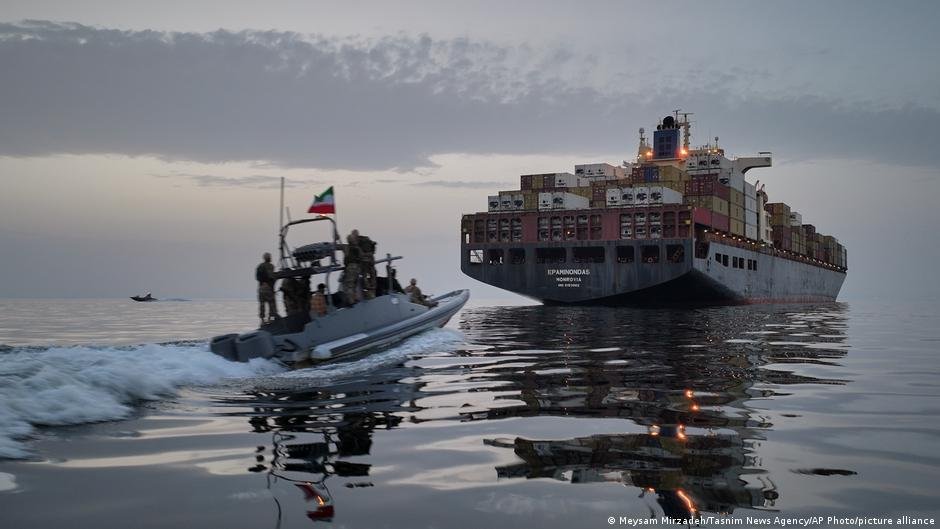
Iran says Revolutionary Guards intercept six ships in Hormuz
Iran’s Revolutionary Guards navy intercepted six ships attempting to transit the Strait of Hormuz via routes not approved by Iranian authorities, Iranian state television reported on Monday.
The ships were stopped overnight after trying to use routes outside Iran’s designated routes, according to a state TV correspondent. The IRGC navy fired warning shots before turning the ships back, the report said.
Earlier, state television reported an unspecified “incident” involving a ship but gave no further details.
The latest action follows a similar episode on Saturday, when Revolutionary Guards said they stopped four ships attempting to transit the southern part of the strait after firing warning shots.
https://p.dw.com/p/5Hogw
27 July 2026
The US-Iran standoff has raised hopes of renewed talks, leading to a fall in oil prices.
Oil prices fell sharply on Monday after the end of hostilities between the United States and Iran boosted hopes for ceasefire efforts and a return to talks over the Strait of Hormuz.
Brent crude fell more than 7% at one point, briefly below $90 (€79) a barrel, as investors welcomed signs of de-escalation after nearly two weeks of exchanges between Washington and Tehran.
The US refrained from launching further strikes over the weekend, while Iran said it would stop retaliatory strikes against regional neighbors. The move eased concerns about disruption to shipping routes and global energy supplies.
Meanwhile, Iran said discussions with Oman had made progress on management of the Strait of Hormuz, a vital global oil transit route. Foreign Ministry spokesman Esmail Baghai said the talks focused on ensuring safe shipping routes while respecting the sovereignty of the countries involved.
The latest conflict sent oil prices above $100 a barrel for the first time since May as concerns grew over threats to shipping in the Strait of Hormuz and the Red Sea.
https://p.dw.com/p/5HogR
Welcome to our coverage
Iran’s Foreign Ministry spokesman Esmail Baghai said Tehran has not sought to resume talks with Washington and does not currently hold direct talks with the US.
While mediators continue to send messages, Baghai said the situation in the Strait of Hormuz remains unchanged and the waterway is still closed. He also said, without giving further details, that some Gulf countries were involved in the US war against Iran.
Follow our blog for latest updates.
https://p.dw.com/p/5HoWc