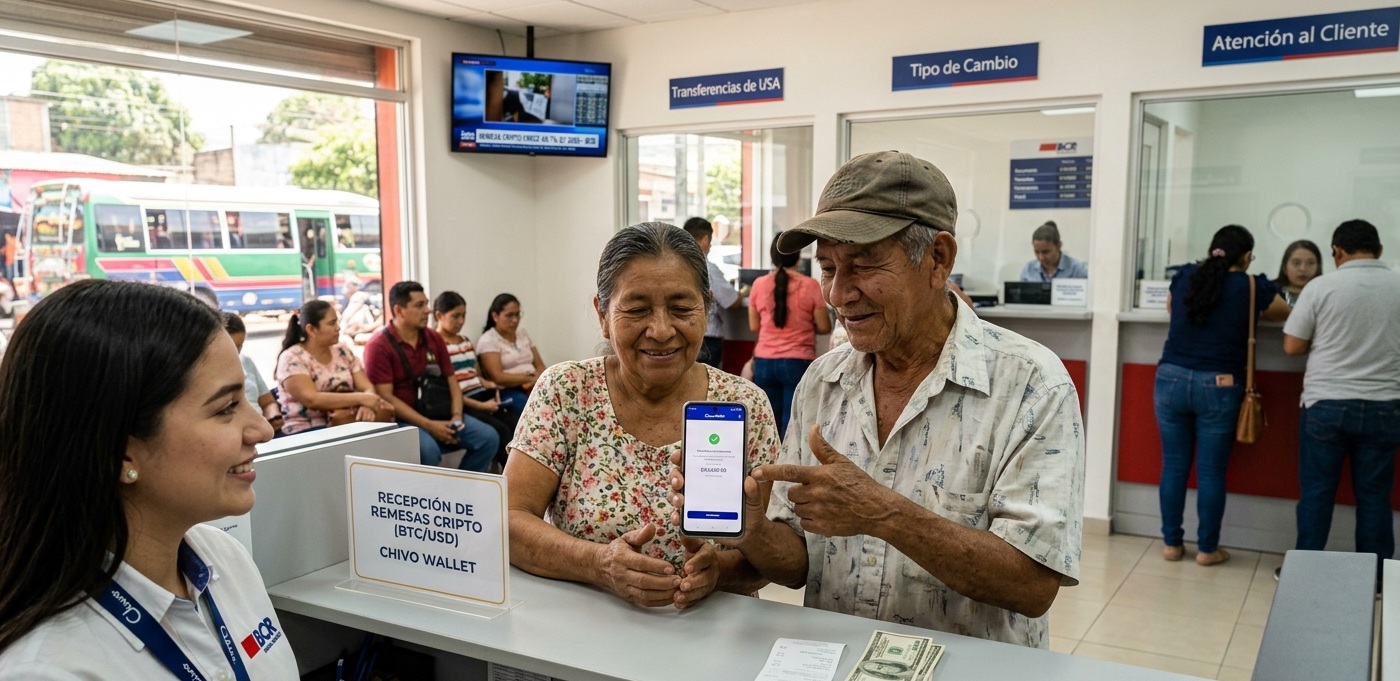
Family remittances continue to be one of the strongest pillars of the Salvadoran economy, but in the first months of 2026 an emerging actor is rapidly gaining ground: digital cryptocurrency wallets.
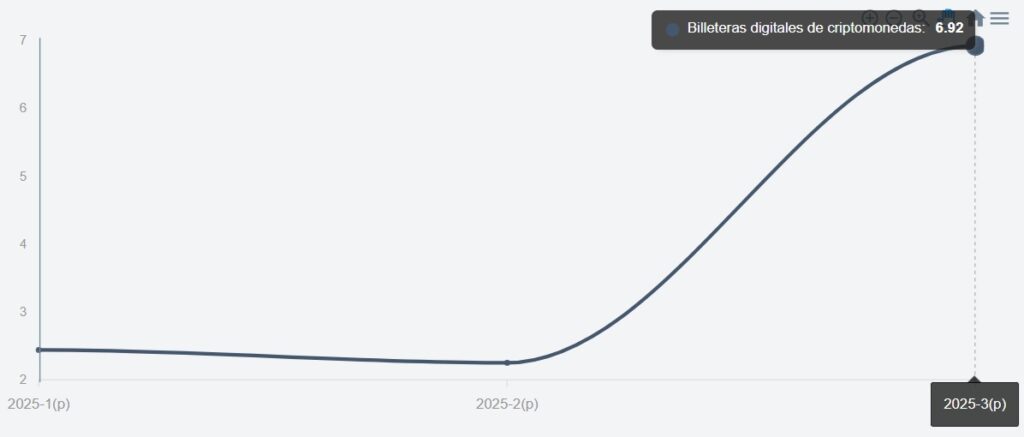
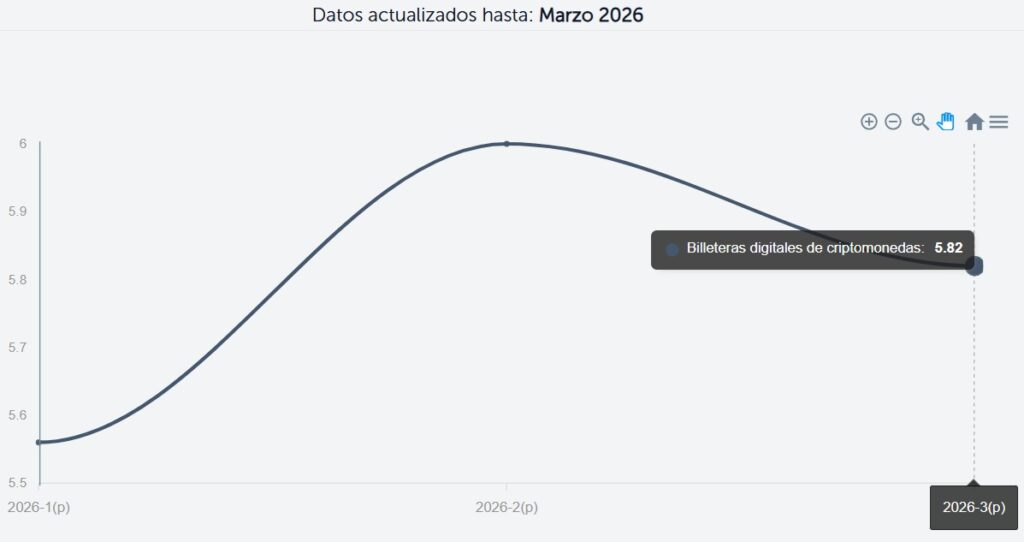
According to the Graphic Report on Family Remittances of the Central Reserve Bank (BCR), published at the end of April, this channel registered a 49.7% jump in the first quarter of the year, the largest percentage increase among all transfer mechanisms.
The accumulated amount went from 11.6 million dollars between January and March 2025 to 17.4 million in the same period of 2026. This dynamism occurs in a context where total remittances also grewbut at a more moderate pace.
The country received 2,435.6 million dollars in the first three months of the year, 7.3% more than the 2,269.7 million of the previous year. In other words, the cryptocurrency segment advanced almost seven times faster than the system as a whole.
Traditional channels continue to concentrate most of the flow. Remittance companies captured 54.2% of the total (1,319 million dollars), while banking institutions took 41.2% (1,004.4 million).
However, within this panorama dominated by classical operators, Cryptocurrency wallets appear as the option that is attracting the most attention among the diaspora.
The United States continues to be, by far, the main emitting country: 2,248.4 million dollars, equivalent to 92% of the total. They are followed in much smaller volumes by Canada, Spain and Italy.
Regarding the number of operations, the system processed 6.5 million transactions, 4.6% more than in 2025, with an average remittance of $370.4.
The report also reveals changes in reception habits. Transfers with direct credit to account increased their share from 32.1% to 36.7%, while traditional counters fell from 63.4% to 58.7%.
This suggests that more Families are choosing to receive money digitally. From a demographic point of view, men were the main senders (57.4%), but women were the largest recipients (52.1%).
Although cryptocurrencies still represent 0.7% of total remittances, their strong growth indicates a quiet transformation in the way the Salvadoran diaspora sends financial support to their families.
CriptoNoticias reported in March that remittances with bitcoin and cryptocurrencies to El Salvador had increased almost 150% in the first two months of the year, which highlights the boom that the sector is experiencing with digital assets.
In a country where remittances are equivalent to almost a quarter of GDP, this data opens the door to greater use of the so-called “blockchain technology” (original Bitcoin technology) as an efficient and accessible complement to traditional channels.
If the trend continues, the next quarter could confirm whether we are facing the beginning of a structural change in the sending of currency.