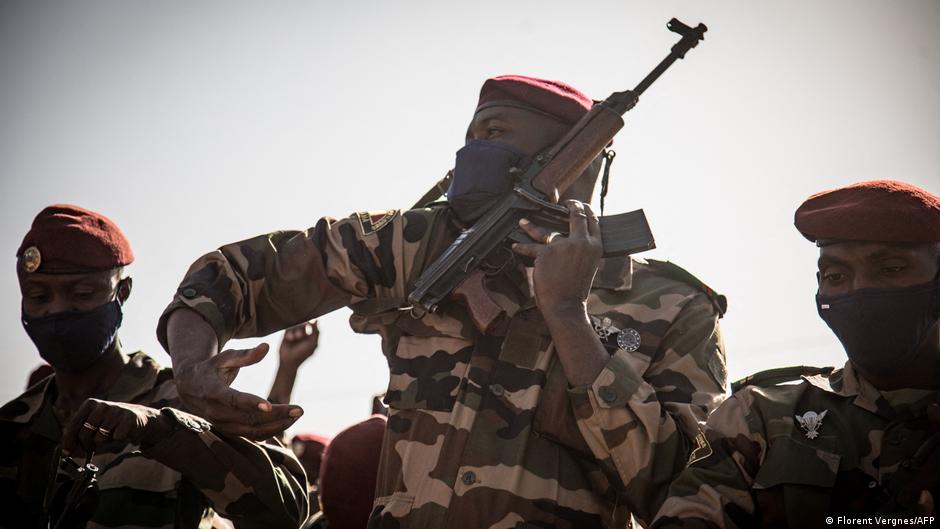
Mali is investigating several soldiers suspected of involvement in coordinated attacks by jihadist and separatist fighters across the West African country last week, officials said late Friday.
The rebel coalition made up of the al-Qaeda-linked group JNIM and Tuareg rebels launched its biggest attack in more than a decade on April 25 as part of efforts to oust Mali’s military government, which had seized power during the pandemic.
Several people, including Defense Minister Sadio Camara and several members of his family, were killed in the near-simultaneous attacks in more than half a dozen locations, including the capital Bamako.
what do we know?
The public prosecutor of Bamako’s military court said there was “concrete evidence regarding the involvement of some military personnel” in the attacks, including serving and recently dismissed officers.
The prosecutor’s statement, read on state television, said the officers helped “plan, coordinate and execute” the attacks.
Those implicated include three active duty soldiers, an army veteran and a soldier who was dismissed and killed in an attack.
“The first arrest has been successfully made and all other criminals, co-offenders and associates are being actively searched,” the statement further said.
The prosecutor also alleged the involvement of Malian politicians, including Omar Mariko, a prominent exiled politician. Marico has historically refused to cooperate with jihadists.
What’s the latest on the conflict?
On Friday, Tuareg rebels said they had captured a strategic military camp in the northern town of Tessalit following the withdrawal of Mali’s army and its Russian mercenaries from the base.
Tessalit is strategically located near an airport and the border with Algeria.
The capture of the camp comes after the junta lost the key city of Kidal during last weekend’s attacks.
Mali authorities have not yet confirmed whether the army has left the camp.
Over the past few days, rebels have cut off most road access to Bamako and on Friday, called for a public uprising against the junta and changes to Sharia law.
Since 2012, Mali has been facing an ongoing war, which began with the Tuareg rebellion in the north, inspired by Libyan weapons. The attack was immediately hijacked by jihadists.
The rebellion has sparked a widespread crisis in the Sahel region south of West Africa’s Sahara desert, with Islamist insurgents spreading violence and instability in Burkina Faso, Niger and beyond.
Frustrated by the failure of the civilian government to stop the rebellion, the Malian military launched coups in 2012, 2020 and 2021, in which Colonel Assimi Goita eventually took power and led the current junta.
Edited by: Louis Olofse