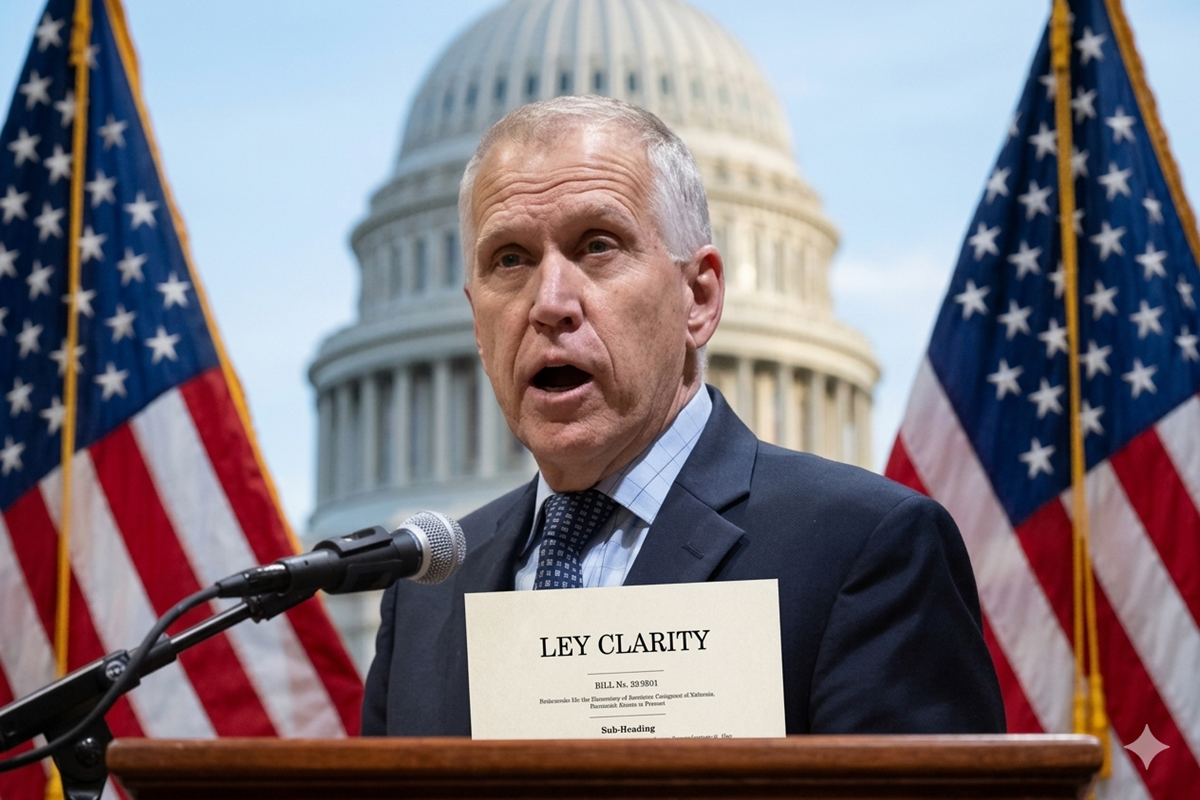
The most recent draft of the Digital Asset Market Clarity Act (Clarity Act), published on May 1, draws a clearer signal on how the United States Senate intends to resolve one of the key dilemmas in the regulation of the ecosystem: whether companies can offer benefits on stablecoins without entering the territory of traditional banking.
The new section of text revealed that the compromise reached by US Senators Thom Tillis and Angela Alsobrooks maintains strict restrictions to avoid products that issue bank deposits with interest. At the same time leaves open a door for companies in the sector to continue offering incentives linked to the actual use of their platforms. This balance represents partial relief for the industry, which sees part of its business model recognized.
Explaining the new update a little, The text establishes that issuers will not be able to generate returns simply by holding stablecoins in reserve or offer payments that function, in practice, as bank interest. The prohibition covers any form of compensation (whether cash, tokens or other means) when it is based solely on the passive holding of these assets.
This stance directly responds to the concerns of the banking sector, which warns that deposit equivalent products could affect its role within the US financial system.
On the other hand, the draft contemplates important exceptions. Rewards linked to real activities within networks or platforms would be allowed, as long as they are not equivalent to traditional interests. This opens space for models similar to benefit programs in traditional finance, where the incentive depends on use and not simple possession.
However, the text also introduces ambiguities. Some loyalty programs could fall within the restricted zone, leaving room for future regulatory interpretations.
Industry reaction
Companies like Coinbase have greeted the new approach with cautious optimism. Its CEO, Brian Armstrongexpressed his support for the progress of the project, while the legal director Paul Grewal He highlighted that the text preserves incentives linked to genuine activity in cryptocurrency networks.
Digital Chamber also appreciated the progress. Its CEO, Cody Carbone, considered that This step helps resolve one of the most complex points of the regulatory debate.
Although the political agreement seems to be moving forward, the text leaves ample room for the authorities to define how the rules will be applied. Factors such as holding time, balance or type of activity may influence the evaluation of rewards.