The European Commission said on Wednesday that Hungary has lost its entitlement to nearly €1 billion ($1.03 billion) of EU aid due to violations of the law.
Earlier, the EU had pressured the country to change its laws to deal with conflicts of interest and corruption.
Budapest was told it had to make the reforms by the end of 2024 or they would lapse.
Why did Hungary lose money?
In 2022, the EU initiated “conditional” proceedings against Hungary, seeking to block payments due to alleged violations of public procurement rules. It said there was a lack of control and transparency.
Hungary was found to be in disregard of EU standards and fundamental values and was asked to implement substantial reforms. Hungary then agreed to make reforms that allowed some of the funds to be blocked, but €19 billion ($20 billion) remained withheld.
The EU’s conditional regulation states that – without lifting the suspension – the “first tranche of suspended commitments” of €1 billion will expire at the end of 2024.
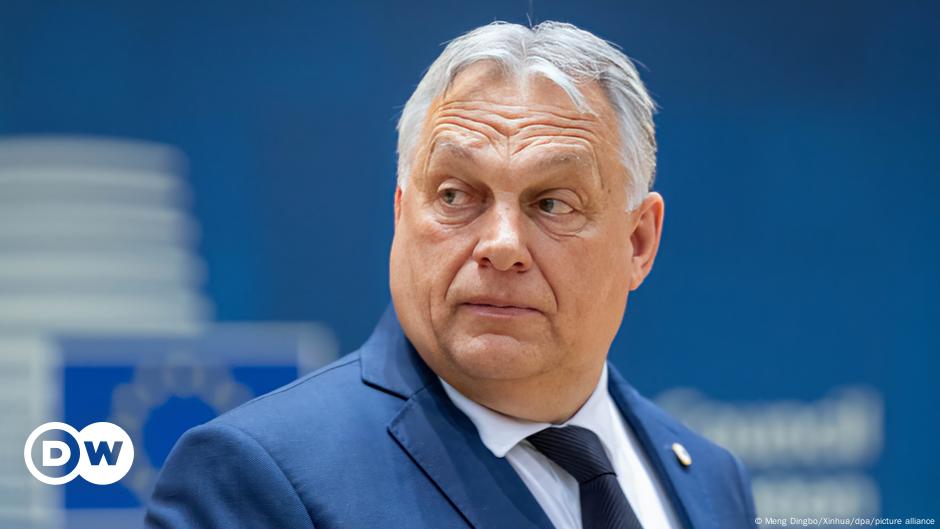
Hungary’s nationalist Prime Minister Viktor Orban has ruled the EU country uninterrupted since 2010, and has consolidated power during his tenure, while some of his allies have amassed huge wealth.
Orban, the closest political partner in the EU to both US President Donald Trump and Russian leader Vladimir Putin, has previously said he would fight to protect money “that is ours”.
In a report published in July, the European Commission concluded that Hungary does not meet EU democratic standards. The most notable of its failings were cited as corruption, political financing, conflicts of interest and media independence.
Hungary is also the subject of a September 2018 procedure that imposes sanctions on member states for “serious violations” of the rule of law.
rc/sms (AFP, dpa)