Project Eleven estimates Q-Day in a base case around 2033.
Final quantum advances would follow the logic of state intelligence, not academic publishing.
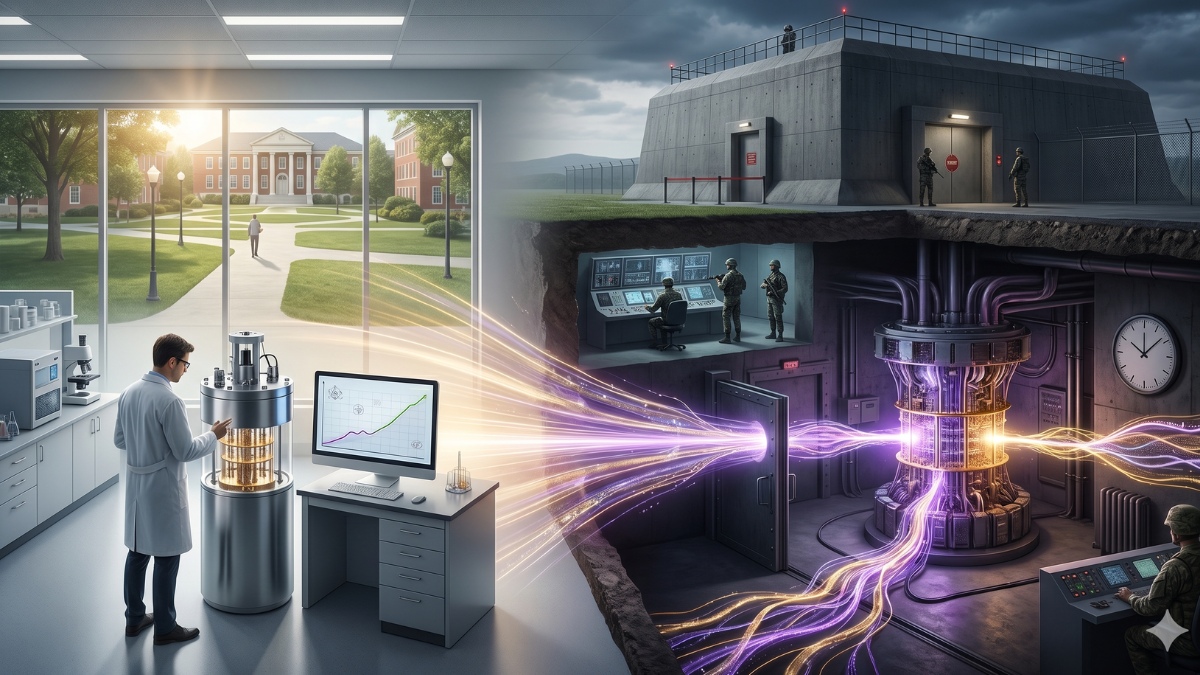
Project Eleven, a research firm specialized in post-quantum cryptography applied to cryptocurrency ecosystems, warns that the latest milestones in the development of a cryptographically relevant quantum computer (CRQC) will be classified as a state secret.
According to the report on quantum threats to blockchains that the firm published on May 6, 2026, the Quantum industry is migrating towards hiding the technical plans of the most advanced attacks. .
The organization, which in that same document quantified the quantum risk on Bitcoin and stablecoins, adds to the debate on post-quantum a variable that it considers decisive for industry planning: the deliberate opacity of States about the real state of quantum development.
The firm maintains that, unlike previous stages of technological development – where milestones were published in academic journals or presented at conferences – final progress towards an operational CRQC They will follow a logic of state intelligencenot open scientific dissemination.
Project Eleven describes the pattern of quantum advancement as a trajectory of “nothing, then everything all at once”: years of seemingly slow progress, followed by a sudden convergence of improvements in physical fidelity, error correction, and algorithmic efficiency.
In that sense, the physicist Hartmut Neven is quoted to illustrate this dynamic: The subjective experience of quantum advancement is that nothing seems to happen until suddenly the world changes..
The firm bases its analysis on the most recent public advances, such as those achieved by Google Quantum AI, and on the historical behavior of military technologies. Historically, the most sensitive developments are often classified and kept secret for years before becoming public.
Consequently, the report does not claim to have concrete evidence that there are already classified advances that accelerate Q-Day, but rather makes an inference based on the observable trajectory of quantum progress and the logic that nation-states They prioritize secrecy in this type of strategic technologies.
On this there is consensus among the majority of cybersecurity experts national. Intelligence agencies and analysts (including reports from the Global Risk Institute, NSA, and think tanks) assume that governments will hide the most powerful advancesclassifying those that give them a cryptographic or intelligence advantage.
Opacity as a systemic risk factor
Project Eleven confirms that state secrecy eliminates the possibility of the private sector anticipating Q-Day based on public signals.
For the firm, when multiple improvements converge—greater physical fidelity, more efficient error-correcting codes, and algorithmic innovations—the gap could be closed in months, not years, with no detectable prior warning from the private or academic sector.
This possibility of intentional misinformation is noted in the midst of the debate currently open on the deadlines for Q-Day.
As CriptoNoticias documented, figures such as Adam Back and Samson Mow maintain that quantum capabilities to break 256-bit cryptography are more than a decade away. However, Project Eleven does not dispute that margin: the central point of the warning is not when Q-Day will arrive, But state opacity makes any private sector estimate structurally incomplete..
The firm adds that the actors with the greatest motivation to develop a CRQC—States with advanced intelligence capabilities—also have the greatest incentives not to reveal their progress. In this scenario, Project Eleven maintains, Q-Day could materialize without the industry having received any signal prior to justifying an acceleration of migration plans.
Project Eleven concludes that waiting for public warning signals to start post-quantum migration is an unviable strategy: if the latest advances are classified, the warning will never arrive.