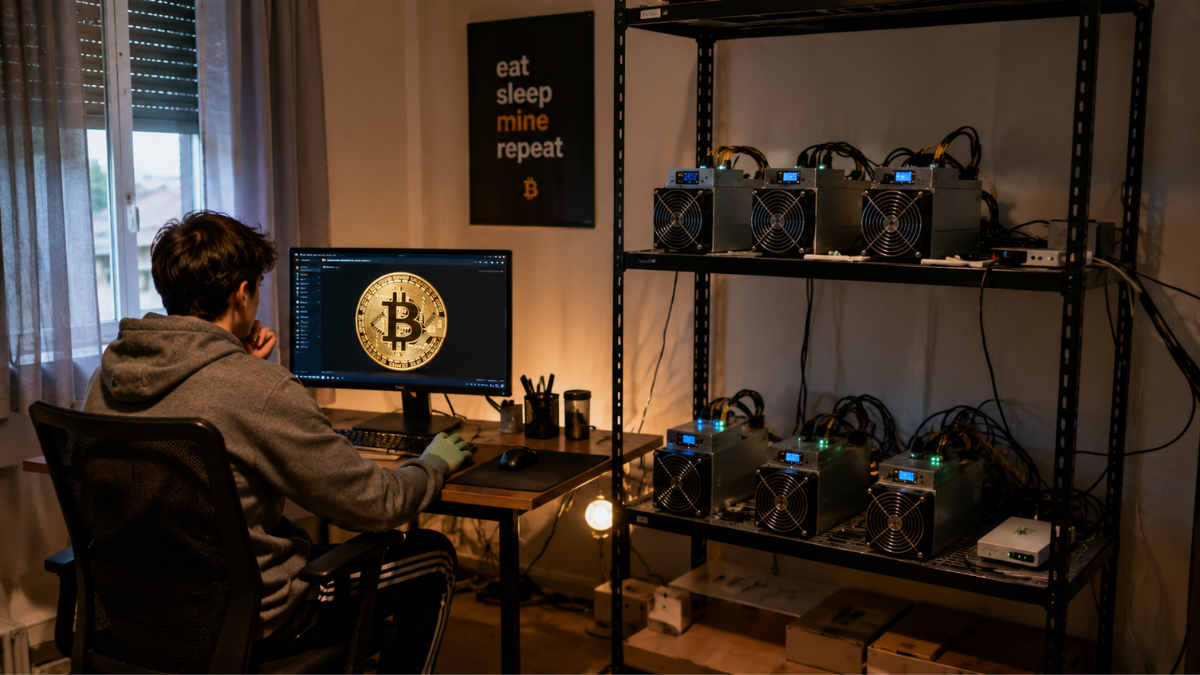
Its mining structure involved an energy expenditure of “1,100 dollars.”
This miner’s hashrate represents 0.000000054% of Bitcoin’s current computing power.
A person mining Bitcoin alone from his home found his second block in seven months on May 6, as he explained in a post on Reddit, accumulating nearly USD 600,000 in rewards between both finds.
The second block processed was 948,146 and left this person a reward of 3,155 BTC for the block subsidy plus transaction fees, equivalent to $258,405according to data from mempool.space.
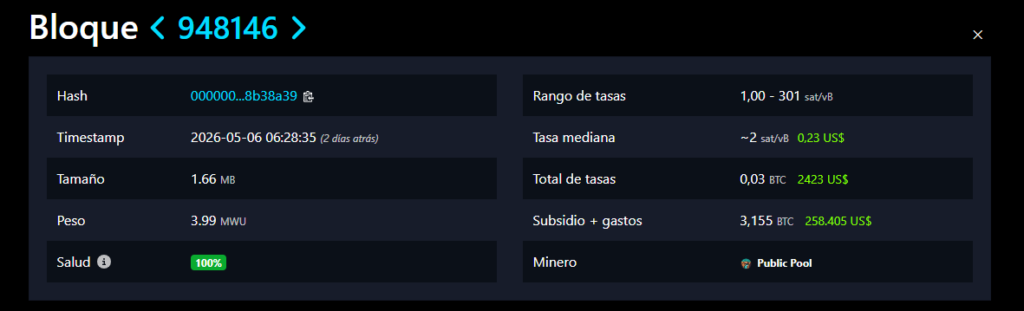
Connected to Bitcoin through Public Pool, a platform focused on solo mining, this miner got his second block with one of his Avalon Q, a home-use ASIC from the Canaan company.
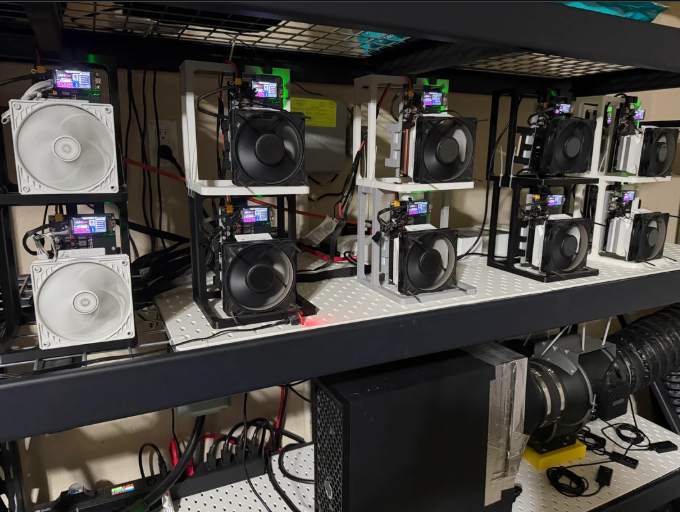
His mining installation consists of twelve NerdAxe mini ASICs and five Avalon Q, so at the time of finding the second block, this person was operating with a hash rate of 500 TH/s (terahashes per second) on a network that currently processes 919 EH/s. This means that at that time it held 0.000054% of the total computing power and still took the prize.
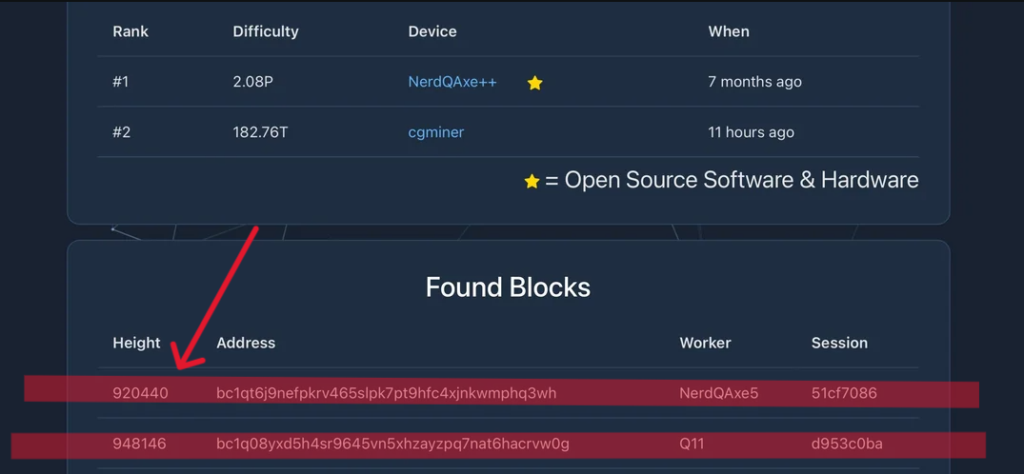
As reported by CriptoNoticias, the first block (920,440) had arrived in October 2025, generating close to USD 350,000 with BTC ranging between $108,000 and $110,000 that day. In that case, the device that hit the block was a NerdAxe with a computing power of 5 TH/s.
What solo mining from home entails
As reported on Reddit, this miner started in September 2025 with six NerdAxe teams that contributed about 30 TH/s together. After the first discovery, expanded its installation by adding four Avalon Q and six additional NerdAxe.
The NerdAxe consume between 70 and 72 watts each, and the Avalon Q between 1,450 and 1,600 watts. Altogether, this installation demanded a total bill of “1,100 dollars, about USD 800 more per month”so this data shows that solo mining is not always synonymous with low consumption or few resources.
A miner can operate individually with a structure that demands space, maintenance and considerable energy expenditure, similar to that of a “small pool”, as the miner himself warned in his publication.
More and more lone miners are coming to light
The discovery of this lone miner is not an isolated case in Bitcoin. As reported by CriptoNoticias, block 948,146 was the fifth block mined alone through Umbrel (the open source operating system that allows you to manage mining equipment and nodes from your own hardware) in less than twelve months.
The previous block under that same platform, 947.073, had been found just six days before by another different user.
While the statistical probability of finding a solo block remains exceptionally low, more and more cases of individual miners are coming to light, both among those who operate their own hardware and among those who rent hashrate on online platforms to participate without installing their own equipment.