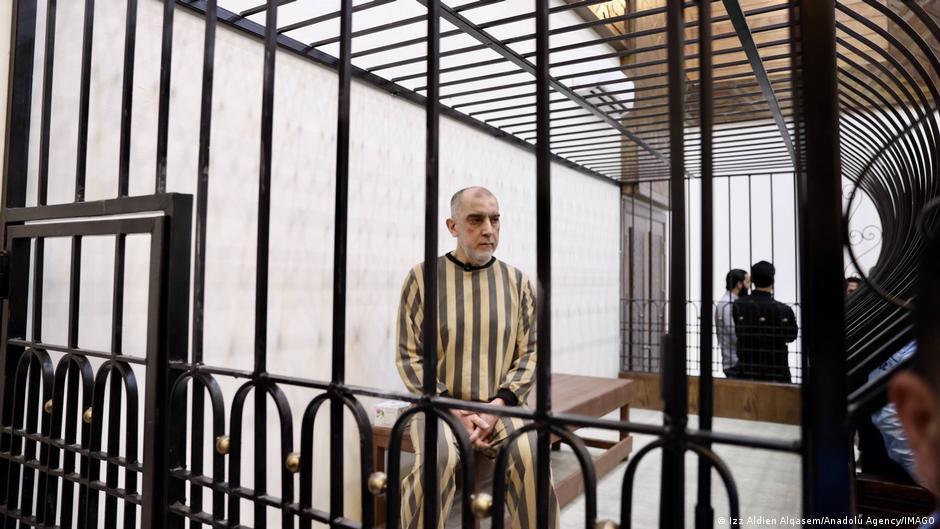
A judge in Damascus on Sunday detailed the charges against Atef Najib, Bashar Assad’s cousin and former senior security official in Syria, as the first trial against Assad-era officials moves forward.
Former President Assad, his brother Maher and several other senior officials faced trial in absentia. They are believed to have fled to Russia after the former Syrian government fell in December 2024.
Najib, the former head of political security in the southern Syrian province of Daraa, where peaceful protests broke out in 2011, is the most senior former regime member to face trial personally. The trial began last month.
What are the charges against Najib and why?
Judge Fakhar al-Din al-Aryan read the charges on Sunday, when state television broadcast part of the session.
“The charges against you relate to events that took place in Daraa province in early 2011, when there was peace [protest] “The movement faced excessive use of force,” Aryan said.
Many link this rebellion to the arrest of 15 students accused of writing anti-government slogans on the walls of their school on March 15, 2011. This led to widespread protests and violent action against them intensified.
This occurred amid the backdrop of the so-called Arab Spring and pro-democracy or anti-autocracy protests in many Muslim countries.
“As then head of the Political Security Branch, you assumed direct and joint leadership responsibility for systematic acts targeting civilians, including killing, torture and arbitrary detention,” the judge said.
They listed alleged crimes that included the arrest and torture of children and firing at a sit-in at a mosque in Daraa, as well as lethal torture in detention facilities run by their security forces.
The judge told former Brigadier Najib, “You were the ultimate authority in Daraa province and had direct responsibility for issuing orders to kill, arrest and torture, and for participating with political, security and military leaders in an organized hierarchical structure in committing these grave violations.”
According to state media, the court later heard statements from Najib and witnesses after the judge halted media coverage of the proceedings.
How and when did Assad’s regime fall?
The 2011 unrest in Daraa was followed by a brutal civil war for more than 13 years, involving various factions and fighting on multiple fronts.
For a while, it appeared that the Assad regime had more or less stabilized the situation and gained the upper hand, despite losing control of most of its territory and facing open rebellion in parts of the country.
But in late 2024, an Islamist group backed by Turkey that may trace its roots to the al-Nusra Front, Hayat Tahrir al-Sham (HTS), made rapid advances toward Damascus. Syria’s military apparatus rapidly collapsed and Assad fled that December.
Ahmed al-Sharaa is now the country’s interim president. It is in the process of negotiating with the international community to normalize its relations and end the sanctions it used to face.
More than a year after taking power, he has come under pressure in recent months to speed up legal proceedings against former regime members – even though many of them are either dead or no longer in Syria.
Syria plans to hold presidential elections within five years of Assad’s fall.
Edited by: Sam Dusan Inayatullah