Australia ordered China-linked shareholders to sell their stake in Northern Minerals, which is developing a rare earth mine.
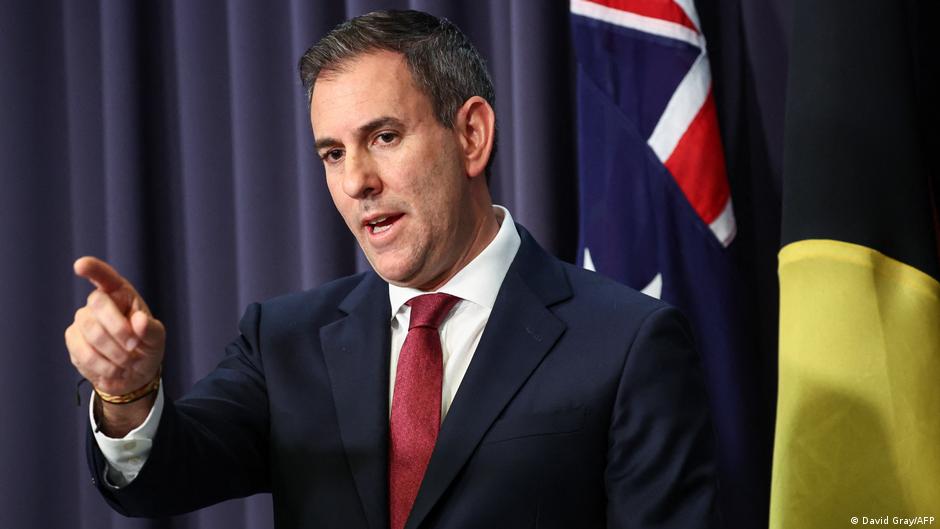
Treasurer Jim Chalmers said he issued the orders on Monday after concerns that Chinese investors had tried to take control of Northern Minerals.
The Australia-based mining company is developing its Browns Range project in the far north of the state of Western Australia to mine significant reserves of dysprosium and terbium.
Six companies have to sell their stake within two weeks.
Chalmers’ decision is aimed at protecting the country’s national interest and ensuring compliance with its foreign investment framework, he said in a statement.
“We operate a strong and non-discriminatory foreign investment framework, and will take further action if necessary to protect our national interests in relation to this matter,” he said.
Why are dysprosium and terbium so important?
Dysprosium and terbium are heavy rare earth elements that are important for heat-resistant high-performance magnets. These are used in clean energy applications, such as hybrid vehicles and wind turbines, as well as specialist defense applications.
China currently almost completely dominates the world dysprosium market.
It mines about 60% of the raw materials and refines an estimated 95%–98% of the global supply. This gives it a near monopoly on processed commercial dysprosium.
Northern Minerals’ rare earths are to be processed at a new refinery being built in Australia.
When both projects come online, Australia will become the first significant non-Chinese source of processed dysprosium.
Western countries, including Australia and the United States, are seeking to limit Chinese investment in critical minerals.
The ongoing saga of mysterious Chinese investors in Northern Minerals
Chinese investors have sought to take large positions in Northern Minerals in recent years.
In relation to Chalmers’ most recent disposal order, three of the six shareholders had addresses listed in China, two in Hong Kong and one in the British Virgin Islands.
But Australia used foreign acquisition laws to force five investors to sell their shares in Northern Minerals as early as 2024.
In 2025, the Treasury took the unprecedented step of taking one of the largest shareholders to court, saying it disregarded the sale-order and instead transferred the shares into the name of its own director.
Edited by: Wesley Dockery