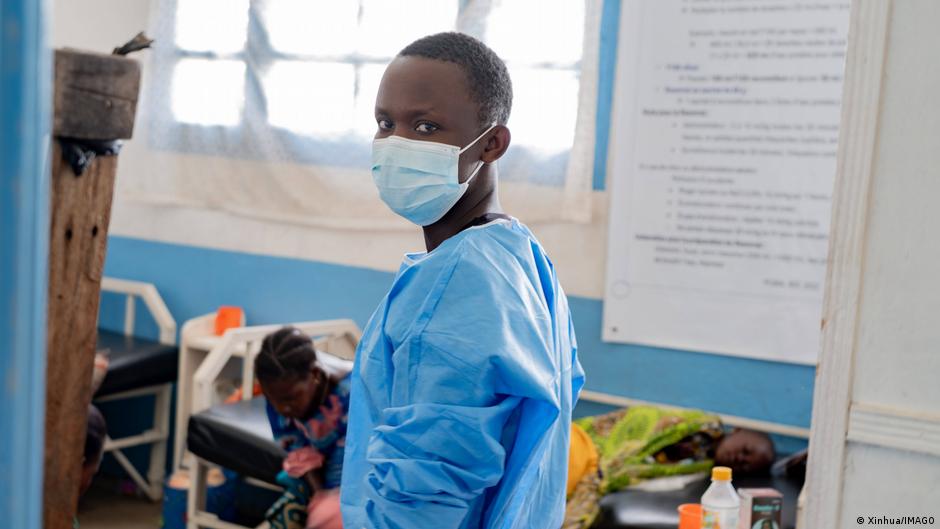
The director-general of the World Health Organization (WHO) expressed concern on Tuesday about the “scale and pace” of the latest Ebola outbreak in the Democratic Republic of the Congo.
WHO is holding an emergency meeting in Geneva on Tuesday to discuss developments in Ituri province and other parts of eastern DRC.
This outbreak involves a rare strain of Ebola called Bundibugyo, for which there is no recognized vaccine. This is also happening in remote parts of the country, making laboratory testing of suspected cases slow and challenging.
What do we know about the suspected and confirmed caseload, the death toll?
Congolese Health Minister Samuel Roger Kamba, speaking on national television early Tuesday, gave the latest update on the recorded progression of hemorrhagic fever.
“We have recorded a total of about 131 deaths and we have about 513 suspected cases,” Kamba said. “The deaths we are reporting are all deaths that we have identified in the community, without saying that they are all Ebola-related.”
Late last week, officials had cited 91 probable deaths among 350 suspected cases.
Germany’s health ministry said Tuesday it was preparing to treat an American doctor infected with the virus following a US request based on short flight times and previous German experience treating the virus. The US Centers for Disease Control and Prevention had already announced plans to send the infection and the patient to Germany.
Many of the cases recorded so far are in northeastern Ituri and North Kivu provinces near the border with Uganda, where two cases have also been recorded among people traveling from the DRC.
This includes cities such as Bunia, Butembo and the case of Goma, the capital of North Kivu, which was seized by the Rwandan-backed M23 rebel group last year.
The region is a center of gold mining and is often unstable.
What did WHO’s Tedros Ghebreyesus say about the outbreak?
WHO Director-General Tedros Adhanom Ghebreyesus, who declared the outbreak a public health emergency of international concern on Saturday, told the World Health Assembly in Geneva on Tuesday that he had not taken the decision “lightly.”
“I am deeply concerned about the scale and speed of the pandemic,” Tedros said.
He said the epicenter of the outbreak was in Ituri province, and meanwhile 30 laboratory-confirmed cases had been reported in that region.
“Uganda has also informed WHO of two confirmed cases in the capital of Kampala, including one death in two individuals who had traveled from the DRC,” Tedros said.
He said WHO would hold an emergency meeting on Tuesday to discuss its response. The panel is expected to discuss issues such as organizing supplies of personal protective equipment (PPE) for healthcare workers, and also what potential vaccine options may exist or need to be tested.
Several relatively new Ebola vaccines, particularly for the more common and more deadly Zaire strain, exist. But none have been formally recognized, at least yet, as effective against the very rare Bundibugyo strain.
There are only two Bundibugyo outbreaks before this one on record, in 2007–08 and 2012.
What is Ebola?
First identified in 1976, Ebola is a deadly viral disease spread primarily by direct contact with the bodily fluids of symptomatic patients or the deceased. It can cause severe bleeding and organ failure and is believed to originate from bats. The mortality rate in past outbreaks has ranged from about 25 to 90% depending on the strain, location, and other factors.
This is the 17th Ebola outbreak in the Central African country. The deadliest killed nearly 2,300 people between 2018 and 2020.
The most recent outbreak, between September and December last year, caused 45 deaths, according to WHO.
Edited by: Dmytro Lyubenko