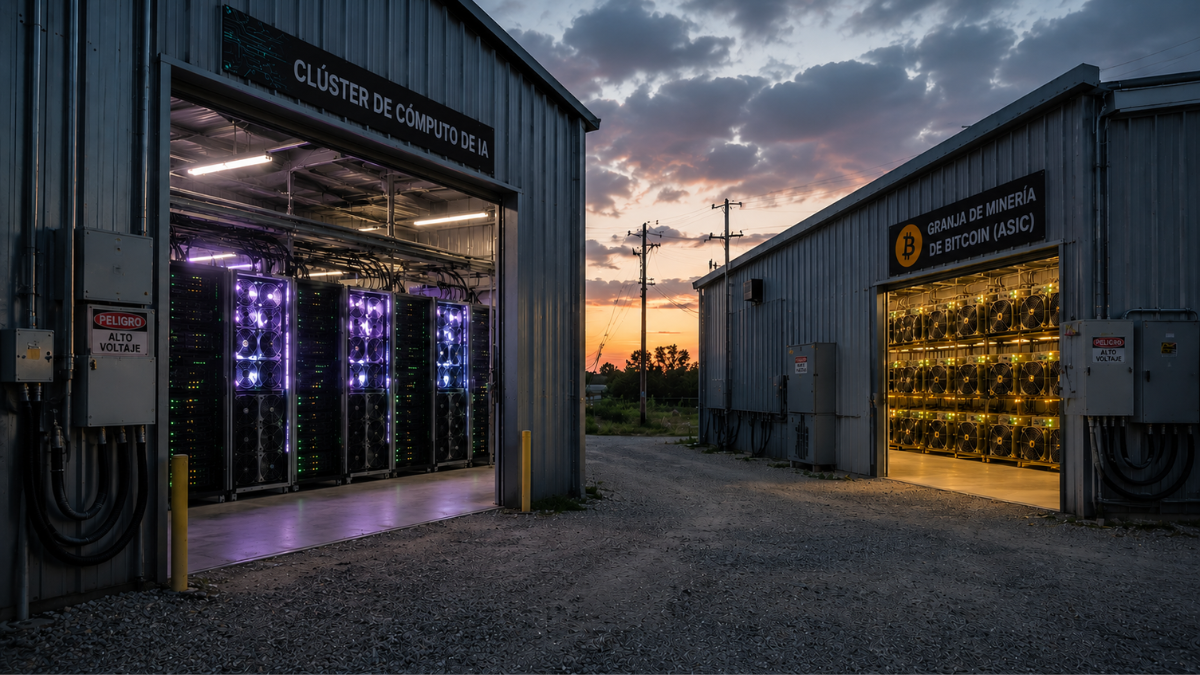
For AI, the main bottleneck is accessing the electrical grid, according to the WEF.
By 2030, 10% of new electricity connection requests will come from AI centers.
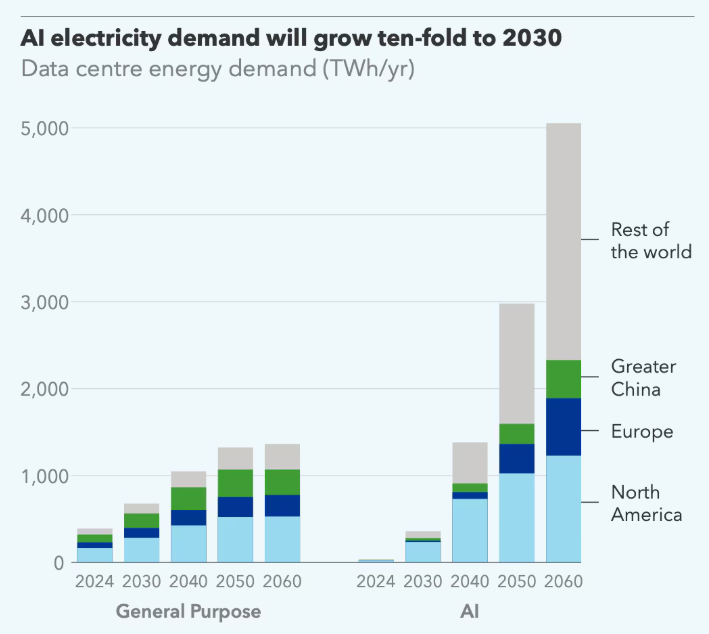
Artificial intelligence data centers represent the most difficult type of electricity demand faced by the global grid, according to a report published this May 18 by the World Economic Forum (WEF), which projects that AI will concentrate 11% of global final electricity consumption in 2060.
The document, signed by Knut Ørbeck-Nilssen, CEO of the energy company DNV, reaches this conclusion by contrast, since to define the difficulty that AI data centers impose on the electrical system, the report measured them against cryptocurrency mining.
“Until recently, data center electrical demand fell into two categories: large-scale, predictable cloud sites suitable for long-term planning, and cryptocurrency mining, volatile but frequently interruptible», points out the WEF text.
AI data centers, on the other hand, combine high power density, fast and uncertain consumption ramps, and low tolerance for interruption. That combination, according to the report, makes them the most demanding load any transmission network has ever had to absorb.
The technical distinction that the WEF article addresses between the demand for AI and mining centers has concrete consequences for the electricity system.
Bitcoin mining can be suspended and resumed without permanent loss of value. For example, if a miner turns off their equipment during hours of high electrical demand, they simply stop competing during that period, also releasing the energy they consumed, potentially relieving the grid.
An AI data center that disrupts its operations, on the other hand, you may lose inference jobs in progressbreak service contracts or interrupt running models. This asymmetry explains why power grid operators can negotiate planned outage conditions with miners; with AI centers, that margin is much smaller.
The AI bottleneck
The main warning of the report points to a mismatch in terms that the market has not yet resolved. Connect a new installation to the electrical network can take between 4 and 10 yearswhile building an AI data center requires only 2 or 3, mentions the WEF study.
The consequence is that network access, rather than capital or hardware, became the main bottleneck to scaling AI infrastructure. By 2030, according to estimates set out in the WEF report by the energy company DNV, 10% of new requests for connection to transmission networks will correspond to AI data centers and by 2040, that proportion will rise to 12%.
By 2060, according to DNV data, 80% of the electrical demand of data centers will come from AI: 6,400 TWh (terawatt hours) annually, equivalent to 11% of global final electricity consumption
From mining to AI: a decade of advantage in the electrical grid
Although the WEF report does not develop it, Bitcoin mining and AI share the same physical basis: large volumes of firm energy, industrial refrigeration and connection to high-voltage transmission networks.
From the perspective of a network operator, both activities pose the same connection problem, although the difference is that mining tolerates intermittent energy and variable pricewhile AI needs almost perfect availability.
The cryptoasset mining industry has also been solving the location problem that AI still faces for a decade, as companies seek to settle in sites with cheaper renewable energy (dams with surpluses, flared gas wells, wind farms with little local demand).
However, the infrastructure that miners have already connected in markets such as Paraguay, Pakistan or in remote areas of Africa with renewable surpluses represents, in several cases, capacity ready to host AI data centers without going through the connection queue that the report describes.
Thus, the debate that the WEF report opens on how to integrate a new type of electrical demand without compromising the stability of the system has, in the mining industry, a decade-long precedent that the energy discussion on AI has not yet finished processing.