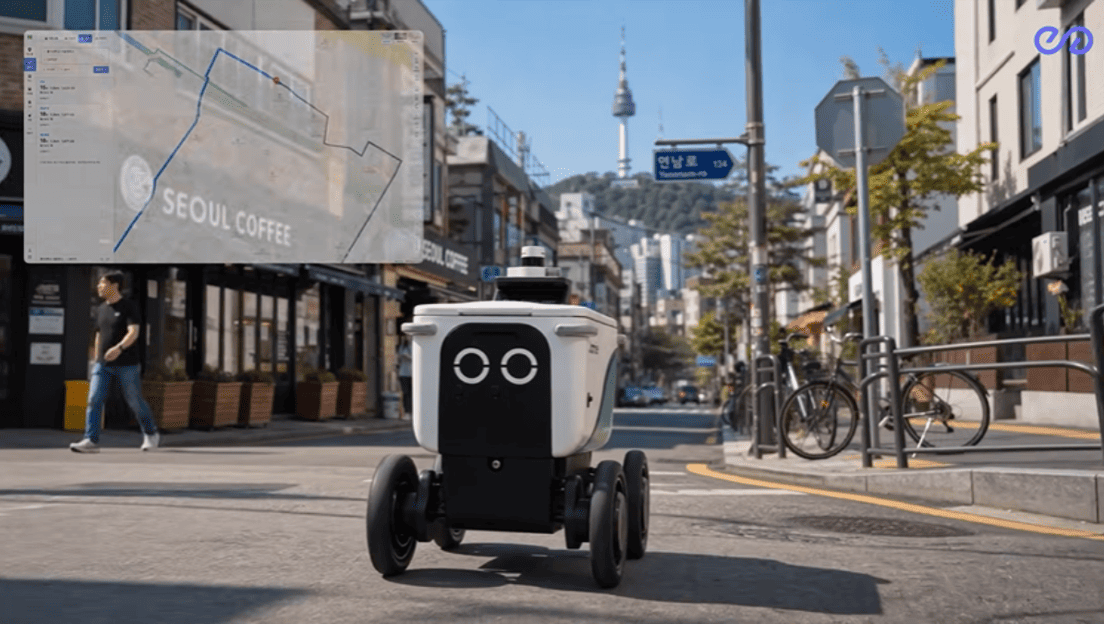
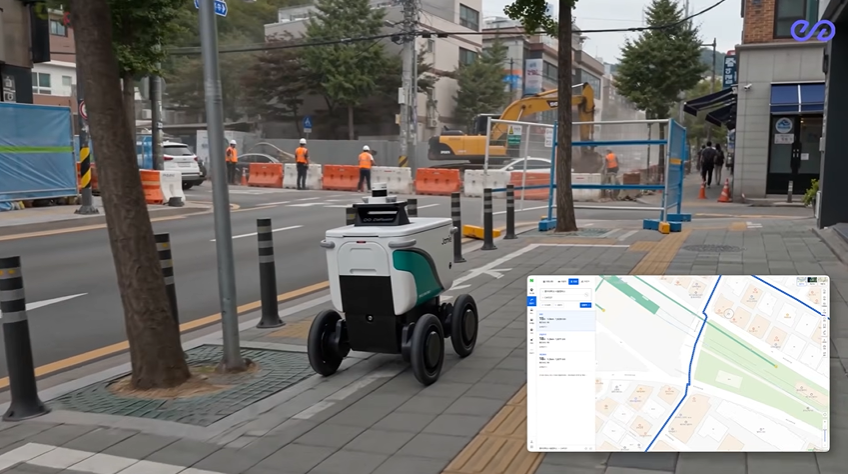
Receive a delivery task. Load a map. Detect a blocked path, choose another route and continue moving forward. Arrive, authenticate the delivery and get paid. All without any human intervening in any of those steps.
That is what peaq, a company specialized in ‘blockchain’ infrastructure for autonomous machines, demonstrated today, May 22, with a starring simulation by a robot from Serve Robotics, an American company that develops autonomous delivery robots for use on sidewalks.
In the demo, the robot navigates the streets of Seoul using NAVER Maps (the dominant mapping platform in South Korea, comparable in scale to Google Maps in that market), redirects its route in real time upon detecting an obstacle, and upon completing the delivery, receive payment in USDT via Tether WDK on the Solana network. No human operator was involved in the journey, according to the company.
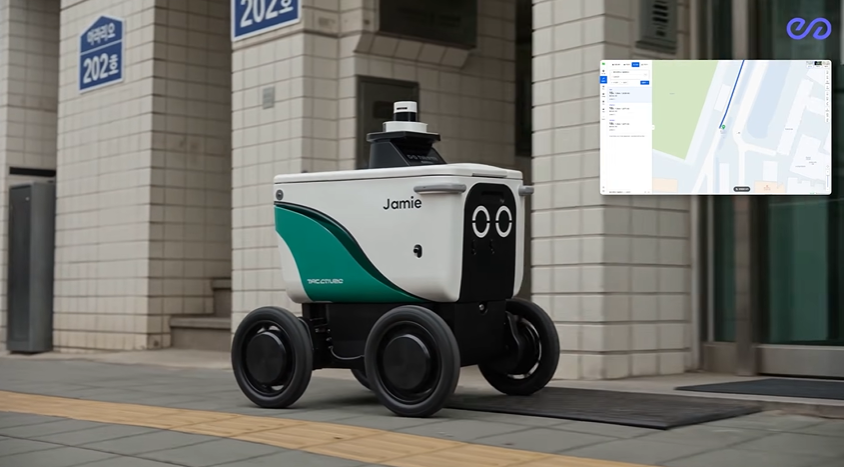
Although it was a simulation, peaq included in its announcement links to payments made on the Solana network; both the payment from the customer to the robot and the payment from the robot to the cafe where the order originated are registered on the network.
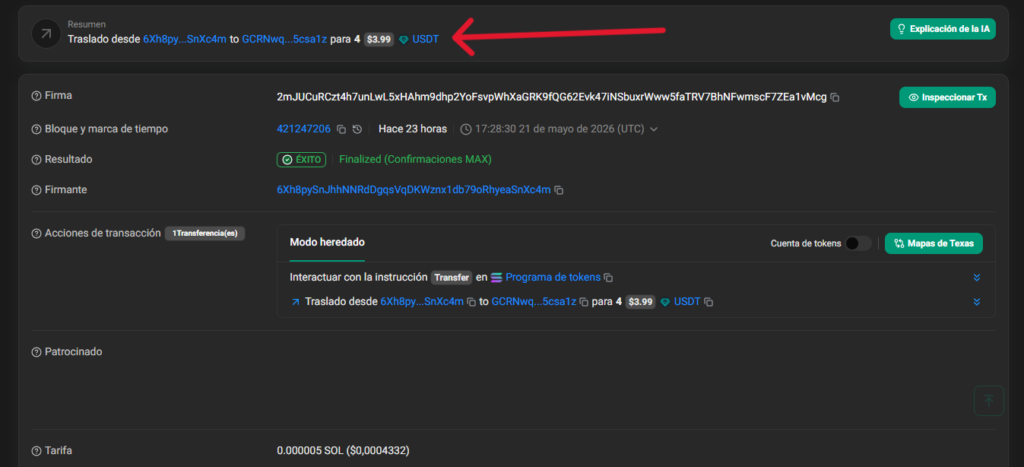
The following screenshot from the Solscan explorer shows one such transaction. the robot transferred 4 USDT (USD 3.99) to coffeeconfirmed on May 21 at 17:28 UTC in block 421247206, with a successful result and a network fee of USD 0.0004. The robot’s wallet is public and searchable in peaqscan.
The robot used a marketplace designed for autonomous machines
The simulated version was designed to illustrate peaqOS Scale, a marketplace where robots and autonomous machines can discover, contract and pay for digital services directly from your own wallet, without human intervention.
NAVER Maps is the first navigation service available in the peaqOS Scale catalog, which at the time of the announcement it lists 13 other services– From AI models like Claude, ChatGPT and Gemini, search and extraction tools like Wolfram Alpha and Exa, Google data services to storage using StableUpload and 2Captcha to interact with websites that require human verification.
An App Store with wallet for machines
peaqOS Scale works as a catalog of digital services that any robot with peaqOS can connect and use, paying directly from its own wallet, without a human operator authorizing or managing the transaction, according to the peaq team statement.
According to this company, the system is omnichain (multi-chain)that is, it operates on Solana, but you can contract and pay for a service hosted also on the Base chains (L2 of Ethereum) or on Sui without friction between networks.
However, until now the flow demonstrated was a simulation, not an operational deployment in real conditions.
With 13 services available on its first day, robotic.sh (the marketplace interface) has the initial catalog built. Whether robots operating in real conditions end up adopting this autonomous purchasing and payment model is the question that the launch leaves open.