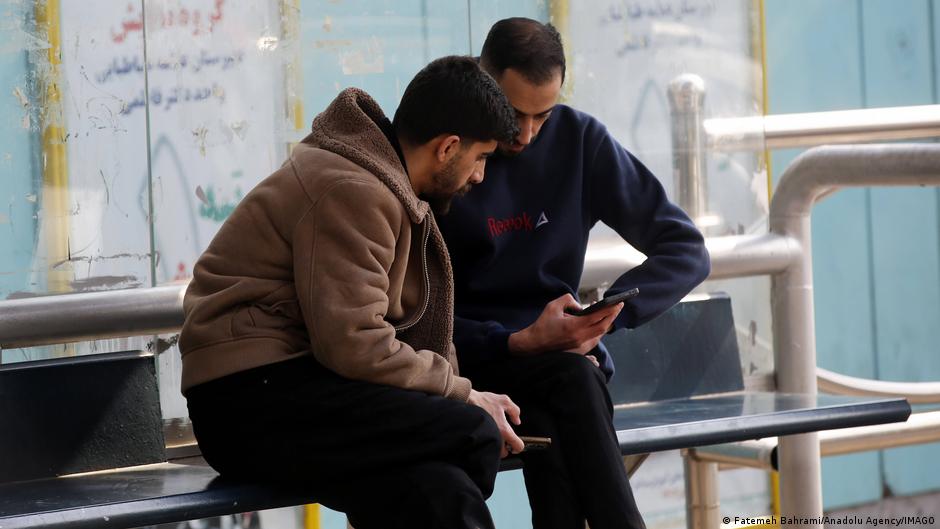
Internet access was partially restored in Iran earlier this week after an 88-day blackout. Real-time data from London-based global internet monitor Netblocks and IT company Cloudflare shows a significant increase in web traffic compared to recent weeks.
Cybersecurity expert Amir Rashidi said, “Web traffic is still lower than it was before January. At that time, it was about 50%.”
Rashidi is the director of the Miyan Group, a US-based organization that advocates for human rights, digital freedom and social justice in Iran and the Middle East and North Africa (MENA) region.
He points out that the internet in Iran has been severely disrupted since a deadly crackdown on nationwide protests in January. During the unrest, authorities largely shut down Internet access, disrupting communications within the country and with the outside world.
Iran experienced the longest nationwide internet shutdown in recent history following the US-Israeli attacks launched on Iran on February 28. Officials have cited security reasons for this measure. However, critics say this method has been used for years to control access to information and communications.
“The goal now appears to be to ensure that the Internet works in principle, but that data traffic is manipulated in a specific way,” Rashidi said. “It is believed that the connection will remain intact, but general and unrestricted use has been made difficult, so that hardly any data can leave the country and information about wars and protests cannot be transmitted.”
Iran makes internet access exclusive
On Monday, President Massoud Pezeshkian ordered the restoration of internet access, according to Iranian sources.
Earlier, a crisis management team was established under the leadership of his vice president, Mohammad Reza Aref, to reduce the “plurality of voices” and overlapping responsibilities in Iran’s Internet policy.
In Iran, several agencies are involved in decisions related to digital control, including the National Security Council and the Supreme Council for Cybersecurity.
For example, during the Internet blockade, the National Security Council approved a plan to provide access to so-called “Internet Pros” to certain groups in exchange for payment. This offer is for groups like Chamber of Commerce members, start-ups, technology companies and verified merchants.
“It appears that the ‘pro-Internet’ policy will continue,” said Rashidi, a cybersecurity expert. “We know that some groups continue to receive promotional and informational messages encouraging them to purchase specific packages.”
In addition to social consequences, the Internet blackout had a significant economic impact, particularly for small businesses, including many women-led online enterprises that were destroyed due to the blackout.
“Many women in small towns and villages use the Internet to sell products such as dried fruits, handmade clothes or food,” said Solmaz Ekder of Filterban, also known as Filterwatch, an Iranian digital rights organization that tracks Internet censorship, digital repression and surveillance in Iran.
His work focuses on Internet censorship, digital repression, and surveillance in Iran.
“This income was essential for many families – but now this opportunity has been taken away from them,” he told DW last week.
monitoring communications
Millions of people in Iran are cut off from the digital economy and communications. Apps like WhatsApp, which play a key role in communications within the country and with the outside world, are still not working even with a VPN connection, multiple sources confirmed to DW.
Iran’s Internet is subject to strict censorship even in peacetime. Many websites and apps have been blocked. Expensive local VPN services are part of most users’ daily lives to access social media platforms like Instagram, TikTok, and YouTube.
VPNs, or Virtual Private Networks, create an encrypted connection between a device and a server abroad, providing access to the open Internet.
The only remaining means of communication, in some cases, is the telephone landline network. Before the connection is established, an automated message plays, providing a code. The connection is established only after entering this code. There is suspicion that calls are being monitored during this process.
This article was originally written in German