
In Pichilemu, a 1978 van is the epicenter of an experiment in digital autonomy.
The rise of decentralized money pushes the Central Bank to accelerate control with a CBDC.
At first glance, a coast full of waves seems like the least thought-out scenario to challenge the world monetary order. However, in a Latin America suffocated by devaluation, bitcoin (BTC) leaves technical laboratories behind to directly take to the streets.
The strategy of community leaders is to break down resistance towards a complex technology using everyday wonder and pop culture as the perfect Trojan horse to engage the community.
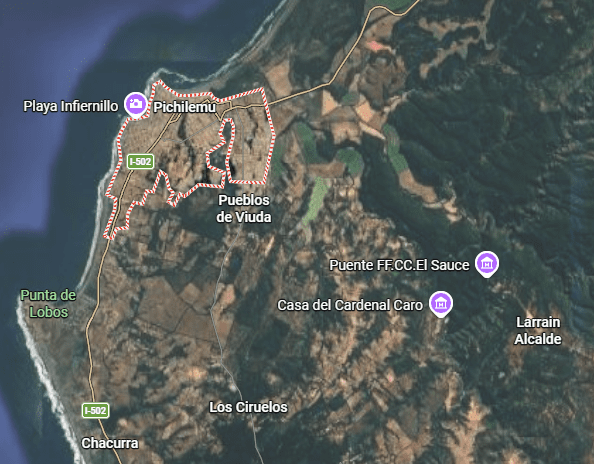
This trend, which already draws an alternative map of bitcoinized citadels or communities in El Salvador, Brazil, Honduras and Peru, has just landed in Chile. From the hand of Miguel Kaggles, bitcoiner and former president of the NGO Bitcoin Chile, the town of Pichilemu (playfully named in the ecosystem as “Satochilemu”) has become the epicenter of a microeconomic essay.
In an exclusive interview with CriptoNoticias, Kaggles explained that the objective of structuring a closed circuit where value is generated and remains in the same region emerged over time. After years of analysis that began in 2021, Miguel dedicated himself to carefully studying how the adoption of bitcoin could transform the community economy. His initial inspiration crossed the borders of the continent:
For several years I had the interest of replicating what happened in El Zonte, in El Salvador, with Bitcoin Beach. I dedicated myself to trying to find a location in Chile where a similar experiment could be done, where a circular economy could be set up and where the conditions were ideal so that… it could be successful.
Miguel Kaggles.

Putting this theory into practice required an environment with very lively commercial dynamics, sufficiently removed from the institutional inertia of the capital, but with the technical connectivity necessary to sustain a self-managed digital map.
After evaluating multiple development nodes that presented cultural resistance or operational failures in the preliminary stages, demographic and geographic variables began to align on the Chilean map, revealing the exact moment to take action:
Finally, approximately two years ago it was presented, let’s say. The opportunity with several different signs, several things that were signaling, that Pichilemu, which is a couple of hours from Santiago, was the ideal town to be able to do something of that style.
Miguel Kaggles.
These types of regional projects usually arises from a tendency toward voluntary isolationa dynamic of strict survival in the face of the aggressive global regulatory offensive, marked by warnings from security agencies against platforms without KYC and the arrests of privacy tool developers in developed countries.
As CriptoNoticias reported when examining the case of Francis Pouliot and the Bitcoin Jungle community in the Costa Rican jungle, geographic disconnection has become the only possible shield against total oversight. For these groups, Leaving aside is the only way to exercise the ethical right to say “no” to the traditional financial system and build a living resistance against state control.
In the Chilean case, the gear that moves this laboratory works under that same logic of absolute disintermediation, where the daily exchange is carried out natively on the network. But for the common citizen to break the bias that bitcoin is a matter exclusively for elites or speculators, the project needed a visual catalyst.
A 1978 van as a financial “Trojan Horse”
Financial literacy here is not achieved with technical discourses, but by turning monetary sovereignty into a shared and playful effort, as detailed by Kaggles:
We tour the city on four wheels. It is literally a Scooby Doo type van, but branded with bitcoin in the background, it is like a mix between a Scooby Doo mystery machine and a Bitcoin machine. It was officially launched for a festival, and we have it here in Pichilemu, where it is paraded with Bitcoin branding.
Miguel Kaggles.
By encouraging local productivity without going through the State payment gateways, the economic culture of the community is transformed. This learning process does not occur in an imposed manner through decrees, but as a direct consequence of the spontaneous interaction and curiosity that is generated in the public space, describing a social dynamic that turns digital currency into something everyday and accessible to everyone:
People like it because they find it entertaining to ride in a Volkswagen combi from the year 78. Everyone takes a photo of it and says hello. And we use it as a method to become bitcoinized along the way, because eventually after people get off, some come up and ask more. So it’s a very good hook to start the conversation and introduce the orange pill.
Miguel Kaggles.
4 drivers for a circular bitcoin economy in Chile
When asked how that abstract “orange pill” is translated on the store counter or in the neighbors’ pockets, Miguel dismantles the technical jargon with the naturalness of someone explaining the rules of a well-known board game. For him, The secret of this coastal laboratory lies in activating three microeconomic gears that change the physics of local money:
- 1.-A decentralized bank for a basic income
The project on the Chilean coast is not limited to guerrilla marketing on wheels; has a deep financial infrastructure ambition. Kaggles revealed that one of the most important phases of the project is the creation of a decentralized bank designed to sustain the community ecosystem. This autonomous institutional structure is designed to connect directly with a basic income plan, serving as the native mechanism to channel and distribute funds directly to the inhabitants of the area.
- 2.-The money that refuses to escape to the capital
In the traditional financial model, cash that enters a small community usually flees quickly to the accounts of large corporations in Santiago. Here the paradox is the other way around: by setting up a closed circuit, the satoshis become trapped in Pichilemu. Digital capital flows in a matter of minutes from fisherman to baker, making the domestic economy spin faster and feed itself directly.
- 3.-The death of the banking toll
For the small neighborhood merchant, credit card fees represent an invisible tax that suffocates their profit margins. Miguel explains that the human solution to this problem is second-layer microchannels (the Lightning network). By settling each purchase in seconds and directly, a digital peso sent is a digital peso received, returning control of the flow to the local business.
- 4.- A shield of mathematical scarcity in your pocket
Faced with a regional economy accustomed to seeing how chronic devaluation melts the effort of daily work, the project proposes a change in the psychology of money. When transacting a finite issue asset, everyday exchange is no longer an ephemeral short-term gain. It becomes, according to Miguel’s vision, a tool of resistance and a firm financial ground where coastal families can plan for the future.
Chile under the shadow of the digital peso
However, this oasis of financial autonomy is moving on a deeply uncertain institutional asphalt. Currently, Chile lacks a specific and definitive regulatory framework for the bitcoin and cryptocurrency ecosystem. In this scenario of legal vacuum, the turn that regulation may take in the short term is completely unpredictable, which inevitably raises alarms about an experiment that seeks, openly, to test a distribution of value outside the State.
The noise among the authorities is not coincidental. This specifically due to the fact that Chile today registers one of the highest stablecoin adoption rates in the regiona phenomenon of passive digital dollarization that has forced the Central Bank to accelerate the debate on the launch of its own Central Bank Digital Currency (CBDC), the so-called digital peso.
As economist Patricio Jaramillo warns, given the structural impossibility of competing against the dollar that backs these stablecoins, the only viable public strategy is rapid adaptation. “The question is not whether this phenomenon will have an impact, but how prepared we will be to face it,” he concludes.
In the end, the “Satochilemu” microeconomic laboratory is much more than a flashy van; is a living symptom of a region that got tired of waiting for solutions from government offices.
While the global regulatory debate continues its course in the courts and central banks accelerate the design of their own digital surveillance currencies, in Pichilemu monetary sovereignty is already moving on four wheels from the year 78.
The financial mystery machine began to roll and, for the residents of the coast, the real mystery is no longer how the Bitcoin code works, but why they agreed to live for so long chained to the rules of a game that was always designed to make them lose.