
“Bitcoin reserves are a reality and will be discussed in central banks,” says Paternó.
He notes that the speed with which similar laws will be implemented will depend on the political context.
The bill introduced in the United States Congress to grant legal permanence to its strategic bitcoin reserve (BTC) could become a catalyst for the financial architecture of Latin America.
This is considered by Argentine lawyer Jorge Paternó, partner and founder of the law firm CSPartners, who affirms that this initiative, identified as HR 8957 or ARMA Law, has the potential to definitively establish the discussion on the inclusion of digital currencies. within the sovereign reserves of the central banks of the region.
The analyst considers that this movement represents an unavoidable economic reference for the rest of the Latin American countries, opening a technical debate on the management of public funds.
In dialogue with CriptoNoticias, Paternó highlights the relevance of the legal structure of the US project, pointing out that the intention is to provide greater institutional weight to the strategic reserve of bitcoin (BTC) in the face of political changes.
Indeed, the regulations, introduced last May, have the main objective of granting legal continuity to the bitcoin reserve ordered through the executive order 14,233 on March 6, 2025 by President Donald Trump, preventing future administrations from unilaterally reversing it.
The lawyer highlights that the ARMA Law is in its early stages and, therefore, “the North American Congress will have to navigate.” Although he highlights that he seeks to “shield the reservation so that it is more than an ordinance issued by the Executive Branch, one issued directly from Congress, so that it has the force of law and that makes it, let’s say, more lasting over time.”
Paternó argues that the implications of the legislation for the American continent will be significant due to the geopolitical role of the North American nation as a trendsetter in international markets. The specialist explained that with this law “it can become a reference point to consider when talking about virtual assets in the countries’ reserves.”
In his opinion, “there is always a first trigger,” which in this case is the US with its GUN Act, “which sets the agenda.” “Which can be inspiring for Latin American countries,” he says.

“The US initiative can be a good kickstart for Latin American countries to begin discussing the issue of virtual assets as part of reserves,” he points out.
Contagion depends on the political environment in Latin America
However, Paternó clarifies that the speed of the law’s replication in the region—if it comes to fruition in the United States—will be strongly conditioned by the internal political scenario of each Latin American nation and, of course, his relationship with Washington.
The founder of CSPartners points out that Latin America “is very changing” and that political aspects and alignments with the US will be an indispensable part of an eventual contagion effect of the law to protect bitcoin reserves.
“The possibility of implementing it or not, and the speed it may have, will also have a lot to do with the political agendas or the political context of each Latin American country,” he comments.
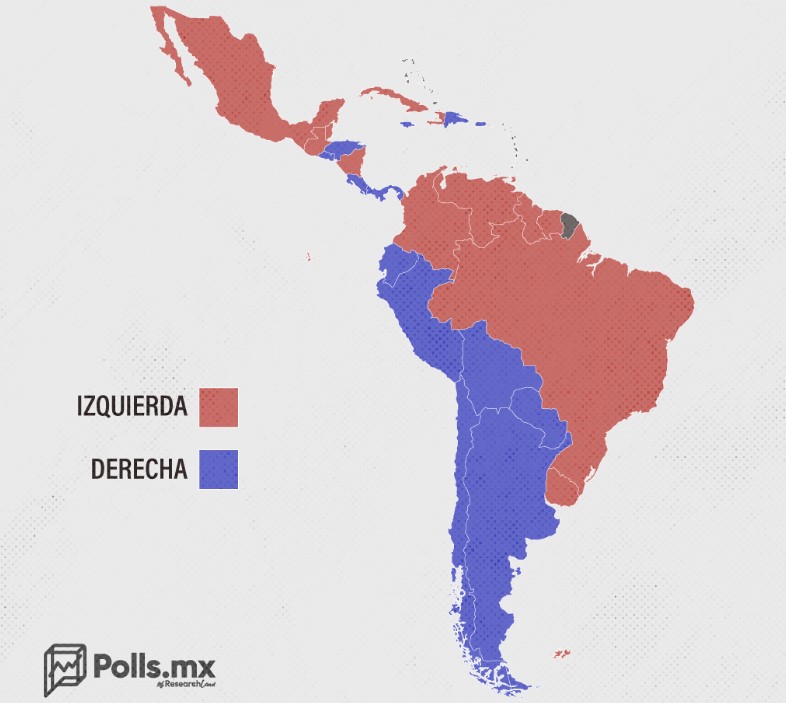
Seen from that prism, and in the event that the ARMA Law goes ahead and is approved, the contagion effect would be replicated—perhaps—in some Latin American countries whose governments are right-wing and are politically aligned with Washington. Argentina, Chile, Ecuador, El Salvador and the Dominican Republic would enter that package.
However, those opposing nations, such as Mexico, Brazil, Honduras and Colombia; likely watch the project go by from the front sidewalk.
What is the GUN law and why does it matter?
The background to this technical discussion dates back to May 21, 2026, when Republican Congressman Nick Begich introduced in the House of Representatives, together with Democrat Jared Golden, the bipartisan proposal known as the American Reserve Modernization Act (ARMA).
Subsequently, on Friday, June 5, the full text of the 19-page legislative proposal was formally uploaded to Congressional web servers for public access.
The ARMA Act proposal contemplates transferring control of all digital assets held by federal agencies directly to the Treasury Department, establishing a structural separation that allocates a exclusive fund for bitcoin and a separate repository for the rest of the virtual assets.
Furthermore, the legislation stipulates that bitcoin funds held by the State must be kept for a minimum period of 20 yearsallowing sales only under limited circumstances, such as measures aimed at reducing the nation’s public debt.
The legal framework also introduces independent audits, quarterly public reports and direct supervision of the Legislative Branch.
Faced with this panorama, Paternó makes his position clear: an imminent impact on the treasuries of Latin America is ruled out. However, it is reiterative in stating that the digital asset It is already part of the agenda of local regulators as the private sector promotes its use.
Therefore, he emphasizes that there would be a contagion effect because the project is born from a reality that, in his words, “is here to stay and is going to be installed on the tables, in the central banks.”