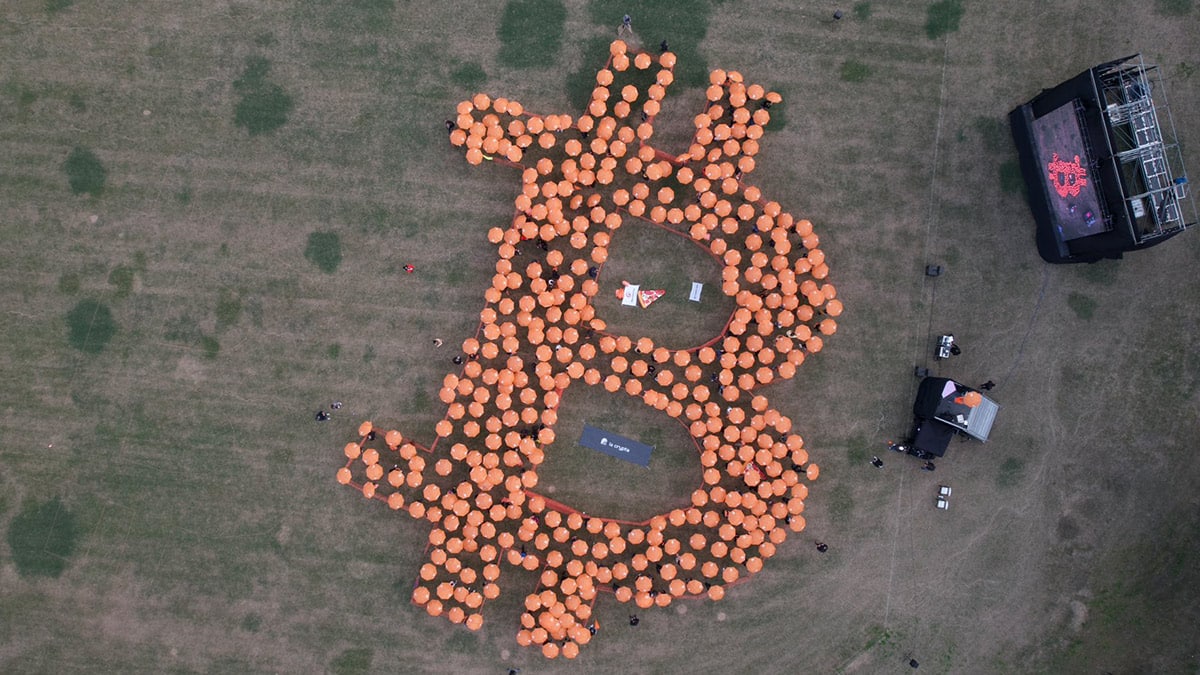
The entity clarifies that the network is auditable, but the use of funds is the responsibility of the user.
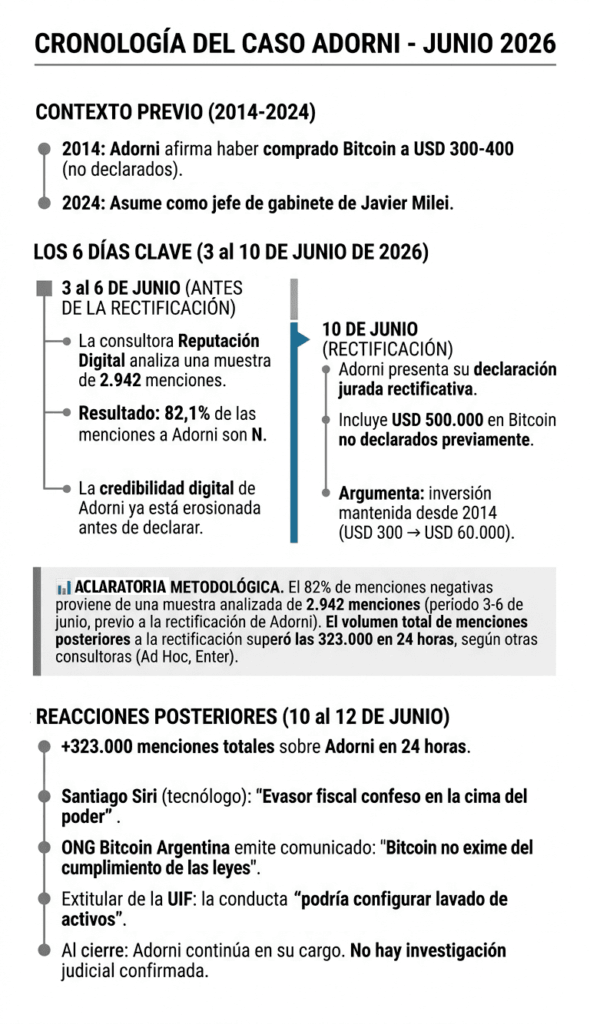
The debate broke out after Manuel Adorni declared a hidden fortune of USD 500,000 in bitcoin.
Technology lacks morals, but the actions of those who use it fall under public scrutiny. This is the central premise that the NGO Bitcoin Argentina exposes in the midst of the political crisis that affects the environment of President Javier Milei.
Through an official statement, the civil organization seeks decouple bitcoin from individual behaviors of its users, opening a debate on technical and legal responsibility.
The entity’s reaction responds to the impact caused by Manuel Adorni, chief of staff and presidential spokesperson, who rectified his sworn declaration of assets to incorporate more than half a million dollars in bitcoin that had not been established in their previous official reports, as reported by CriptoNoticias.
The case revived questions from various sectors that point to digital currency as a tool that facilitates fiscal opacity and the concealment of assets.
The debate occurs in a context of high sensitivity for Argentina, a country that is among the global leaders in the adoption of these assets, where one in four citizens turns to the digital environment to protect their savings from inflation.
The NGO’s plea in defense of Bitcoin
Bitcoin is an open, decentralized and neutral network that can be used by anyone. As with the Internet and other commonly used technologies, the analysis of how it works must be differentiated from the individual actions of those who use it. At the same time, Bitcoin does not exempt any person from compliance with legal, regulatory or tax obligations in force in each jurisdiction.
NGO Bitcoin Argentina.
To support this position, the document highlights the coexistence of two operational pillars. On the one hand, self-custody, which allows users to control their funds using passwords private cryptocurrencies without banking intermediation.
On the other hand, the auditability of the Bitcoin network, a public accounting book where each movement is permanently recorded. However, at this point lies the complexity of the system because the transactions are visible to anyone, but the identities of the owners remain hidden under alphanumeric codes.
The organization’s statement avoids directly mentioning Adorni, focusing the argument on the regulatory framework. However, the publication of the text in the same week as the official’s property rectification, and without any other similar public event taking place, makes it unavoidable to link both events.
Argentine citizens, critical sectors of the opposition and various analysts reject the official’s actions. And there are those who say that the pseudonym of decentralized networks makes control tasks difficult and facilitates evasion.
The limits of state control in the digital age
Against this position, the NGO counters that the evaluation of the legal or illicit origin of funds is a task of exclusive competence of the State and its control agencies, and not of technology.
Under this logic, the statement introduces a key distinction. It is the fact that One thing is the necessary supervision of public officials and another is the right to privacy. and security of ordinary citizens against possible leaks of their financial data.
The scenario exposes the structural tension of bitcoin and cryptocurrencies in modern public management. This is where the blockchain provides a digital accounting trail for judicial reports, but this record is only useful if an official investigation manages to unequivocally link the identity of the official with the address of his virtual wallet.
Without that legal bridge, technology will continue to operate at the border where anonymity and technical transparency compete under their own rules.
In the end, the case of Manuel Adorni leaves an uncomfortable certainty in Argentine politics. It is that as long as State institutions do not adapt their audit mechanisms to the speed of the digital age, sworn asset declarations of public officials will continue to depend more on good faith and last minute corrections, rather than real and effective control.