In mid-June, the German Weather Service (DWD) described the record-breaking heat in Germany and Europe as a “heat wave for the history books”.
The 40 °C (104 °F) mark was exceeded at 46 weather stations in 11 German states, the highest temperature ever recorded for the month of June.
Eleven hot days and nights made many people’s homes so hot that coolness and a good night’s sleep were out of the question. Chronic lack of rest can have serious health consequences and can even be fatal.
Extreme heat waves are becoming more common across Europe and elsewhere. On July 7, 2026, the World Health Organization warned that “the next heat wave is already forming in the Atlantic. Temperatures are forecast to reach 43 degrees Celsius in Portugal and southern Spain this week. France and the Benelux are preparing for another heat surge. Parts of Central Asia are sweltering below 40 degrees.”
It’s time for homeowners and local governments to rethink their approach to housing, says Thomas Auer, professor of building technology and climate-friendly construction at the Technical University of Munich.
“If you don’t think about cooling in summer when you build, that’s a big mistake,” Auer told DW.
Windows: lots of light, lots of sun, lots of heat
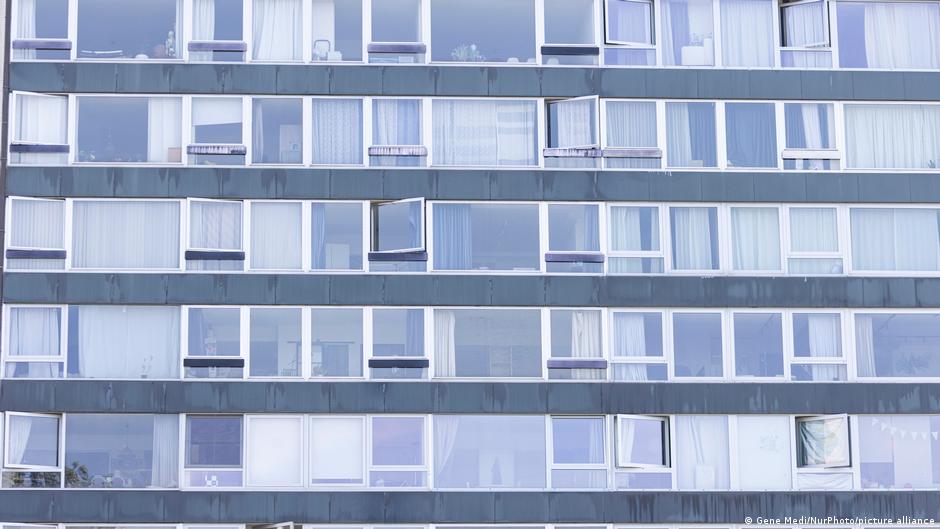
Direct sunlight is the number one source of heat. Therefore, Auer says it is important to have a “proper proportion of window area” – that is, the number and size of windows that provide enough light without creating a greenhouse-like atmosphere in the apartment.
In many rental apartments, he said, there aren’t enough shading options with roller shutters or blinds.
Shading is especially problematic in attic apartments, where heat accumulates.
“A skylight exposes far more sun than a vertical window,” Auer said. “And [the requisite] It’s hard to build cinematography tools.”
Concrete, wood, clay, brick – which materials are heat resistant?
From floors to walls and ceilings, most houses in Germany are made of concrete.
When it comes to regulating heat (aka thermoregulation), concrete doesn’t seem like such a bad idea at first glance. The material has high thermal mass, meaning it can absorb large amounts of heat and release it slowly over time.
Concrete acts as a climate buffer. However, for this to work, the nights must be cool so that the concrete can release the heat it absorbed during the day. But if the temperature does not drop below 20 degrees Celsius at night, the walls remain warm.
Another problem with concrete is that the cement used to make it produces high CO2 emissions, which is a cause of climate change.
Auer says we need “sensitive combinations of mineral ingredients [such as concrete] And use natural materials like wood while building a house.
“A traditional construction method in Germany was half-timber framing filled with clay,” said Auer, who advocates a return to that method. He says that the soil controls the temperature and humidity of the room.
By using so-called “activated clay building panels”, existing apartments can be made more heat resistant. The panels are equipped with a system of pipes through which water flows.
“This will be an excellent way to regulate the climate in the apartment,” Auer said, in summer and winter alike.
Heat pumps provide another way to cool buildings. The Fraunhofer Institute for Building Physics has a webpage that explains How can a heat pump be used for cooling. Heat pumps are usually installed as heating systems, but can also be used for cooling when operated in reverse mode.
Homes with courtyards provide better indoor climate
Auer takes inspiration from countries and regions that have long had to adapt to heat, such as Andalusia in Spain. There are many courtyard houses – buildings arranged in such a way that a courtyard is formed in the centre.
Trees and roof overhangs often provide shade in these courtyards; Sometimes there is a fountain or other type of water source.
“This creates a pleasant microclimate and allows cross-ventilation,” Auer said.
air conditioning in extreme heat
Since not all existing buildings can be converted into courtyard houses, purchasing an air conditioner may seem like a good option.
But Auer says air conditioning is short-sighted, and, in some cases, could even be harmful.
Air conditioners create huge differences in indoor and outdoor temperatures. They remove moisture from the air, making it dry. And it may contribute to respiratory conditions and allergies, a study based in India showed.
Additionally, an earlier study in China suggested that prolonged exposure to air-conditioned rooms reduces the body’s natural ability to acclimatize to heat.
Germany’s Federal Environment Agency has also warned that air conditioners increase CO2 emissions due to their energy consumption. Greenhouse-gas emitting refrigerants present in some AC systems can harm the climate.
It is possible to cool buildings and protect people from extreme heat without further increasing greenhouse gas emissions.
Auer says we need to combine natural and mineral materials with minimal use of glass and ample shading options, where technology simply complements traditional construction methods.
That said, Auer is not averse to technology like air conditioning. He just bought a ceiling fan for the bedroom and says, “It really saved us this year.”
This article was originally published in German on July 6, 2026.