The US and Iran are again at war after a long but unstable ceasefire, with the latest US strikes appearing to be focused less on Iranian coastal installations and maritime targets in the Strait of Hormuz.
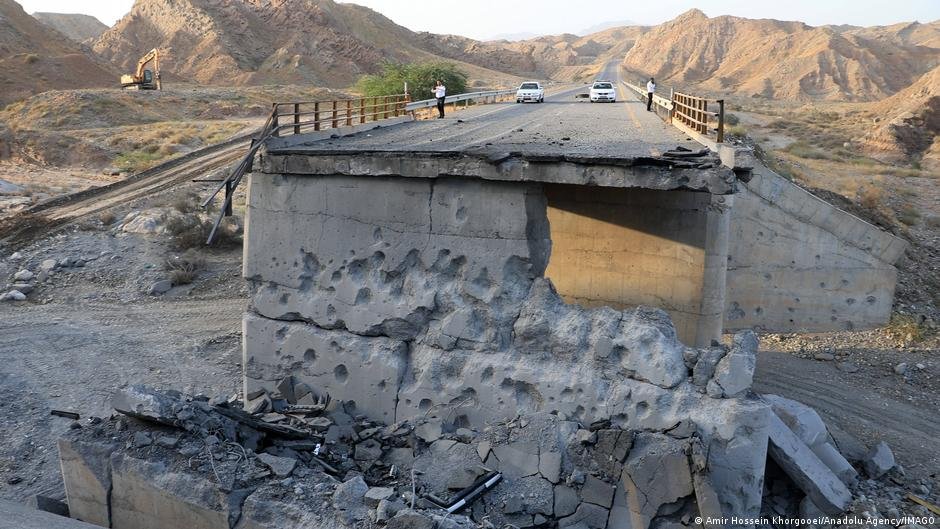
Iranian media and local officials have reported attacks on bridges, tunnels, roads, rail infrastructure, power facilities and desalination plants in southern Iran last week.
Hormozgan province, just north of the Strait of Hormuz, has been particularly hard hit.
According to Iranian media, six bridges in Khamir County were damaged on the morning of Friday, July 17.
A few hours later, there were further reports of attacks on two tunnels and two more bridges in Hormozgan. At least eight people are reported killed in the attacks on the bridge.
US campaign aims for mobility and recovery
It seems that the American Army has also carried out the attacks very thoughtfully. In the first wave, bridges to the west and north of the provincial capital Bandar Abbas were affected.
In the second wave, a bridge in the east, a bridge in the north, and two tunnels in the north of the city were damaged. Additionally, the section of railway west of Bandar Abbas was also affected.
Thanka Bradust, an international security analyst at Virginia Tech in the US, told DW that the US’s main objective remains the same.
“The US goal in attacking southern Iran is to reopen the Strait of Hormuz,” he said.
However, he said Washington is trying to do more than address direct military threats to shipping.
The U.S. military is destroying infrastructure that could help Iran rebuild, rebuild or maintain military pressure in the region, he said, adding that this is why bridges, roads and rail lines have become targets.
He also warned that Washington could move to take control of the strategic Kharg island, home to Iran’s main oil export terminal, to address the broader threat to Hormuz.
Can America cripple Kharag Island without destroying it?
The US has so far avoided targeting energy facilities on the island, home to Iran’s main oil export terminal, said Ahmad Vakhshiteh, director of the Moscow-based Center for Strategic Research on the Development of Relations with the Middle East.
“Naturally, the island is valuable as long as its oil facilities are operational and undamaged,” he told DW. “But the main question is whether the United States wants to seize Kharg militarily or whether, through repeated attacks, it can achieve what can be described as a political occupation of the island.”
“In other words, instead of deploying ground forces, it could continue nightly attacks on Kharg and other parts of southern Iran to create the public perception that southern Iran has fallen or that its energy infrastructure can no longer function,” Vakhshiteh said, adding that this could increase public pressure on Iranian leaders.
“One possible scenario is that, if Iran does not show flexibility in negotiations with the United States, Washington could increase pressure on Kharg Island in an effort to bring Iranian oil exports closer to zero,” Vakhshiteh said.
However, the Russia-based analyst pointed out that such a move would deal a major blow to global energy markets, which could also have serious consequences for the United States and US President Donald Trump.
He added, “Overall, however, I do not think the United States would miscalculate in deploying its troops to Kharg Island. Doing so would put it at war, requiring enormous resources to capture the island before ultimately being forced to withdraw.”
Washington is increasing the cost of war
While Washington and Tehran were able to sign a memorandum of understanding in June, Iranian officials have stepped up their rhetoric since the burial of Ayatollah Ali Khamenei two weeks ago.
These include increasingly common references to revenge, Bradust said, indicating an intense ideological imperative of confrontation, making compromise difficult.
Iran is also trying to escalate the energy crisis and pass on the costs of war to others so that the conflict becomes too costly to maintain.
In turn, Washington has focused on gradually reducing Tehran’s ability to project power, from Iran’s naval and logistics capabilities to energy exports and its ability to use the Strait of Hormuz as leverage.
political survival game
The attacks on Iranian infrastructure in Hormozgan reflect broader competition over the next phase of the war.
Each collapsed bridge and tunnel impacts Iran’s ability to move troops toward the Strait of Hormuz, recoup losses and maintain pressure on one of the world’s most sensitive energy chokepoints.
However, as long as the war continues, the Trump administration will face political and economic pressures of its own, limiting the scope of its campaign.
While Tehran faces similar pressure to compromise, it also has other ideas.
The Iranian leadership appears to believe that if the threats to oil exports, energy security, and the Strait of Hormuz disappear, external pressure and public outrage can be focused on them rather than external enemies.
Viewed from this perspective, Iran’s strategy becomes less focused on defending the region and more on the regime protecting its own political survival.
Edited by: Wesley Rahn