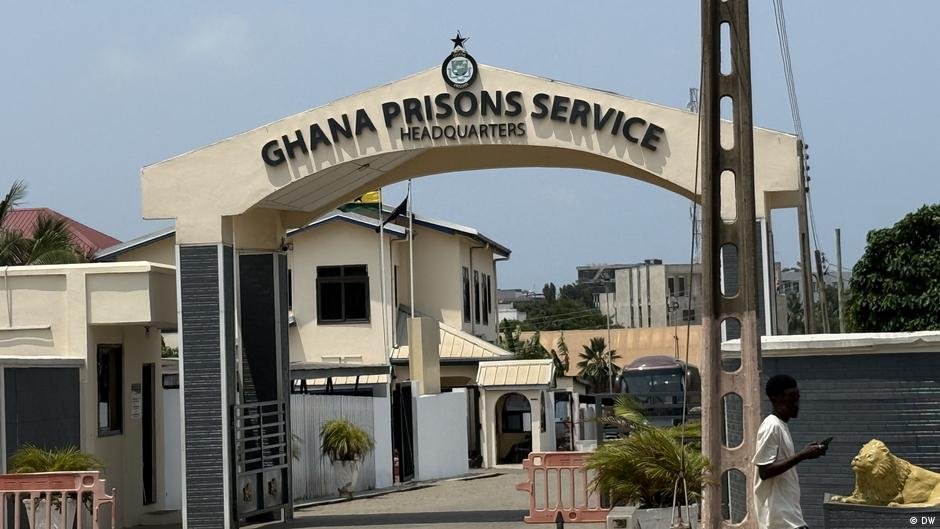
The Parliament of Ghana recently passed community service bill2026. The piece of legislation is designed to introduce community service as an alternative to custodial sentences for minor offences. The bill also seeks to reduce pressure on the country’s overcrowded prisons and redesign the way justice is delivered for minor crimes.
The law establishes a National Community Service Secretariat and provides a legal framework for courts to impose community service instead of imprisonment for specified offenses in Ghana.
According to the government, the move will ease the financial strain in maintaining prison facilities, which have long been plagued by inadequate budgets, high medical costs and chronic congestion.
Ghana’s Interior Minister, Muntaka Mubarak, said, “If you examine the current prison population, overcrowding is over 37%. Our current population is over 13,000 prisoners. The cost of maintaining them today, let alone feeding them, requires 10 million cedis (€752,000, $859,000) per quarter.” Bill introduced in ParliamentTold the House during a debate.
What offenses are covered under the Community Service Bill?
Under the Bill, community service is applicable to offenses punishable with imprisonment not exceeding three years with or without fine. Courts can also impose community service for offenses that involve a fine alone or with imprisonment.
This means that minor offenses such as false publications or traffic offenses can now be punished with non-custodial penalties.
Legal practitioner Christian Malm Hesse described the bill as “a step in the right direction”, citing its potential to reduce prison overcrowding. He told DW that the bill provides a structured option for misdemeanor crimes that previously did not carry a custodial sentence.
However, some Ghanaians believe that its effectiveness will depend on proper classification of crimes and public education.
According to DW correspondent Eric Mavuena Egbeta, many Ghanaians still need clarity as to which crimes qualify. “A crime that’s worse than a misdemeanor would mean you wouldn’t get a community sentence… a lot of people would need education on this,” Egbeta said.
For legal practitioners like Hesse, a key safeguard in the bill is the requirement for social screening reports, which help judges assess an offender’s background, circumstances and suitability for community service. Hesse said such measures ensure that sentencing decisions are informed and consistent, reducing the risk of arbitrary application.
Africa’s shift towards non-custodial sentencing
Ghana’s new path is in line with a growing trend across Africa, where countries such as Nigeria, Kenya, Zimbabwe, Malawi, Tanzania and Uganda have adopted similar non-custodial sentencing laws.
International bodies, including united nationsThe Office on Drugs and Crime has long encouraged the establishment of alternatives, citing benefits such as reduced recidivism (where a person returns to criminal behavior and is sent back to prison after completing a previous sentence), reduced state expenditure and improved community reintegration.
For Ghana, the bill represents the culmination of a decade-long policy process initiated in 2014 by the Ministry of the Interior with support from UNICEF. The resulting framework aims to modernize justice administration and align national laws with global best practices on restorative justice.
Experts say the bill could be a game-changer for the continent, offering a model for balancing accountability with rehabilitation. By redirecting minor offenders toward community labor, skills development, and civic responsibility, Ghana has joined a broader African effort to rethink punishment beyond incarceration.
What do Ghanaians think about the bill?
Ghanaian journalist Christabel Success said the law is “best suited for minor crimes”, but stressed the need for fairness in its application. “The method of application will determine whether it is a good bill or not,” he told DW.
“This will help us build capacity, build nations and rid our communities and our environment of waste,” Accra-based resident Noorah Suglo told DW. Success further said, “We will have clean cities, clean areas and we will make good use of our labor instead of crowding our prisons. Even people with minor crimes will get a chance to do something that will contribute to the country as a whole.”
However, Egbeta said crimes classified as second-degree felonies, such as home invasion, are outside the scope of the bill, which could frustrate hopes for sweeping reforms. Although Parliament has passed the Community Services Bill, it cannot come into effect until President John Dramani Mahama gives his assent.
Despite applauding its passage, Hesse pointed out that another important step forward for the bill is the creation of a Legislative Instrument (LI). Hesse said, “What is left is an LI. When bills like this are passed, it becomes secondary legislation under which operations become effective.”
This article was adapted from the AfricaLink Podcast. you can listen to the podcast Here.
Edited by: Crispin Mavakideau