
More than a year ago the Superfinanciera presented a proposal that it promised to take to Congress.
While the wait continues, Colombian banks and exchanges advance self-regulation.
More than a year has passed since the Financial Superintendency of Colombia (Superfinanciera or SFC) presented the vision that Gustavo Petro’s government has on the regulation of bitcoin (BTC).
The Colombian bitcoiner ecosystem felt excited after Superintendent César Ferrari presented the guidelines of a bill to regulate cryptocurrency exchangesidentified in their proposal as Virtual Asset Service Providers or PSAV.
The hope of achieving regulation gained strength, after two failed attempts with projects that were debated in the Colombian Congress in the last five years, but that did not go to the plenary sessions. The new proposal, emerged under the wing of the Superfinanciera, put the main focus on establishing standards for the creation of virtual assets and the operation of cryptocurrency exchanges.
The main guidelines – presented by Superintendent César Ferrari – this time had the support of the Ministry of Finance and the Bank of the Republic, including the support of members of the Colombian ecosystem and even representatives of Congress.
However, the wait has been prolonged. The central bank is the one that expresses many doubts in the debate carried out by the regulatory bodies, before presenting the project that they would deliver to Congress. As Mauricio Tovar, representative of the country before the Ibero-American Blockchain Alliance, comments to CriptoNoticias, the Bank of the Republic seems not having a clear position on regulation and that is causing delays.
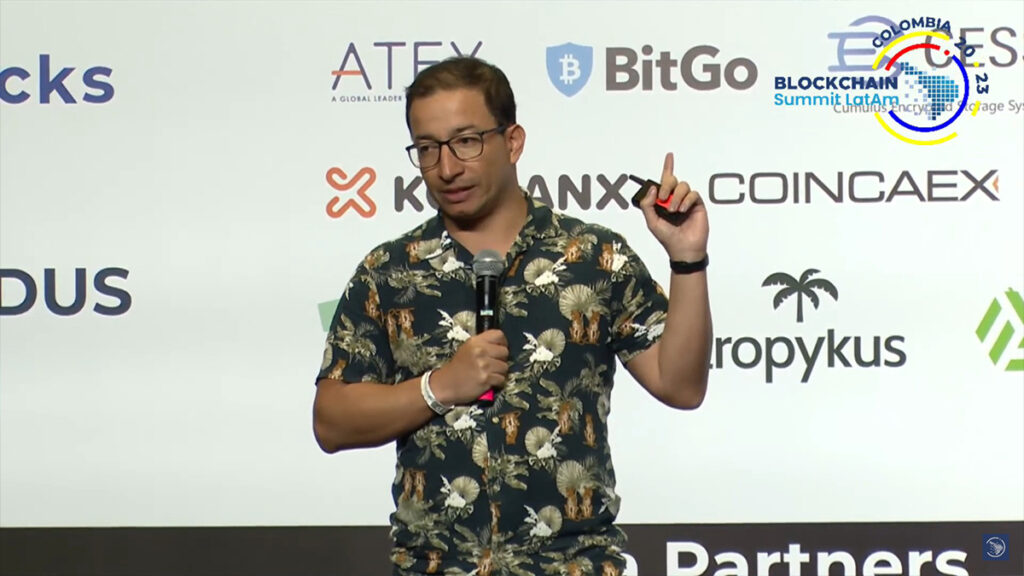
Hence the debates have spread. And although Tovar did not offer details about what the questions raised by the Bank of the Republic would be, it is known that the monetary entity has expressed itself on several occasions against cryptocurrencies considering that “they are not currency or currencies.”
The spokespersons for this organization usually insist that cryptocurrencies are not endorsed or regulated by the State, and do not have official recognition as a means of payment. In this way, the bank has been reluctant to give legal recognition to virtual assets. In addition, he constantly warns on his social networks about the volatility and risks associated with investing in cryptocurrencies.
However, Tovar assures that there is a consensus among all regulators on the need to advance in regulatory mattersespecially considering the level of adoption present in Colombia. Despite this, the process has been characterized by “a lot of debate and little real action” to advance the law and submit it to a vote in the legislature.
«There is a clear interest in exchanges meeting minimum requirements and above all in providing protection to users. Something that these platforms have already been doing in practice,” adds Tovar. This refers to a type of self-regulation that some banks apply in collaboration with cryptocurrency platforms. who participated in the regulatory sandbox coordinated by the Superfinanciera.
This is how entities, including Bancolombia, Davivienda and Itaú, chose to apply some of the existing regulations and are working on consolidating some of their projects with cryptocurrencies, while the regulatory framework is issued.
As reported by CriptoNoticias, the Superfinanciera reported last July on the closure of the sandbox that had been taking place since 2021. An experiment that allowed evaluating the trading activities of cryptocurrencies in a group of selected exchanges, which worked together with Colombian banks .
In its final evaluation, the SFC recognizes that the results provide a basis for advancing in the understanding of the risks and opportunities of this type of operations in its interaction with financial system services.
“The data collected (in the sandbox) provided essential information about the risks faced by both consumers and supervised entities,” said the Superfinanciera. Despite this, regulators remain cautious with regulation, maintaining the idea that “the activity is risky.”