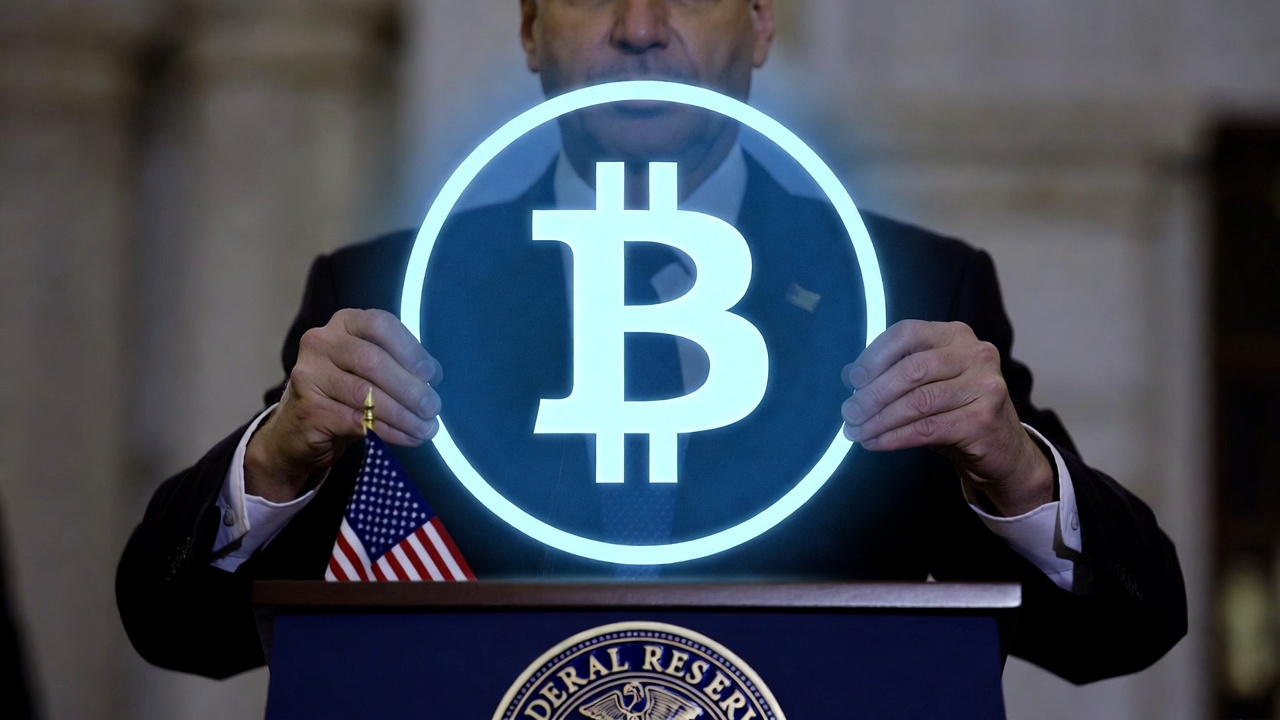
The nominee assures that he will part with the necessary assets to avoid conflicts of interest.
Considers bitcoin a key asset to discipline monetary policy.
Kevin Warsh’s ethics review is now the centerpiece of his confirmation process to chair the Federal Reserve (Fed), a path that formally began with his nomination by President Donald Trump. In response to this procedure, the former governor of the central bank presented a 69-page financial report to the US Office of Government Ethics on April 14, 2026.
It is about a document detailing a compound heritage above $100 million, including bitcoin-related projects (BTC) and cryptocurrencies. The fact raises a debate about the border between professional experience in emerging markets and the impartiality required for the position.
Warsh, who served as governor of the FED between 2006 and 2011, has developed his recent activity as a researcher at the Hoover Institution and an advisor to the Duquesne Family Office. This stage in the private sector is reflected in a declaration of assets that shows bets in sectors that the Federal Reserve itself must regulate, such as financial technology (fintech) and the development of protocols in Ethereum.
This trajectory in the private sector is interpreted by its defenders as a competitive advantagearguing that their direct knowledge of technological innovation will strengthen decision-making in the organization.
“The police” of monetary policy
However, the impact of his possible arrival at the Fed transcends administrative ethics and moves to the heart of the cryptocurrency market. For the bitcoin community, Warsh represents a paradox because he is a monetary “hawk”, a supporter of discipline and firm interest rates to control inflation, who, at the same time, calls Satoshi Nakamoto’s creation a “major asset.”

As CriptoNoticias has reported, in his academic interventions, Warsh has described bitcoin as a “good policeman” capable of issuing warning signals when the central bank makes mistakes or ignores inflation.
This vision suggests that, under his leadership, The FED could integrate bitcoin as a thermometer of economic healthproviding the sector with unprecedented institutional legitimacy. However, its restrictive profile poses a pressure scenario for speculative income assets.
Towards a Federal Reserve with code vision?
In any case, the FED’s supervision of the banking system and its influence on digital asset regulations raises questions in Washington. The institution not only manages monetary policy, but also defines how traditional banks interact with cryptocurrencies and artificial intelligence tools.
In this context, owning stakes in blockchain infrastructure companies could be interpreted as a potential conflict of interest, given that the FED’s decisions directly impact the valuation and legality of these markets.
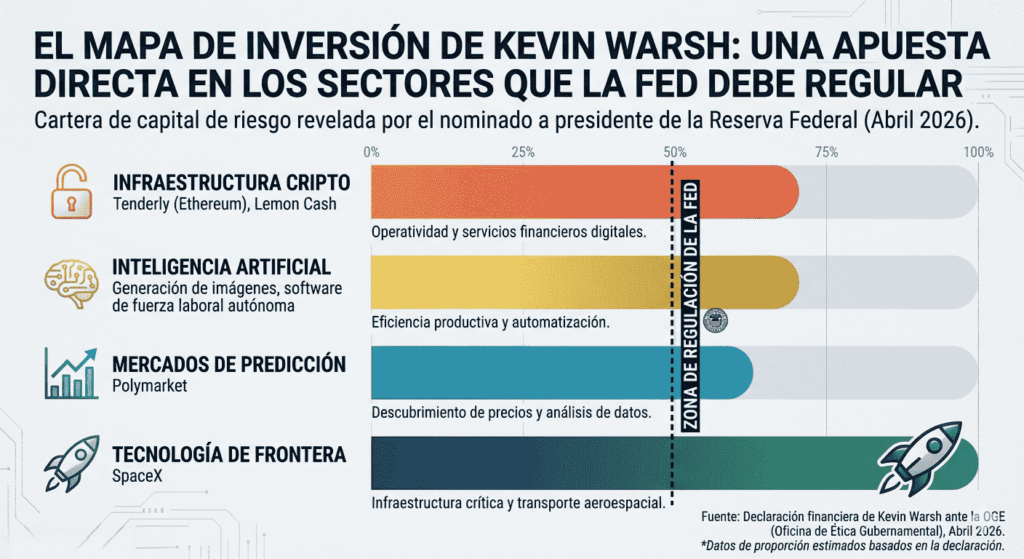
The confirmation process in the Senate Banking Committee will focus on the nominee’s ability to maintain institutional neutrality. Warsh has responded to these concerns with a formal asset sale commitment (divestment) if confirmed.
This measure seeks to shield the perception of independence of the FED, whose credibility depends on its leaders operating without financial ties with the industries under his supervision.
Ultimately, Warsh’s case highlights the structural tension in senior public service by contrasting the search for leaders with practical experience in markets against the need for absolute independence. The resolution of this scrutiny will determine whether the direction of the US economy will be in the hands of a profile that, after years of investment in disruptive technologies, will now have to integrate or limit them from the regulatory framework.