
This ETF operates through a strategy called ‘covered call’.
It will not follow the exact price of bitcoin, but will have reduced volatility.
Goldman Sachs bank filed today, April 14, 2026, a preliminary prospectus with the United States Securities and Exchange Commission (SEC) to launch the Goldman Sachs Bitcoin Premium Income ETF.
This exchange-traded fund (ETF) seeks to offer exposure to bitcoin without directly owning the digital asset, focusing on generating dividends for its investors.
The signature opted for a structure that will have lower volatility compared to that presented by the funds that own the currency directly. Therefore, it will not follow exactly the price of bitcoin, as will be detailed later in this text.
The design is designed for those who wish to participate in the performance of bitcoin, but under a more controlled risk profile than that of traditional investment in the asset and with recurring benefits.
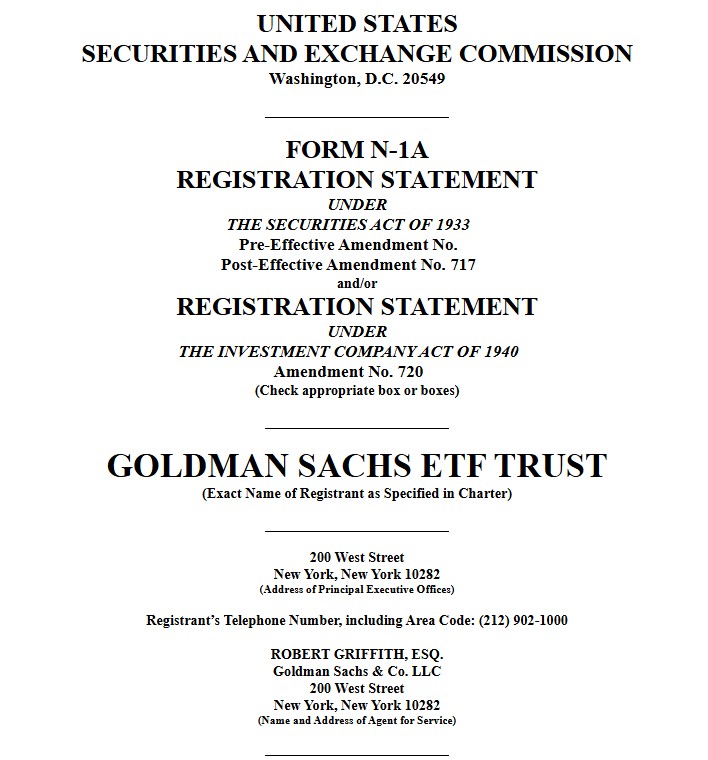
Unlike spot bitcoin ETFs (spot) launched in January 2024, as reported by CriptoNoticias – whose function is the purchase and custody of the asset -, the Goldman Sachs fund will use the strategy of “covered call” or selling covered options. This allows the fund earns income through option premiums, which translates into possible monthly distributions of money for fund participants.
To comply with the US legal framework and optimize tax treatment, the fund was registered under the Investment Company Act of 1940 (’40 Act). Under this scheme, the entity plans to use a subsidiary based in the Cayman Islands to manage exposure to bitcoin indirectly through other ETFs and financial derivatives.
This foray by Goldman Sachs into the bitcoin ETF market has surprised sector specialists. Eric Balchunas, ETF analyst at Bloomberg Intelligence, pointed out that “Goldman could be sensing an opportunity to surpass direct competition.”
The specialist added that the bank “is probably hearing from its clients that they want bitcoin but with less volatility and are happy to give up some upside potential in exchange for lower downside risk and income.”
By using the strategy covered callthe fund sells options on its exposure to bitcoin and charges a premium for it, which it then distributes monthly as income.
That income has a cost. If bitcoin rises sharply, the fund doesn’t capture all of that gain because the sold options prevent it from doing so—that’s what “giving up some upside potential” refers to. But if bitcoin falls, the premiums collected cushion part of the loss, reducing the downward blow—that’s the “lower downside risk.”
In other words, the fund does not follow the price of bitcoin like a mirror, but rather moderates it in both directions, sacrificing more extreme gains in exchange for less steep declines and a regular income stream.
«I can’t say I saw this coming. I rather thought that JP Morgan and Goldman Sachs would stay out of the bitcoin market in favor of competing in other categories,” Balchunas admitted.