Peace talks between the United States and Iran in Islamabad failed to reach an agreement, with one key issue proving to be the main obstacle: Iran’s nuclear program.
This week, US Vice President JD Vance said Washington’s main demand is that Tehran commit “not to have nuclear weapons.”
Vance said that if the Islamic Republic agreed to Washington’s terms, the US would “make Iran prosperous” and that a deal with the Trump administration would allow Iran “to prosper and be included in the world economy.”
Iran’s nuclear ambitions have been the biggest obstacle to normalized relations with the West for more than two decades, and were cited as the central factor behind US-Israeli bombing campaigns this year and in the summer of 2025.
Iran’s nuclear ambitions: unrealistic or dishonest?
In engineering economics, factors such as benefit-cost ratio (B/C ratio), rate of return (ROR), payback period, value engineering and similar metrics are key considerations. To determine whether a nuclear plant is economically viable, these factors must be evaluated to assess its cost-benefit justification. Iran’s nuclear program is no exception.
Tehran’s stated objectives are power generation and energy security, not nuclear weapons. However, available data suggests otherwise.
Iran has announced its plans to increase its nuclear power generation capacity to 20 gigawatts by 2041.
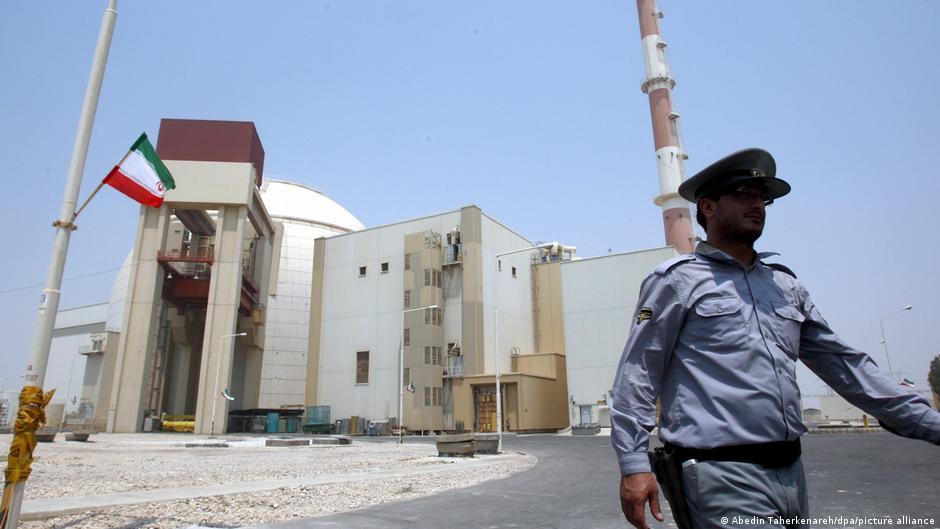
The Russian-built Bushehr power plant in southern Iran, which opened commercially in 2013, has a capacity of 1,000 MW and remains the country’s only operational nuclear facility. This accounts for about 1% of Iran’s total electricity production, which is heavily dependent on natural gas and oil.
“Iran has some of the world’s largest natural gas and oil reserves, enabling electricity generation at significantly lower costs than nuclear power,” Umoud Shokri, an energy strategist and senior visiting fellow at George Mason University in the United States, told DW. “In practice, its electricity mix remains dominated by natural gas, while nuclear makes only a small contribution from the single-operating Bushehr reactor.”
To compensate for the current 25,000 MW shortfall in Iran’s electricity grid, about 25 power plants similar to Bushehr would need to be built. The construction of Bushehr took approximately 20 years to complete.
‘Economically illogical’
According to some estimates, the cost of completing the facility was around $5 billion (about €4.2 billion), which experts say is five times the initial estimated cost.
Some estimates go even further, suggesting that without taking into account the high cost of sanctions, and considering only the final cost and performance of the Bushehr plant, the project could cost Iran 10 times more than its original estimate. The lack of access to independent, foreign observers makes it extremely difficult to ascertain the exact costs.
This relatively low level of power generation represents minimal benefits obtained at very high costs. Due to Iran’s insistence that its uranium enrichment is for power generation, the country has faced heavy sanctions, with direct economic damage estimated at between two and three trillion dollars, according to some estimates.
For civilian use such as power generation, uranium only needs to be enriched to 3%-5%. According to the International Atomic Energy Agency (IAEA), Iran has developed reserves of uranium enriched to 60%. Nuclear weapons require 90% enriched uranium.
Shokri said, “Iran’s nuclear program, when framed as a strictly civilian energy project, does not seem economically rational.”
He added, “The cost structure also differs significantly from typical civilian nuclear programs. Bushehr-1 has faced decades of delays and cost overruns, with total construction costs estimated at between $8–11 billion, making it unusually expensive on a per kilowatt basis.”
Additionally, Iran has invested heavily in enrichment and fuel-cycle infrastructure, “which adds substantial expense but provides limited economic justification given its modest uranium resources and access to imported fuel,” Shokri said.
Beyond the political and diplomatic controversies arising from Iran’s nuclear program, its emphasis on domestic uranium enrichment makes little sense from an economic and cost-benefit perspective.
no valid civil justification
In a joint statement addressed to the Board of Governors of the IAEA, France, the United Kingdom, and Germany in 2021 said that Iran has no credible civilian justification for enriching uranium to 20% or 60%, and that producing enriched uranium at such levels is unprecedented for a country without a weapons program.
According to a 2013 report by the Carnegie Endowment for International Peace, Iran’s uranium reserves are scarce. The IAEA says Iran is not even among the top 40 countries in terms of uranium reserves and its known reserves are considered very limited compared to many other countries.
According to data published in 2011, Iran’s proven uranium reserves were only 700 tonnes, most of which fall into high extraction cost categories.
Apart from the quantity, the quality of this uranium is also low, further increasing the technical costs required for extraction.
In other words, exploiting uranium from low-grade reserves is both expensive and technically challenging. Some estimates suggest that Iran’s known uranium reserves can only supply fuel for the Bushehr power plant for about nine years.
At the same time, to extract uranium from these mines, millions of liters of fresh water is required every day. Given that Iran’s uranium mines are located in arid and semi-arid regions, this raises serious environmental concerns.
Iran’s international isolation further complicates matters
The need to move away from fossil fuels has led many countries to choose nuclear energy as a relatively clean source.
Many countries, such as Belgium or Sweden, have determined that it is more cost-effective to import enriched uranium than to produce it domestically.
As a result, Belgium operates seven reactors that supply more than half the country’s electricity without any domestic uranium enrichment. Sweden also imports all the fuel needed for its 10 reactors, which provide about 40% of its electricity.
“Successful civil nuclear programs in countries like France, South Korea or the UAE depend on economies of scale, standardized reactor designs and integrated global supply chains,” Shokri said.
But Tehran’s pariah status among many Western capitals means that these avenues are not available to it.
“Iran’s approach of isolation, indigenous development and extended timelines has significantly increased costs and reduced efficiency,” Shokri said.
Shorkee says claims by Iranian officials who argue that nuclear power gives Iran more room to export gas and oil and generate revenue are also highly questionable. “The scale of displacement remains modest relative to the total cost of the program. Lower-cost alternatives, including gas-fired generation and renewable energy, can provide electricity more efficiently and with fewer financial and geopolitical risks,” he said.
When evaluated on a purely energy basis, Tehran’s nuclear program “does not mesh well with the cost-benefit logic of traditional civilian nuclear energy strategies and appears to be economically inefficient,” Shokri said.
Edited by: Carl Sexton