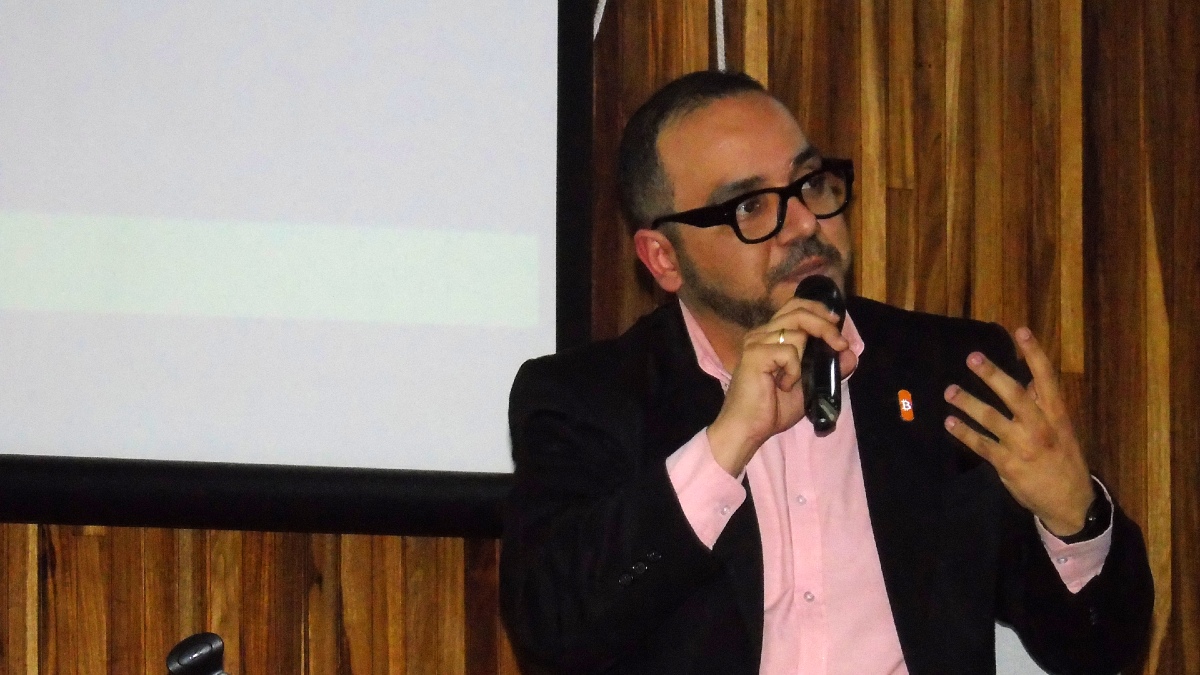
Garrido suggests that every cryptocurrency company be “sandboxed” before operating in the country.
The specialist says that, at the moment, there are no foreign cryptoasset companies on the radar.
The issuance of license 57 from the United States Department of the Treasury, which enables the interconnections of Venezuela’s public banks with international financial systems, was understood as a “starting signal” for fintechs and companies in the digital assets sector interested in entering the country. But it might not be such a thing.
According to Aníbal Garrido, director of the Blockchain, Trading and Crypto (BT&C) Academy of the Andrés Bello Catholic University (UCAB), international companies in the sector interested in operating in the Caribbean country They continue to go through a complex panorama in technical and regulatory matterseven with the license of the Office of Foreign Assets Control (OFAC).
In dialogue with CriptoNoticias this Friday, April 17, Garrido explained that, until the total and complete figure of the sanctions disappears, It is complex to operate in the country. “And everything will depend on the risk appetite of the company that wants to start operations in Venezuela. If the appetite is broad, we will probably have a gigantic company in the sector with headquarters and so on in the future. But if they are conservative, they will not touch Venezuela until the OFAC issue is resolved,” he said.
Likewise, the specialist stressed that the Venezuelan cryptocurrency ecosystem, like any other, has its own regulations that must be respected by companies in the sector if the objective is to operate within the legal framework. In his words, These companies should “tie their pants” before entering the oil country.
“If you do not establish the minimum necessary, the onboardingthe initial approach, at this moment I do not see the possibility of any company, except one that is being managed in a very private manner, arriving in Venezuela,” he said. “To get in here, you have to grab and tie your pants. And for that you need legal guarantee and security and comply with the proper compliance standards, as in any country on planet Earth,” he noted.
The specialist added that, until now, There is no evidence of formal approaches by new international actors. of the cryptocurrency sector before the national regulator, the National Superintendence of Cryptoactives and Related Activities (Sunacrip). He also commented that the Venezuelan ecosystem, being small, is interconnected, so any movement of this type is felt first in that field. Something that, according to him, has not happened so far.
“Yes, there are actors within the national ecosystem who are opting for a license and are waiting, but that is not how it is handled at the international level,” Garrido stressed.
The debate on the arrival of cryptocurrency companies and services to Venezuela, as a result of the relaxation of sanctions, was initially promoted by Asdrúbal Oliveros, economist and business consultant. He stated in an interview reported by CriptoNoticias this week that this softening of financial restrictions on Venezuelan public banks could “open up the crypto universe” for the country.
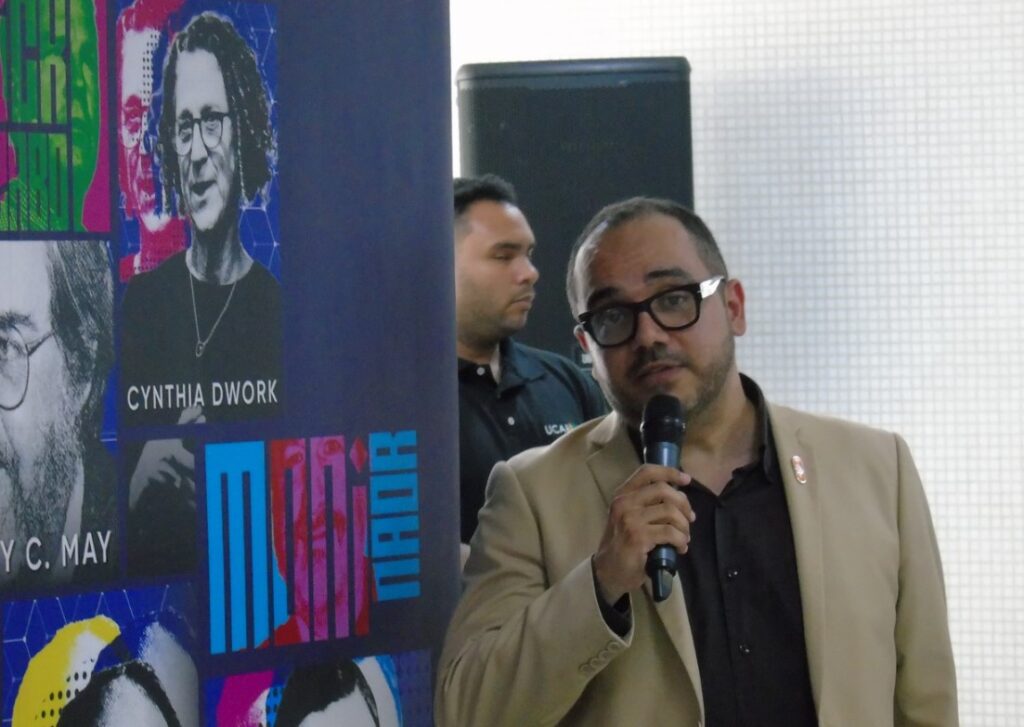
Although the above could be true given what Venezuela means in terms of the market for the cryptocurrency ecosystem, Garrido clarified that, for a company in the sector to operate in that country, introduction of relevant documentation is required in order to obtain the Sunacrip license.
“This would involve not a matter of intention, but rather a matter of actually wanting to evaluate and be able to penetrate the market in Venezuela,” he said. “And that at this moment, I repeat, internationally, with the information that is handled, unofficially I can say that it is not on the map,” he insisted.
Sunacrip’s extensive restructuring adds another layer of complexity
Furthermore, Garrido warns that the current situation of Sunacrip, which is about to complete four years of restructuring ordered by the Executive after the Pdvsa-Cripto corruption scandal, adds another layer of complexity to the intentions of foreign companies.
“It is not easy, let’s say that it is a system that right now is hermetic, I don’t know if it will be by strategy, I don’t know if it will be by political will, I don’t know if it will be by some other element. The State is the one that makes the determination, but there are no floors at this moment to be able to see an international actor penetrating the Venezuelan ecosystem, at least in relation to the issue of exchange houses,” he said.
Garrido’s reaction responds to the recent announcement by Qash, a stablecoin neobank that, in the voice of its CEO and founder, Boris Spiwak, announced that it would expand “aggressively” in Venezuela, as a result of the advantages offered by the OFAC license. Without giving details of how, the director of that fintech assured that They have been “preparing” for this unlocking scenariowhich he described as a “signal of departure.”
For Garrido, unless there are conversations between that company and the regulator, This is an “adventurous” ad. of a movement that, according to him, has not been felt in the Venezuelan cryptocurrency ecosystem, which, he insisted, is “very interconnected.”
“It seems risky to say ‘we are ready to penetrate the Venezuelan ecosystem’ when the ecosystem, like any other, has a regulation to which you have to abide. And that regulation in one way or another, beyond being restrictive, is a regulation that establishes controls,” he remarked.
Such regulation is the one established in the Constituent Decree on Crypto Assetsapproved in 2018, which dictates the rules for a company in the cryptocurrency sector to operate in Venezuela. These regulations were described as “extremely rigid and restrictive” by the economist Oliveros, since, in his opinion, They do not allow the sector to “develop.”
Garrido suggested that, in addition to technical and regulatory controls, cryptocurrency companies interested in operating in Venezuela should be “sandboxed.” That is, within a regulated testing environment to determine the feasibility of the service, which, according to its calculations, requires an investment of between $500,000 and $1 million in integrations and software alone.
Any initiative from a fintech and technological point of view that is developed in our country has to be sandboxed and has to go through a testing ecosystem: 100, 200, 300, 400 users, in such a way that this test, that controlled and regulated sandbox, allows the fintech, allows the exchange, the crypto company, and the regulator, to be sure that the product is complying with all the measures, not only from the technological point of view, of cybersecurity, but also, obviously, of compliance. The conjunction between the ecosystem of traditional finance and the system of decentralized finance can only occur through the conjunction that provides the norm, that provides compliance, and that is the only guarantee that this effectively, from my perspective, can be magnified.
Aníbal Garrido.
The Venezuelan ecosystem, although attractive due to its high level of adoption, remains a closed and monitored environment. For Garrido, the only guarantee of success for a cryptocurrency company in Venezuela is to follow the guidelines, stand firm and rely on the conjunction between the norm and technology. Otherwise, he assured that Companies will hit a legal and financial “concrete wall.”