Until a few years ago, the quiet community of Peyia on the west coast of Cyprus was known mainly for its banana plantations.
However, the region has changed rapidly over the past decade, largely due to development involving foreign investors, many of whom are Russians.
The most emblematic project of the development of this coastal community is the Cap St. George complex, a luxury resort consisting of a hotel and hundreds of villas along the beach.
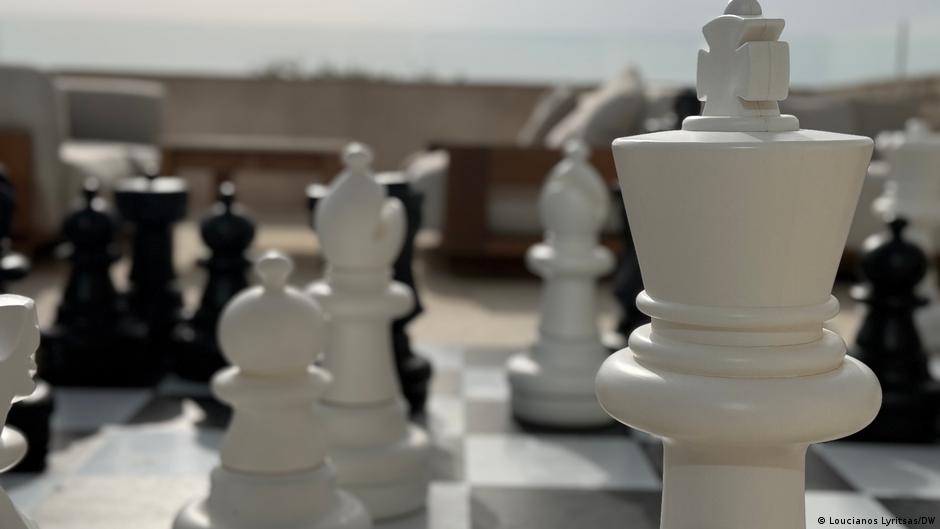
Between March 28 and April 16, this high-end resort hosted some of the world’s greatest chess players who gathered there to compete in the 2026 FIDE Candidates Tournament and the FIDE Women’s Candidates Tournament.
Grandmaster came from Cyprus
These elite players were competing for the right to challenge the reigning world champions.
These included elite grandmasters such as Fabiano Caruana, Hikaru Nakamura, Anish Giri, Matthias Blubaum and 20-year-old Javokhir Sindarov of Uzbekistan, who emerged as the tournament’s standout performer and eventual winner.
His victory earned him the right to challenge reigning world champion Gukesh Domraju for the world title.
The winner of the Women’s Candidates Tournament was India’s 24-year-old Vaishali Rameshbabu, who will challenge reigning women’s world champion Xu Wenjun.
withdrawal of candidate
The tournament took place within a broader international context that cannot be ignored.
The ongoing tension and instability in the Middle East had a direct and tangible impact on this incident. India’s Koneru Humpy withdrew her name from the Women Candidates Tournament citing serious security concerns related to the evolving regional situation.
In a statement posted on X, she emphasizes that “no tournament, no matter how important, can be placed above personal safety and well-being.” He cited regional instability and disruption in international travel as the main reasons behind his decision to withdraw from the competition.
Following her withdrawal, Humpy was replaced by Ukrainian grandmaster Anna Muzychuk, who stepped into the lineup in her place.
shadow of war in ukraine
Even more obvious was that Russia’s full-scale invasion of Ukraine affected the tournament in both practical and symbolic terms.
The war led to widespread sanctions against Russia throughout international sport – and chess was no exception.
Following decisions of the International Chess Federation (FIDE), Russian players have been required to compete under a neutral flag in official competitions, without national symbols, anthems or representation of the federation.
As a result, Russian players Andrey Esipenko and Alexandra Goryachkina participated in the tournament under the FIDE flag.
‘Little Russia’ in Limassol
Despite the absence of Russian national symbols, the Russian presence in the tournament atmosphere was still strong, especially in the spectators.
As chess enthusiast Vlad told DW, chess has always been very important in Russia. “My parents learned it in school,” he said, showing how deeply rooted the game is in Russian culture and education.
When asked if he had come from Russia to watch the tournament, he replied with a smile: “From Little Russia: Limassol.”
Vlad was referring to Cyprus’s most cosmopolitan city, located on the southern coast of the island, where the Russian presence is particularly strong and highly visible.
It is estimated that a total of about 40,000 Russian-speakers live on the island. The overall figure is even higher when dual citizens and long-term residents are taken into account.
Limassol has become the main center of the Russian-speaking community in Cyprus: more than 30,000 people are thought to live here alone.
Why Cyprus?
Cyprus’s Russian community began to grow after the collapse of the Soviet Union and continued to grow in the decades that followed, driven by investment opportunities, real estate development, and Cyprus’ attractive tax and residency structure.
Today, the Russian-speaking community is an important part of life in the city, with a visible presence in business, education and everyday social activities.
The strong presence of the Russian-speaking community on the island may also explain FIDE’s decision to host the tournament in Cyprus – even though chess does not traditionally attract particularly strong interest among locals.
Although FIDE is an international governing body consisting of over 190 national federations as members, Russia has historically held considerable influence in the chess world due to its deep connection with the game.
FIDE’s current President, Arkady Dvorkovich, and many staff members and contributors come from Russian or Russian-speaking backgrounds.
Chess is deeply embedded in Russian culture
Sofia, who is currently studying mathematics at the Cyprus University of Technology in Limassol as part of an exchange programme, was one of several Russian volunteers working at the tournament.
He also told DW that chess is deeply embedded in both Russian education and culture, with many people learning the game from a very young age.
This strong cultural connection is one of the reasons he chose to volunteer for the Candidates Tournament and, he said, why there are many Russian employees and contributors within FIDE.
The choice of Cyprus as a venue has certainly appealed to winner Javokhir Sindarov.
When he was asked in the press conference after his victory where he would like the World Championship match to be held, he replied that, if it were up to him, he would choose a warm country like Cyprus, he also said that he would not want to play such an important match in cold conditions.
Edited by: Angiel Flanagan