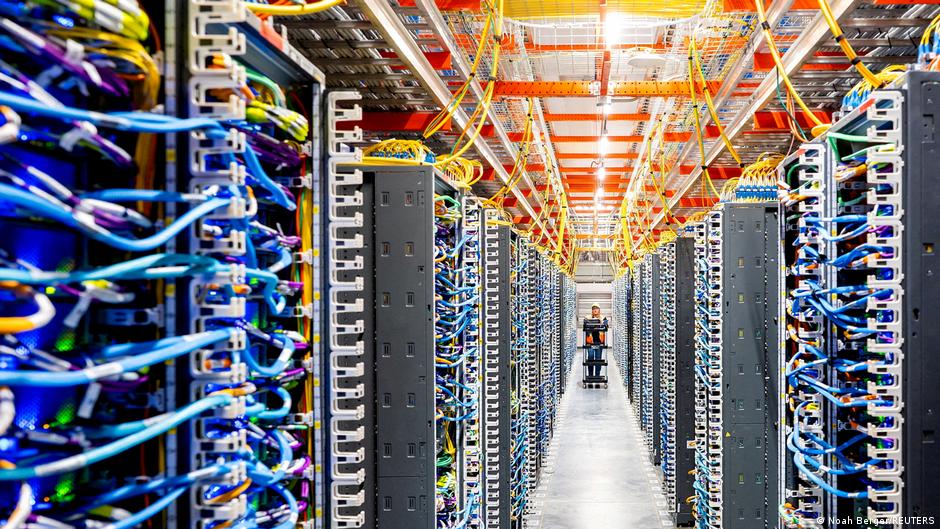
Data centers require large amounts of energy to fuel the servers and process the information that keeps our websites, applications, and generative AI models running.
In the United States, which has more data centers than anywhere in the world, energy demand is putting pressure on the transmission grid and driving up electricity costs. Struggling grid operators are turning to polluting fossil fuels for quick supplies of power. In some cases, they are considering nuclear power plants, or even retrofitting oil, gas and coal power plants that are closing.
The country’s largest power grid last year postponed or canceled plans to close 60% of its fossil fuel plants, according to a recent Reuters analysis. PJM Interconnection covers 13 eastern states, including Virginia, the “data center capital of the world.” Eleven of the plants to be shut down were so-called “peakers”, which are brought online during times of increased demand for electricity.
“Today, nationally, it is clear that demand for electricity exceeds supply – the market reflects this, and generators are responding,” PJM spokesman Jeff Shields told Reuters. “We need every megawatt of energy we can get right now.”
To meet that demand, some power companies are curtailing other priorities. Virginia-based Dominion Energy, which has pledged to shift to 100% renewable sources by 2045, plans significant investments in gas and nuclear power by 2039 to “reliably produce”.[e] “Power is delivered when customers need it most.”
In Nevada, utility company NV Energy has said data centers could cause it to miss the state’s clean energy goal of 50% renewable energy production by 2030. And in North Carolina, where it has about 100 data centers, NextEra Energy announced in December that it now sees “no realistic path to achieving true zero-carbon emissions by 2045.”
Gas is the ‘fastest, cheapest, easiest way’ to power data centers
Dave Jones, chief analyst at global energy think tank Ember, said the unique power demands of data centers explain their heavy reliance on fossil fuels, especially gas.
AI data centers today can use as much electricity as 100,000 homes, but the largest centers currently under construction will require 20 times as much electricity. And rapid technological advances make it difficult to predict future needs.
“It’s very hard to plan in this context how much electricity you’re going to use,” Jones said. He said some centers are also considering on-site power generation. “The quickest, cheapest, easiest way in the eyes of many companies is to use gas.”
In the US, natural gas provides more than 40% of electricity for data centers, according to international energy agency. Coal-fired power plants provide 15%.
Worldwide, the IEA estimates that these two dirty fuel sources will power more than 40% of the additional electricity needed by data centers until at least 2030. The agency says demand for upcoming plants will likely be “a significant near-term driver of growth for natural gas-fired and coal-fired generation.”
Jones said the fact that “U.S. natural gas prices are at an 18-month low” makes the fuel an attractive option.
Are climate targets a ‘trade-off’ for AI development?
Low gas prices, combined with additional tariffs on imports of solar panels and other technologies from abroad, mean the expansion of renewable energy for US data centers has slowed. But Jones said that’s not all.
“The other component of all of this is just that there is absolutely zero willingness for any climate responsibility,” Jones said, referring to the move away from climate policies under President Donald Trump. Many of the projections and commitments made by AI companies to use clean electricity for their data centers have “gone out the window,” he said.
Since returning to office last year, Trump has been open about his disdain for renewable energy. He has signed executive orders to defund fossil fuels, and the Energy Department has reiterated the importance of coal and nuclear to sustaining America’s energy needs, especially when it comes to data center development and AI.
“How are we going to re-industrialize America? How are we going to win the AI race on that trajectory?” Energy Secretary Chris Wright said during a briefing at the New York Foreign Press Center in September, commenting on the previous administration’s plans to phase out fossil fuel plants by 2025. “Climate change, like every other issue, is a compromise.”
27% of the world’s data centers are powered by renewable energy
But clean energy advocates say there should be no compromise. He says investments in grid transmission lines and battery storage could provide the additional energy provided by peaker plants without the increased air pollution.
Renewable energy powers about a quarter of the more than 4,200 data centers in the U.S., particularly in sunny regions in the South and Southwest. And it is like this all over the world. The IEA has stated that “over 65% of all electricity produced for data centers is set to be from renewables and natural gas by 2030” – including, for example, in parts of Southeast Asia, where the IEA expects electricity demand from data centers to more than double by 2030.
“Electricity demand is growing rapidly for a variety of reasons across countries in Asia as they electrify rapidly,” Jones said. “Renewables are largely offsetting this – even in India and China,” where they currently rely on “a mix of coal and renewables.”
Jones said the ongoing energy crisis caused by the US-Israel war in Iran is causing Asian countries to rapidly build out their data center networks, making them think twice about relying on oil and gas to fuel growth and instead consider nuclear and renewable energy.
“Clean electricity gets a huge boost from the rise in fossil fuels [fuel energy] prices,” he said. “Renewables, wind and solar, have 1776766118 An integral part of the conversation and focus of their energy strategies.”
Meanwhile, data center adversaries in the US are striking back. Recent Quinnipiac University survey found that 65% of Americans were against a utility near their home, with nearly two-thirds citing the cost of electricity.
In New Jersey, where the average electric bill rose nearly 17% last year, residents of one town recently managed to cancel a planned data center over environmental and energy concerns. In Maine, legislators have backed a bill that would pause new data center construction until November 2027 to evaluate the risks to the electric grid and the environment.
State Representative Melanie Sachs said, “If these hubs are not thoughtfully planned and coordinated, they could place extraordinary demands on electrical infrastructure, the surrounding environment, and host communities.”
Edited by: Tamsin Walker